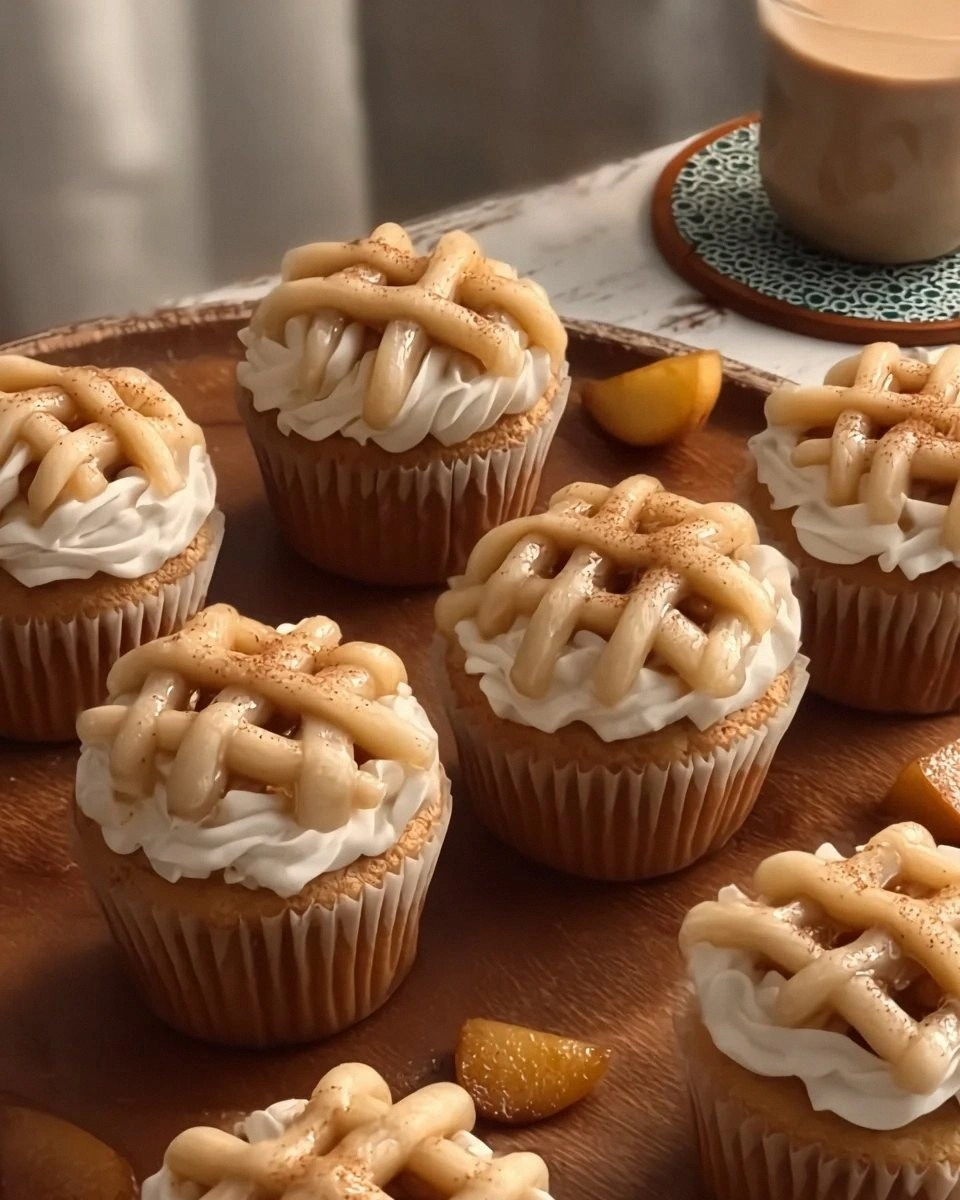
Picture this: it is a gray November afternoon, the wind is rattling the maple leaves against the kitchen window, and I am standing in my socks, clutching a half-eaten slice of apple pie that refuses to cooperate. The filling slides out like a syrupy avalanche, the crust shatters across the plate, and I am left with sticky fingers and a very undignified pile of crumbs. In that moment—fork in one hand, dignity in the other—I decide there has to be a better way to get the cozy perfume of apple pie without the structural drama. Ten test batches later, these Apple Pie Cupcakes were born, and I swear on my last stick of butter that they are the most irresistible mash-up I have ever pulled from my oven. They taste like your favorite bakery candle came to life, wrapped itself in tender spice cake, and threw a cinnamon confetti party.
Close your eyes for a second and imagine the first bite: the cupcake dome cracks ever so slightly under the fork, releasing a puff of warm nutmeg and caramelized apple steam. The apple filling is soft but not mushy, glossy but not cloying, and it perches in the center like a secret treasure. Crown the whole thing with a swirl of browned-butter cream cheese frosting—yes, browned butter, because life is too short for plain—and you get the silky richness that makes people close their eyes and say “mm-mm-mm” without realizing they are doing it. I dare you to taste one and not immediately reach for a second; I have seen stoic grown-ups break into cupcake sprinting marathons across my kitchen.
What makes this version different from every other “apple pie cupcake” floating around the internet? First, we are not dumping canned pie filling on top of a box mix and calling it a day. We are folding tiny cubes of Honeycrisp and Granny Smith into a brown-sugar buttermilk batter, so every bite carries soft pockets of fruit that still have a whisper of bite. Second, we core out a warm cupcake plug and fill it with glossy apple-cider-caramel that would make a French pastry chef blush. Third, the frosting is tangier and deeper than the usual butter-sugar cloud thanks to a quick nut-brown butter swirl that smells like toasted hazelnuts doing the tango with caramel. Fourth—and stay with me here—we are brushing the cakes with a cider-spice syrup the second they emerge from the oven, locking in moisture and giving the crumb that syractic snap reminiscent of a pie crust’s caramelized edges.
Oh, and the aroma? It is the olfactory equivalent of flannel shirts, crackling fireplaces, and someone handing you a mug of cider while you still have rosy cheeks from the cold. My neighbor once rang the doorbell mid-bake claiming he “just happened to be walking his cat.” (He does not own a cat.) If you have ever struggled with dry cupcakes, soggy pie bottoms, or frosting that melts into a sweet oil slick, you are not alone—and I have the fix. Let me walk you through every single step; by the end you will wonder how you ever made it any other way.
What Makes This Version Stand Out
Double Apple Whammy: We use both fresh diced apples and a concentrated cider reduction so the fruit flavor is bold, not bashful. Most recipes lean on one or the other and end up tasting like lightly spiced vanilla with a sad apple cameo.
Browned-Butter Velvet Frosting: By cooking the butter until the milk solids toast, we unlock nutty toffee notes that hug the tangy cream cheese like they were long-lost soulmates. It is the difference between a handshake and a slow dance.
Hot-Cake Syrup Soak: Brushing the cupcakes with a hot cider syrup right out of the oven keeps them impossibly moist for days. Think of it as the pastry equivalent of that post-workout sports drink, only miles tastier.
Spice layering, not dumping: We bloom the cinnamon, cardamom, and nutmeg in the browned butter before the batter sees them, intensifying flavor the way blooming chili in oil wakes up a curry. Your kitchen will smell like a spice market on a sunny Saturday.
Make-ahead friendly: The cupcakes, filling, and frosting can all be prepped separately up to three days ahead and assembled in minutes. Hosting Thanksgiving? You can bang these out Wednesday night and still watch the parade.
Texture contrast built in: A quick sprinkle of candied ginger crumble on top adds crackle without the need for finicky pie crust shards. You get that satisfying crunch without rolling out dough at dawn.
Crowd reaction guarantee: I have served these at bake sales, office parties, and family reunions, and every time at least one person utters the words “I don’t usually like dessert, but…” before inhaling two. That is a baker’s mic drop.
Inside the Ingredient List
The Flavor Base
Butter is the backbone, and we are taking it past the melting point into nut-brown territory. When those milk solids caramelize they create hundreds of new flavor compounds reminiscent of toasted hazelnuts and butterscotch. Skipping this step leaves the cupcakes tasting flat, like a black-and-white TV when you could have 4K color. Use European-style butter if you can; the higher butterfat translates into richer, more tender crumbs. If you are dairy-free, substitute refined coconut oil and add a teaspoon of toasted sesame oil for nuttiness, but honestly, promise me you will try the real deal at least once.
Brown sugar is not just a sweetener—it is a flavor grenade full of molasses. Dark brown sugar amps up the caramel notes, while light brown keeps things gentle. I mix half and half for complexity that blooms in the background without stealing the apple show. White sugar alone will give you a one-note sweetness that feels like listening to a piano with only the middle C key working.
Apple cider reduction is the secret handshake among serious fall bakers. We simmer two cups of fresh cider down to a quarter cup, concentrating the fruity acidity and natural sugars until it tastes like liquid autumn candy. Drizzle this elixir into both the batter and the filling, and you will get that “did you slip in some expensive Calvados?” reaction from guests. Do not try to shortcut with apple juice; it lacks the tannins and tang that cider brings to the party.
The Texture Crew
Buttermilk is the velvet rope that keeps crumb tender by tenderizing gluten. Its gentle acid reacts with baking soda to create tiny carbon-dioxide pockets, giving us lift without the soapy aftertaste baking powder can leave behind. No buttermilk? Mix three-quarters cup of milk with two teaspoons of white vinegar and let it sit five minutes until slightly thickened. Your cupcakes will still be fluffy, though they will miss buttermilk’s subtle cultured tang.
Cake flour keeps things delicate, but do not panic if you only have all-purpose. For every cup of cake flour, use one cup of all-purpose minus two tablespoons, then replace those two tablespoons with cornstarch. The lower protein content prevents tough, muffin-like cupcakes, ensuring the fork glides through like a hot knife into chilled mousse.
Eggs should be at room temperature so the yolks emulsify smoothly with the butter. Cold eggs can shock the batter, causing the fat to seize into grainy specks. Drop them in a bowl of warm tap water for five minutes while you prep everything else, and you are golden.
The Unexpected Star
Granny Smith and Honeycrisp apples each play a role: Granny brings tart structure, while Honeycrisp offers honeyed sweetness and a snap that holds up under heat. Peel them or leave the skins on for a rustic flair; the skins tint the cake with tiny confetti flecks of green and red. Dice them to blueberry-size so they integrate into the crumb instead of sinking to the bottom like sad apple submarines. If you can only pick one variety, go with Pink Lady—its sweet-tart balance is the Switzerland of apples.
Cardamom is the stealth spice. A whisper of it makes people say, “I cannot put my finger on what makes these so incredible.” Too much and your cupcakes taste like chai cologne. Buy whole green pods, crack them, and grind immediately for citrusy perfume that pre-ground versions lost months ago sitting on the shelf.
The Final Flourish
Cream cheese must be full-fat and softened to blob-of-whipped-cream consistency. Cold cream cheese will fight the mixer and leave you with pebbled frosting that looks like cottage cheese trying to be glamorous. Leave it on the counter overnight, or microwave ten-second bursts, flipping like a pancake between zaps, until it yields to a gentle poke.
Pure vanilla extract is non-negotiable. Imitation vanilla has a sharp, almost boozy edge that bulldozes the delicate apple notes. Splurge on the good stuff, or scrape a vanilla bean if you are feeling fancy. Your future self, swirling latte art or baking birthday cakes, will thank you.
Everything prepped? Good. Let us get into the real action.
The Method — Step by Step
- Position a rack in the center of your oven and preheat to 350°F/175°C. Line two standard 12-cup muffin tins with paper liners; lightly mist them with non-stick spray so the cupcakes release like silk scarves sliding off a hanger. In a medium saucepan, melt 10 tablespoons (140 g) of unsalted butter over medium heat. Swirl occasionally; after the foam subsides, the milk solids will turn chestnut brown and smell like toasted hazelnips—this should take about 5 minutes. Remove from heat immediately and pour into a heat-proof bowl to halt cooking; you want liquid gold, not bitter black puddles.
- While the butter cawns, whisk together 1¼ cups (300 ml) fresh apple cider and 2 tablespoons of dark brown sugar in a small saucepan. Bring to a gentle boil over medium-high heat, then reduce to a lively simmer until the mixture thickens to ¼ cup, about 12 minutes. Swirl, do not stir, to prevent scorching. When a spatula leaves a clear trail on the bottom of the pan, you have arrived at apple nirvana. Cool to lukewarm; you will use half in the batter and half for the syrup soak.
- In a medium bowl, sift 1¾ cup cake flour, 1 teaspoon baking soda, ½ teaspoon baking powder, 1 teaspoon ground cinnamon, ½ teaspoon kosher salt, ¼ teaspoon freshly grated nutmeg, and ⅛ teaspoon ground cardamom. Whisk for a solid 30 seconds so the leaveners and spices distribute evenly; lumpy baking soda equals weird bitter craters, and nobody invited those to the party.
- In the bowl of a stand mixer fitted with the paddle attachment, combine the browned butter (plus every last drop of toasty flecks) with ½ cup packed dark brown sugar and ½ cup packed light brown sugar. Beat on medium speed for 2 minutes until the mixture looks like wet sand turning into fluffy caramel. Crack in 2 large eggs, one at a time, beating until each is fully absorbed before adding the next. Drop in 1 tablespoon of vanilla extract and half of your cider reduction; beat just until the batter ribbons off the paddle like satin ribbon on a Christmas present.
- Reduce mixer speed to low and add the dry ingredients in three additions, alternating with ¾ cup room-temperature buttermilk, beginning and ending with flour. Mix only until the last streak disappears; over-mixing encourages gluten and we want pillowy, not pizza dough. The batter will be thick yet spoonable, with a fragrance that will make you consider pouring it into a mug and calling it autumn soup.
- Fold in 1½ cups finely diced apples (about 2 medium) with a silicone spatula. The apples should be coated like jewels suspended in custard. Using a #20 cookie scoop or two spoons, divide the batter evenly among 16 liners, filling each about ¾ full. Tap the tin gently on the counter to dislodge air bubbles—those little pockets can collapse into sad sinkholes if you skip this.
- Bake for 18–22 minutes, rotating the pan halfway through. The cupcakes are ready when the centers spring back lightly and a toothpick comes out with a few moist crumbs. Resist the urge to open the oven door before 18 minutes or you will chill the party and cause humpy tops. While they bake, rewarm the remaining cider reduction with 1 tablespoon of butter and ½ teaspoon cinnamon to create your hot soak syrup.
- The moment the cupcakes emerge, brush each generously with the hot syrup using a pastry brush. It will sizzle and soak in like summer rain on parched soil. Cool in the tin for 5 minutes—any longer and condensation turns the bottoms soggy—then transfer to a wire rack. Feel free to “test” the syrup with a spoon; I will neither confirm nor deny I drank half of it straight.
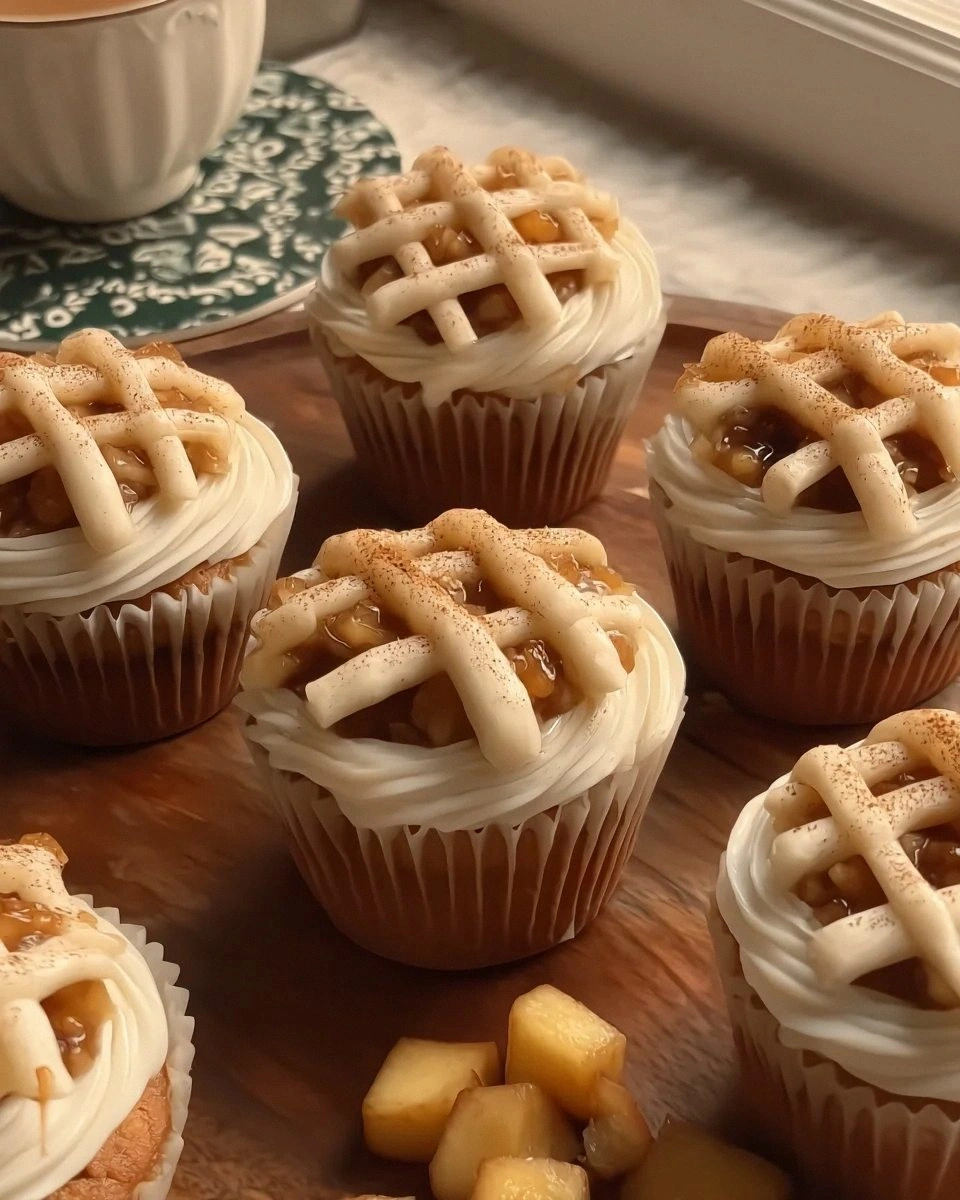
- Once completely cool, core the centers with the back of a piping tip or a small paring knife, going two-thirds deep. Pipe or spoon in the apple-caramel filling (recipe below) until it mounds slightly like a hidden treasure chest. Don’t overfill or the lid (a.k.a. frosting) will slide off like a drunk penguin.
- Prepare the browned-butter cream cheese frosting: Beat 8 oz room-temp cream cheese with ¼ cup of the reserved browned butter until silky. Add 1½ cups powdered sugar, pinch of salt, and 1 teaspoon vanilla. Beat on medium-high for 2 minutes until the frosting stands in soft peaks that curl like ocean waves. Swirl onto each cupcake using a large star tip, or smear with a spoon for a rustic “I meant to do that” vibe. Garnish with a sprinkle of candied ginger crumble if you want fireworks.
That is it—you did it. But hold on, I have got a few more tricks that will take this to another level...
Insider Tricks for Flawless Results
The Temperature Rule Nobody Follows
Room-temperature dairy and eggs emulsify into a satiny batter that traps air, giving you sky-high domes. Cold ingredients are like trying to whip a brick—it simply will not cooperate. If you are impatient (hello, me), submerge eggs in a bowl of hot tap water for 5 minutes and microwave milk or buttermilk in 5-second bursts until just lukewarm. A quick digital thermometer should read 68–70°F. Your cupcakes will rise like they are auditioning for a baking commercial.
Why Your Nose Knows Best
Trust your sense of smell at every stage. The butter is browned when it smells like toasted hazelnuts, not like regular melted butter. The cider reduction is ready when the bubbling bubbles sound thicker and the aroma shifts from bright apple juice to rich caramel apple. Even the baking cupcakes tell you they are done when the scent of cinnamon drifts up the stairs and lures roommates from their Netflix caves. If you wait for visual cues alone, you are playing catch-up with chemistry.
The 5-Minute Rest That Changes Everything
After you brush the hot syrup, tent the cupcakes loosely with foil for 5 minutes before removing from the tin. The trapped steam circulates, creating a gentle sauna that finishes baking the centers without drying the edges. A friend once skipped this and ended up with hockey pucks that even coffee could not resuscitate. Learn from her tragic brunch.
Frosting Insurance Policy
If your kitchen is warmer than 74°F, beat the frosting an extra minute until it clings to the whisk like soft-serve ice cream, then chill the bowl for 10 minutes. This stabilizes the butter so the swirl holds its shape on a hot patio or a steamy bake-sale table. Conversely, if the room is cold, leave the cream cheese on the counter an extra 15 minutes to avoid lumps that look like cottage cheese curds plotting an escape.
Apple Dice Size Matters
Think blueberry, not chunky applesauce. Uniform ¼-inch cubes disperse evenly, bake through in the same time as the cake, and do not stab the delicate crumb like rebellious apple spears. A quick minute with a sharp chef’s knife beats the food processor, which can turn your fruit into applesauce confetti and tint the batter gray. Nobody wants gray cupcakes unless you are hosting a storm-cloud-themed party.
Creative Twists and Variations
This recipe is a playground. Here are some of my favorite ways to switch things up:
Salted Maple Bourbon
Swap the cider reduction for maple syrup simmered with a tablespoon of bourbon and a pinch of flaky salt. The maple perfumes the whole cake, while the bourbon bakes off leaving smoky vanilla notes. Top the frosting with candied pecans for a cupcake that tastes like a Vermont ski lodge.
Cheddar Streusel Top
Stir ½ cup finely shredded sharp white cheddar into a classic brown-sugar streusel and sprinkle it on top of the batter before baking. The cheese toasts into crispy, salty shards that contrast the sweet apple like a good pie companion. Midwesterners will nod knowingly; coastal folks will convert.
Caramel Apple Cheesecake Core
Instead of a cider filling, pipe in a no-bake cheesecake mixture made with cream cheese, caramel, and a squeeze of lemon. The tang plays off the sweet cake like a Granny Smith dipped in caramel on a stick, minus the orthodontist bill.
Spiked Chai Latte
Add 1 teaspoon each of ground cardamom, ginger, and allspice to the batter, plus a tablespoon of loose chai steeped in the buttermilk. The result tastes like your favorite coffee-shop drink, only in handheld dessert form. Garnish with a tiny chai-caramel drizzle for extra swagger.
Gingerbread Crunch
Fold 2 tablespoons of molasses into the batter and replace ¼ cup of the flour with almond flour. Top with crushed gingersnaps mixed with a touch of melted butter before baking. You get the warm snap of gingerbread cookies baked right onto the cupcake—holiday cookie trays just got competition.
Sugar-Free Keto-ish
Use granulated erythritol in place of brown sugar, add a tablespoon of blackstrap molasses for flavor, and swap buttermilk for sour cream thinned with water. Use a cream-cheese whipped-cream frosting stabilized with gelatin. It is not an exact replica, but it scratches the itch for anyone watching carbs.
Storing and Bringing It Back to Life
Fridge Storage
Place cupcakes in an airtight container with a tight-fitting lid and refrigerate for up to 4 days. To prevent the frosting from smudging, insert a toothpick halfway into the center and drape a piece of wax paper over so it tents above the icing. The cold can dull flavors, so let them sit at room temp for 20 minutes before serving. They will taste bakery-fresh and the frosting will soften back to silk.
Freezer Friendly
Flash-freeze frosted cupcakes on a tray until the icing is solid, about 1 hour, then wrap each individually in plastic wrap and stash in a zip-top bag. Freeze up to 2 months. Thaw overnight in the fridge, then unwrap and bring to room temperature. The texture stays moist because the syrup soak locks in moisture like a cake insurance policy.
Best Reheating Method
If you like your cupcakes slightly warm (who does not?), pop one in the microwave for 8–10 seconds on 50% power. Any longer and the frosting turns into a melty soup that slides off like a guilty conscience. Alternatively, warm in a 300°F oven for 5 minutes with a small cup of water on the rack to create gentle steam. You will get that fresh-from-the-oven aroma without drying the crumb.