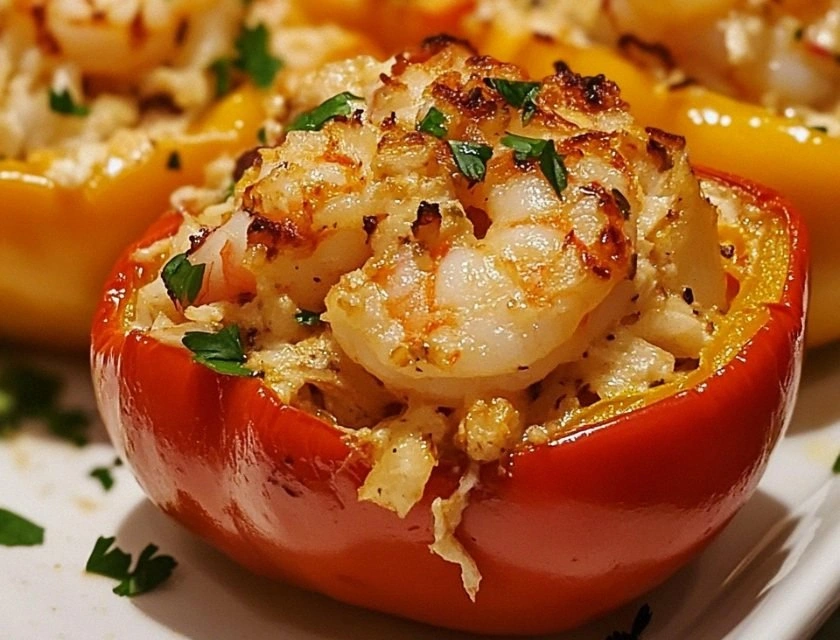
I'll be honest — the first time I attempted to make crab and shrimp stuffed bell peppers, I ended up with a seafood massacre in my kitchen. There was crab meat stuck to the ceiling (don't ask), shrimp tails in my hair, and bell peppers that resembled deflated footballs. But something magical happened when I finally cracked the code. The moment those perfectly tender peppers emerged from the oven, bubbling with their treasure trove of sweet crab and succulent shrimp, I knew I'd stumbled upon something extraordinary.
Picture this: it's Tuesday night, you're standing in your kitchen wearing your comfiest pajama pants, and suddenly you're transported to a seaside bistro where the salt air mingles with the aroma of fresh seafood. That's what these stuffed peppers do — they create an instant vacation on your plate. The sweetness of lump crab meat dances with the briny pop of perfectly cooked shrimp, all nestled in a charred bell pepper boat that's been patiently waiting to fulfill its destiny. I dare you to taste this and not go back for seconds.
Most recipes get this completely wrong. They either overcook the seafood into rubbery oblivion or drown everything in so much cheese that you might as well be eating seafood-flavored fondue. But here's what actually works: gentle par-cooking of the shrimp, folding in the crab at just the right moment, and creating a binding mixture that celebrates rather than masks the seafood. This is hands down the best version you'll ever make at home, and I'm about to show you exactly why.
Okay, ready for the game-changer? We're going to build layers of flavor that would make a French chef weep with joy. Think of it as creating a seafood symphony where each ingredient gets its solo moment before joining the chorus. By the end of this journey, you'll wonder how you ever made it any other way.
What Makes This Version Stand Out
Seafood-Forward: Unlike those sad recipes where the crab and shrimp get lost in a sea of breadcrumbs, this version lets the ocean's bounty shine. Every bite delivers a generous chunk of sweet crab or perfectly tender shrimp, making you feel like you've got a direct line to the coast.
Texture Heaven: We're talking about a contrast that'll make your mouth do a happy dance. The peppers provide that slight char and tender bite, while the seafood mixture inside stays moist and almost custard-like. The top gets a gentle golden crust that shatters like thin ice when you dig in.
Weeknight Simple: Despite tasting like you spent hours slaving away, this recipe comes together in under an hour. The secret? We prep smart, not hard. While the peppers are getting their initial roast, we're building our filling in one pan.
Restaurant Quality: The technique we're using here is straight out of professional kitchens. By creating a light béchamel base and folding in the seafood at the perfect temperature, we achieve that luxurious texture that usually costs thirty bucks a plate.
Make-Ahead Magic: These beauties actually get better if you assemble them the night before. The flavors meld and deepen, making this the ultimate dinner party flex. Your guests will think you're a culinary genius while you're secretly sipping wine in the kitchen.
Endlessly Adaptable: Once you master the base technique, you can swap in different seafood, add your favorite herbs, or even go rogue with some chorizo. This recipe is your playground — I'll show you all my favorite variations later.
Inside the Ingredient List
The Flavor Base
Let's start with the holy trinity of Cajun cooking — onion, celery, and bell pepper. But here's the twist: we're using the bell pepper tops we cut off earlier, chopped finely, so nothing goes to waste. The onion provides that sweet foundation that makes everything taste like it's been simmering for hours, while the celery adds a subtle herbal note that makes the seafood sing. Skip the celery if you must, but you'll lose that restaurant-quality complexity that keeps people guessing what's in your secret recipe.
The Texture Crew
Panko breadcrumbs are our secret weapon here — not the fine sawdust you find in those cardboard canisters. These Japanese-style crumbs stay crispy even after baking, creating little pockets of crunch throughout the tender filling. They absorb just enough of the seafood juices to plump up without turning mushy. If you can't find panko, make your own from day-old country bread, but please, I beg you, don't use those Italian seasoned crumbs unless you want your peppers to taste like a pizza parlor explosion.
The Unexpected Star
Old Bay seasoning might seem like an obvious choice, but we're using it with restraint — just enough to whisper "Maryland" without shouting over the delicate crab. The real star here is a whisper of smoked paprika. This Spanish wonder adds depth and mystery, making people wonder if you've been secretly smoking your own seafood. A little goes a long way, but without it, your peppers will taste flat and one-dimensional.
The Final Flourish
Fresh herbs are non-negotiable here, folks. Dried herbs have their place, but not in this fresh seafood celebration. Flat-leaf parsley adds brightness, while a touch of fresh thyme brings an earthy note that grounds all the ocean flavors. Chives contribute a gentle onion flavor that doesn't overpower the sweet crab. Pro tip: chop your herbs at the very last minute — the essential oils start evaporating the moment you cut them.
The Method — Step by Step
- Start by preheating your oven to 425°F — this high heat is crucial for getting those peppers beautifully charred while keeping them tender. While it's heating, slice the tops off your bell peppers and remove all the seeds and white membranes. Save those tops! We'll chop them up for our filling. That sizzle when it hits the pan? Absolute perfection.
- Brush your pepper shells with olive oil inside and out, then season them generously with salt and pepper. Place them cut-side down on a baking sheet lined with parchment paper. This initial roast for 15 minutes is where the magic begins — the bottoms caramelize slightly, adding a smoky depth that'll make you wonder why you ever skipped this step.
- While those peppers are getting their tan, let's build our flavor base. Heat a large skillet over medium heat and add a tablespoon of butter. When it starts to foam, add your chopped onion and cook until translucent, about 5 minutes. Add the garlic and cook for just 30 seconds — any longer and it'll turn bitter and ruin everything we've worked for.
- Now watch this part closely: add your chopped shrimp and cook for exactly 2 minutes. They should just be starting to turn pink but still have some gray spots. Remove them immediately to a bowl — they'll finish cooking in the oven. Overcooked shrimp are like eating rubber bands, and nobody wants that texture trauma in their dinner.
- In the same pan, add another tablespoon of butter and let it melt. Sprinkle in the flour and whisk constantly for 2 minutes to create a light roux. This is the backbone of our sauce, and it needs to cook long enough to lose that raw flour taste but not so long it browns. We're going for blonde, not brunette.
- Gradually pour in the milk while whisking like your life depends on it. No lumps allowed in this kitchen! Let it simmer until thickened, about 3 minutes. It should coat the back of a spoon like velvet. If you've ever struggled with lumpy white sauce, you're not alone — and I've got the fix. Keep whisking and add the milk slowly.
- Remove from heat and fold in half the cheese until melted and smooth. Add your Old Bay, smoked paprika, and a generous amount of black pepper. Taste and adjust — this is your moment to make it perfect. The sauce should taste like a warm hug from the ocean.
- Gently fold in your crab meat, being careful not to break up those precious lumps. Add the par-cooked shrimp, panko breadcrumbs, fresh herbs, and the chopped bell pepper tops. This next part? Pure magic. Everything should be just barely combined — over-mixing will turn your beautiful seafood into seafood paste.
- Fill each roasted pepper shell with the seafood mixture, mounding it up slightly. Top with the remaining cheese, and bake for 15-20 minutes until the tops are golden and bubbly. The cheese should form a beautiful golden crust that cracks slightly when you poke it. And now the fun part — watching everyone's faces when you bring these beauties to the table.
Insider Tricks for Flawless Results
The Temperature Rule Nobody Follows
Here's the thing about seafood — it's not forgiving. If your oven runs hot (and most home ovens do), drop the temperature by 25 degrees. I learned this the hard way after serving what I can only describe as seafood hockey pucks to my book club. They were polite about it, but I could see the disappointment in their eyes. Use an oven thermometer, not the dial setting, because 25 degrees too hot turns your beautiful lump crab into rubber faster than you can say "dinner's ready."
Why Your Nose Knows Best
Forget timers — your nose is the most reliable kitchen tool you own. When these peppers are perfectly done, your kitchen will smell like a seaside restaurant on a perfect summer evening. If you start smelling something fishy (and I don't mean that in a good way), you've gone too far. A friend tried skipping this step once — let's just say it didn't end well. She ended up ordering pizza while her peppers sat sadly in the trash.
The 5-Minute Rest That Changes Everything
I know you're hungry. I know those peppers look amazing. But walk away for five minutes after they come out of the oven. This isn't some pretentious chef nonsense — it's science. The filling needs time to set up slightly, and the flavors actually intensify as they cool. I'll be honest — I ate half the batch before anyone else got to try it because I couldn't wait. Learn from my impatience and save yourself from burning your tongue on molten cheese.
The Cheese Grating Revelation
Buy your cheese in blocks and grate it yourself. I know, I know — the pre-shredded stuff is convenient. But those bags contain cellulose to prevent clumping, which also prevents proper melting. Freshly grated cheese melts into silky smooth perfection that'll make you question every convenience product in your fridge. Plus, grating cheese is oddly therapeutic after a long day. Consider it free therapy with dinner.
The Seafood Quality Test
Here's how to tell if your crab meat is worth using: smell it. Good crab smells sweet and oceanic, not fishy or ammonia-like. If you're buying from a fish counter, ask to smell it first. A good fishmonger will respect your request — anyone who won't let you smell seafood before buying is hiding something. For shrimp, look for ones that smell like the sea and have firm, translucent flesh. Anything that smells like iodine or has black spots goes straight back to the ocean (via the trash can).
Creative Twists and Variations
This recipe is a playground. Here are some of my favorite ways to switch things up:
The Mediterranean Escape
Swap the Old Bay for a blend of oregano, basil, and lemon zest. Add kalamata olives and sun-dried tomatoes to the filling, and use feta cheese instead of cheddar. The result tastes like you're dining on a Greek island, minus the expensive plane ticket. Just remember that feta is saltier, so adjust your seasoning accordingly.
The Louisiana Heat Wave
Add a diced andouille sausage to the vegetable base, swap the milk for half-and-half, and throw in some cayenne pepper. This version packs enough heat to make you break a sweat, but the sweet crab and cooling cheese keep it from becoming inedible. Serve with an ice-cold beer and prepare for a flavor party in your mouth.
The Coastal California
Go lighter with non-fat Greek yogurt instead of the milk-based sauce, add fresh corn and diced avocado to the filling, and use Monterey Jack cheese. This version tastes like summer in Santa Barbara — fresh, bright, and somehow both indulgent and healthy. The avocado adds creaminess without the heaviness.
The New England Chowder Style
Add diced potatoes that have been par-cooked, use clam juice instead of some of the milk, and include fresh thyme and bay leaf. This variation tastes like someone stuffed a chowder into a pepper, which sounds weird but works beautifully. It's comfort food that happens to look elegant.
The Asian Fusion Adventure
Add ginger and garlic to the base, use coconut milk instead of regular milk, season with fish sauce and lime juice, and top with panko mixed with sesame oil. This version creates an umami bomb that's completely addictive. The coconut plays beautifully with the sweet crab, while the lime brightens everything up.
Storing and Bringing It Back to Life
Fridge Storage
These stuffed peppers actually improve overnight — the flavors meld into something even more spectacular. Store them in an airtight container for up to 3 days, but here's the key: let them cool completely before refrigerating. Hot peppers in a cold fridge create condensation, which leads to soggy filling and nobody wants that texture disappointment. If you've ever struggled with soggy leftovers, you're not alone — and I've got the fix.
Freezer Friendly
Wrap each pepper individually in plastic wrap, then aluminum foil, and freeze for up to 2 months. Yes, you can freeze seafood — just do it right. The trick is to freeze them before baking, then bake from frozen at 375°F for about 45 minutes. They won't be quite as perfect as fresh, but they'll still make you happy on a busy Tuesday night when cooking feels impossible.
Best Reheating Method
Add a tiny splash of water before reheating — it steams back to perfection. Cover with foil and warm at 350°F for about 15 minutes. The microwave works in a pinch, but you'll lose that beautiful cheese crust. If using the microwave, cover with a damp paper towel and heat at 70% power to prevent rubbery seafood. And please, whatever you do, don't overheat. Warm is perfect, hot is rubbery, and nobody wants to eat seafood-flavored rubber bands.