Love this? Pin it for later! 📌
Why This Recipe Works
- Double-Temperature Roast: Start at 425 °F to drive off moisture, finish at 450 °F for glass-crisp edges.
- Cornstarch Armor: A light toss in seasoned cornstarch creates a micro-coating that browns like a dream.
- Pre-heated Sheet Pan: A blazing-hot tray sears the cut side the moment it lands, locking in fluffiness.
- Garlic-Oil Infusion: Warm olive oil bloomed with garlic and rosemary clings better and tastes louder.
- Post-Bake Parm: Adding parmesan after baking keeps it sharp and sandy, not gummy.
- Game-Day Friendly: Reheat at 425 °F for 6 minutes and they’re just as crunchy as kickoff.
Ingredients You'll Need
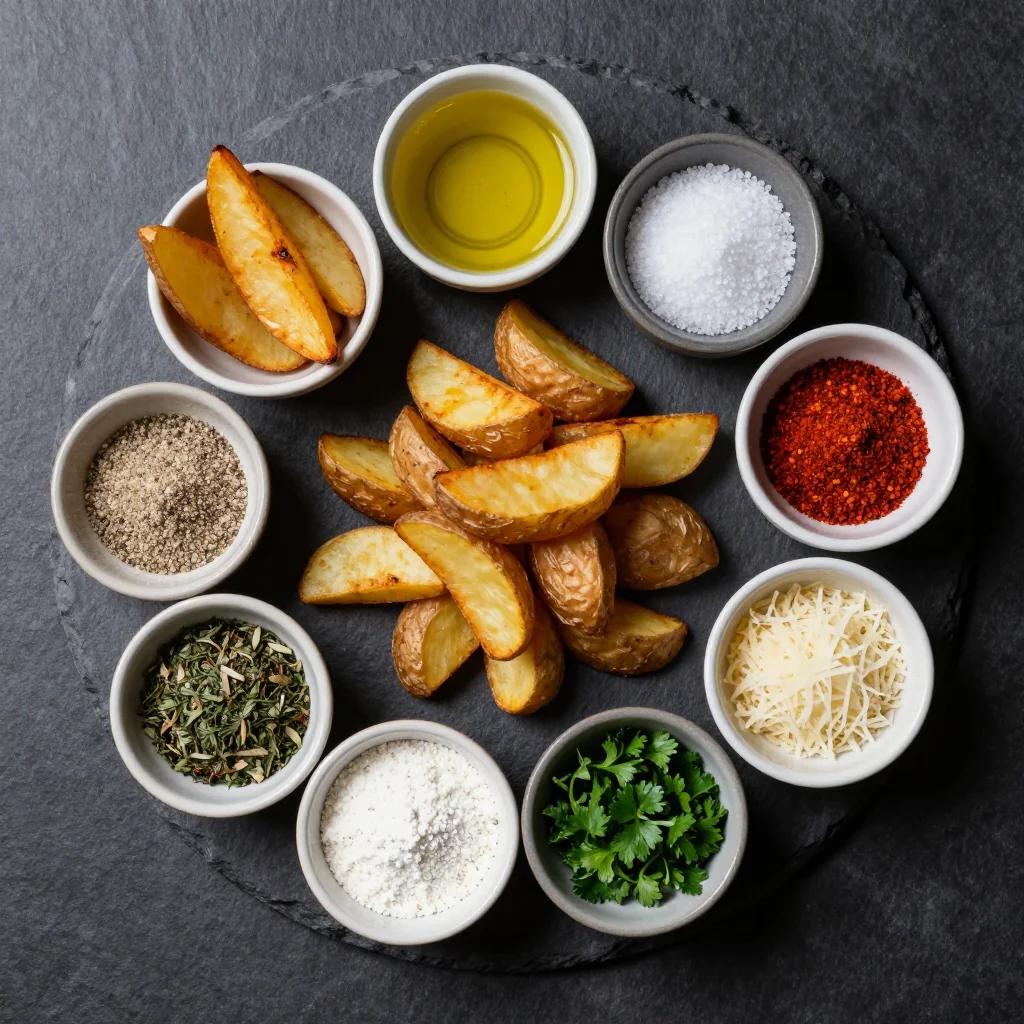
Great potato wedges start with the right spud. I use Yukon Gold for their naturally buttery flavor and thin skin—no peeling required. If you only have Russets, they’ll work, but peel them first; the thick skin can turn leathery. Look for potatoes that feel heavy and firm; avoid any with a green tinge (that’s solanine, and it tastes bitter). For the cornstarch coating, Argo or Bob’s Red Mill are ultra-fine and dissolve instantly. The olive oil should be extra-virgin but not your $40 finishing bottle—something fruity yet affordable like California Olive Ranch Everyday. Fresh rosemary is worth it; dried needles feel like pine shavings in your teeth. When you buy garlic, choose heads that still have a little give when squeezed—rock-hard cloves are old and will burn before they perfume the oil. Finally, grab a block of real Parmigiano-Reggiano and grate it yourself; the pre-shredded stuff is dusted with cellulose and refuses to melt into savory snow.
How to Make Crispy Roasted Potato Wedges for NFL Game Snacks
Preheat & Heat Your Sheet Pan
Place a rimmed half-sheet pan on the lowest oven rack and preheat to 425 °F (220 °C). Giving the metal a 10-minute head start guarantees the bottoms of the wedges sear the instant they touch down, preventing sogginess.
Cut Consistent Wedges
Wash 3 lb (1.4 kg) Yukon Gold potatoes. Halve lengthwise, place cut-side down for stability, then slice each half into 4–5 wedges about ¾-inch thick at the outside edge. Uniform size = uniform cooking.
Soak Away Surface Starch
Submerge wedges in a bowl of hot tap water for 10 minutes. This rinse removes excess starch that would otherwise glue the potatoes together and steam instead of roast. Drain and spin in a salad spinner or pat absolutely dry with a kitchen towel—moisture is the enemy of crunch.
Infuse the Oil
While the potatoes soak, combine ⅓ cup (80 ml) olive oil, 2 smashed garlic cloves, 1 tsp cracked black pepper, and 2 fresh rosemary sprigs in a small skillet. Warm over medium heat until the garlic barely sizzles, 2 minutes. Remove from heat; let the herbs steep and cool so they won’t scorch in the oven.
Seasoned Cornstarch Coating
In a gallon-size zip-top bag, shake together 2 Tbsp cornstarch, 1 ½ tsp kosher salt, 1 tsp smoked paprika, ½ tsp onion powder, and ¼ tsp cayenne. Add the dried potato wedges; seal and shake like you’re celebrating a touchdown until each wedge wears a whisper-thin jacket of seasoned starch.
Oil & Arrange
Remove the scorching sheet pan (use mitts!). Drizzle half of the infused oil onto the surface; tilt to coat. Dump the wedges on, then flip each one cut-side down for maximum contact. Drizzle the remaining oil overtop. Crowding is okay—just don’t stack.
First Roast: Drive Out Moisture
Slide the pan onto the lowest rack and roast 20 minutes. Steam will billow out—that’s good. The underside should be golden when you peek.
Flip & Crank the Heat
Turn each wedge with tongs so the pale side now faces down. Increase oven to 450 °F (235 °C). Move the pan to the center rack and roast another 15–18 minutes until the edges look like caramelized lace.
Parmesan Snow & Final Blast
Transfer wedges to a heat-proof bowl. Immediately shower with ½ cup finely grated Parmigiano-Reggiano and 1 Tbsp chopped parsley. Toss—cheese will melt on contact but stay sandy. For extra crunch, return to the hot sheet for 2 minutes; the cheese toasts into lacy frico.
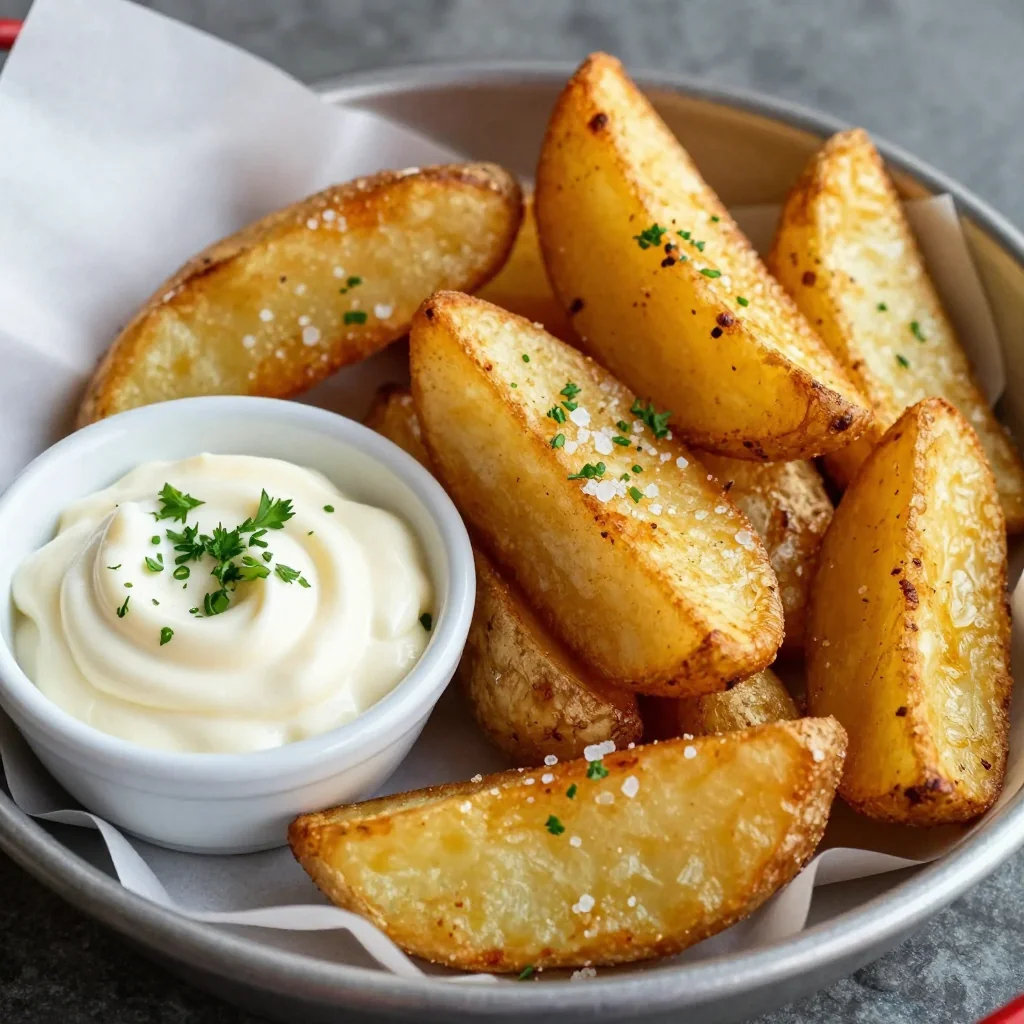
Pile onto a platter lined with parchment for easy cleanup. Offer garlic-herb aioli, smoky ketchup, or buffalo-ranch on the side. They stay shatter-crisp for 30 minutes—plenty of time to get through the first quarter.
Expert Tips
Hot Pan, Cold Potatoes
Starting with chilled wedges helps the insides steam while the exterior sears, giving you the fluffy-center/crunchy-coat contrast.
Oil Wisely
Too much oil and the wedges fry unevenly; too little and they shrivel. Stick to ⅓ cup for a half-sheet pan.
Don’t Rush the Soak
Ten minutes is the sweet spot—longer leaches flavor; shorter leaves sticky starch.
Single Layer Rule
If you’re doubling for a crowd, use two pans. Overcrowding steams instead of roasts.
Overnight Crisp Revival
Reheat day-old wedges in a 425 °F air-fryer for 5 minutes instead of the microwave—you’ll resurrect 90% of the crunch.
Season After, Too
A whisper of flaky salt right out of the oven hits your tongue first and amplifies every other flavor.
Variations to Try
- Buffalo Bleu: Replace paprika with 1 Tbsp Buffalo seasoning; finish with crumbled bleu cheese and diced celery.
- Truffle-Parm: Swap rosemary for fresh thyme, drizzle with 1 tsp white-truffle oil after roasting, and shower with black pepper.
- Southwest Street-Corn: Add 1 tsp ancho chile and ½ tsp cumin to the cornstarch. After baking, toss with mayo, cotija, lime zest, and cilantro.
- Loaded Baked: Top hot wedges with shredded cheddar, bacon bits, scallions, and a dollop of sour cream right on the platter.
- Garlic-Feta: Omit parmesan; finish with ½ cup crumbled feta, 1 tsp dried oregano, and a squeeze of lemon.
Storage Tips
Cool leftovers completely, then refrigerate in a shallow airtight container with a paper towel on top to wick steam; they’ll keep 4 days. For longer storage, freeze wedges in a single layer on a parchment-lined sheet until solid, then transfer to a zip-top bag; they’ll stay crisp-worthy for 2 months. Reheat from frozen at 450 °F for 12–15 minutes—no need to thaw. If you want to prep ahead for game day, par-roast the wedges through Step 7, cool, and refrigerate up to 24 hours; finish Steps 8–10 just before kickoff.
Frequently Asked Questions
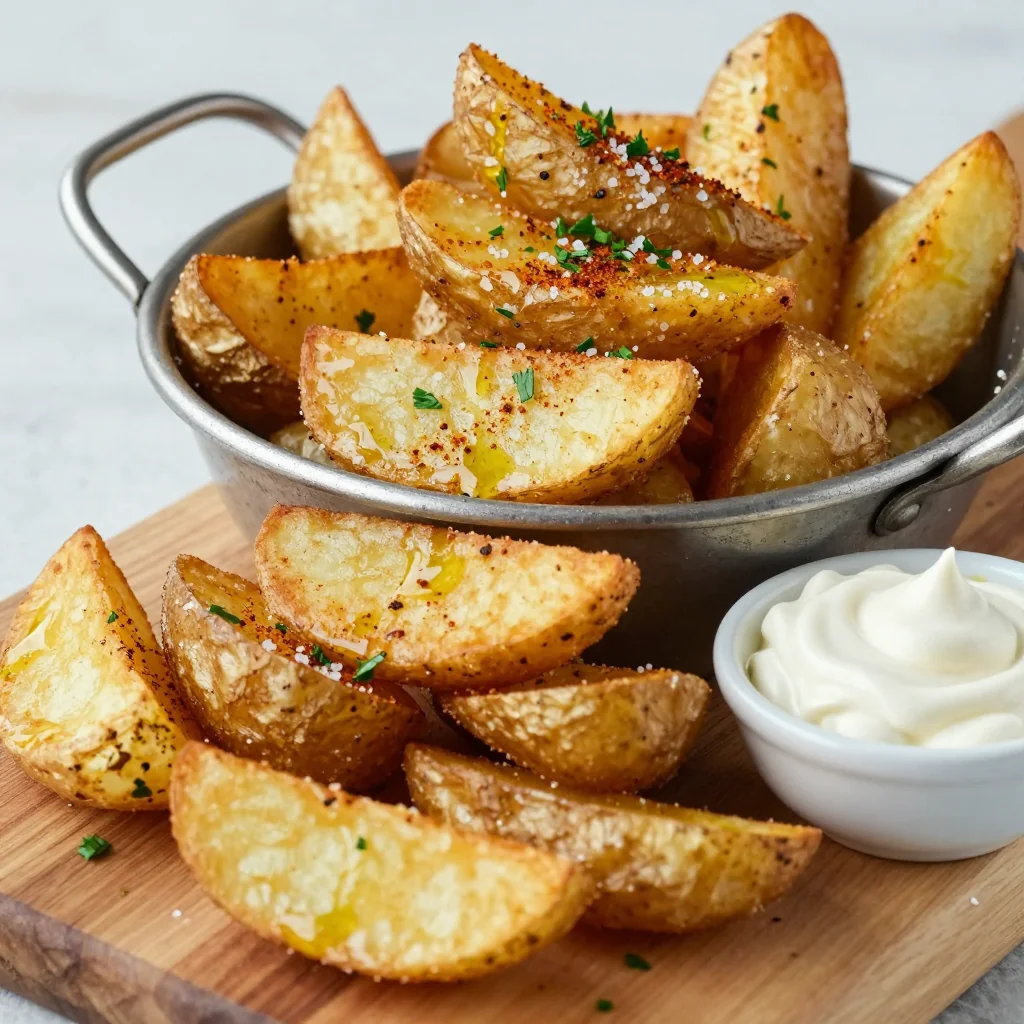
Crispy Roasted Potato Wedges for NFL Game Snacks
Ingredients
Instructions
- Preheat sheet pan: Place rimmed sheet pan on lowest rack; heat oven to 425 °F.
- Prep potatoes: Cut each potato lengthwise into 4–5 wedges; soak in hot water 10 min; spin dry.
- Infuse oil: Warm olive oil with garlic, pepper, and rosemary 2 min; cool.
- Coat: Shake cornstarch, salt, paprika, onion & cayenne in bag; add wedges; toss to coat.
- Sear: Carefully remove hot pan; oil surface. Arrange wedges cut-side down; drizzle remaining oil.
- Roast & flip: Bake 20 min, flip, raise heat to 450 °F, bake 15–18 min more.
- Finish: Toss hot wedges with parmesan and parsley. Optional 2-min pan return for extra frico.
- Serve: Pile high with your favorite game-day dip and watch them disappear.
Recipe Notes
Wedges stay crisp up to 30 min uncovered; hold longer in a 200 °F oven on a wire rack. Reheat at 425 °F for 6 min to restore crunch.