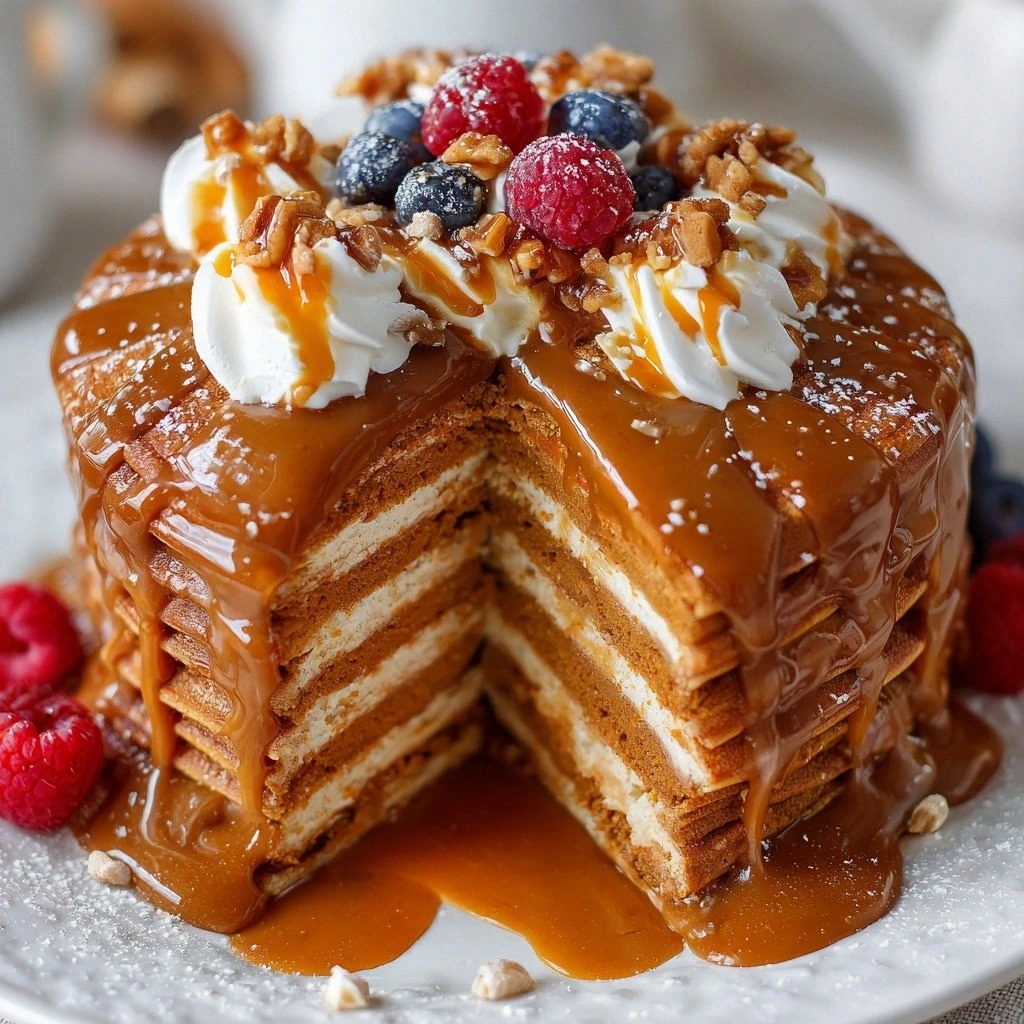
Picture this: you’re in the middle of a Saturday brunch, the kitchen is a whirlwind of flour, milk, and the faint scent of vanilla, and you’re staring at a stack of pancakes that look like they’re about to collapse. I’ve been there—my pancakes came out flat, the batter was too thick, and the Biscoff spread I’d added seemed to dissolve into a greasy mess. That disastrous morning was the spark that lit a fire in my culinary soul, and it led me to a revelation: a pancake stack that feels like a decadent dessert, yet is perfectly balanced for breakfast or brunch.
I’m talking about a batter that is airy enough to float on your tongue, a glaze that coats each bite like velvet, and a finish that’s so sweet it feels indulgent without being over the top. The first thing that struck me was how the Biscoff spread, with its caramel‑toffee flavor, could be folded into the batter and also used as a topping. The result? Pancakes that are crisp on the edges, tender in the middle, and coated with a glossy, caramelized glaze that melts in your mouth. I dare you to taste this and not go back for seconds; the moment you bite, you’ll hear that satisfying crackle of the outer crust and feel the buttery richness spread across your palate.
Most pancake recipes rely on plain sugar and butter, but this version elevates the humble stack into a luxurious treat. The Biscoff spread isn’t just an add‑in; it’s the star that carries the flavor profile, turning each pancake into a caramel‑spiced, nutty bite that feels like a slice of dessert. If you’ve ever struggled to keep pancakes from sticking or wanted a sweet, yet balanced, flavor, you’re not alone—this recipe is here to rescue you from the bland and the burnt.
And here’s the twist that makes this recipe unforgettable: the batter is mixed with a splash of buttermilk to bring a subtle tang that balances the sweetness, and the Biscoff spread is folded in just before the batter hits the griddle, ensuring that every pancake has a hint of caramelized glaze. By the end, you’ll wonder how you ever made pancakes any other way. Let me walk you through every single step—by the end, you’ll wonder how you ever made it any other way.
What Makes This Version Stand Out
- Flavor: The caramelized Biscoff spread infuses every bite with a deep, nutty sweetness that feels like a dessert on a breakfast plate. It’s not overpowering, but it’s unmistakably present, turning ordinary pancakes into a memorable experience.
- Texture: The batter’s airy consistency, thanks to the buttermilk and baking powder, gives you that light, cloud‑like interior while the edges crisp to a golden perfection.
- Ease: All the steps can be completed in under 45 minutes, and the recipe scales effortlessly for a crowd or a quick solo treat.
- Versatility: Whether you’re a Biscoff fan or just looking for a new sweet twist, the recipe can be adapted with different spreads or toppings without compromising the core flavor.
- Visual Appeal: The glossy glaze and stacked layers make for Instagram‑worthy presentation that’s as delightful to look at as it is to eat.
- Make‑ahead Friendly: The batter can be prepared ahead and kept in the refrigerator, and the pancakes reheat beautifully, preserving the crispness and flavor.
- Ingredient Quality: Using high‑quality Biscoff spread and fresh eggs ensures that the final product isn’t just tasty, but also wholesome.
- Audience Response: Friends and family who taste these will often ask for a second plate—this is hands down the best version you’ll ever make at home.
Alright, let’s break down exactly what goes into this masterpiece…
Inside the Ingredient List
The Flavor Base
All-purpose flour is the backbone of these pancakes, giving them a light, tender crumb. It’s the canvas that absorbs the caramel flavor of the Biscoff spread and holds the batter together. If you skip it, the pancakes will fall apart and lack structure. For best results, sift the flour to aerate it, which also helps keep the pancakes fluffy.
The Sweetener
Sugar adds a subtle sweetness that balances the caramel notes of the Biscoff spread. It also helps the pancakes brown evenly, giving that desirable golden crust. If you prefer a lower sugar option, replace it with a natural sweetener like maple syrup in the same quantity, but be aware that the color may differ slightly.
The Leavening Agent
Baking powder is the secret to a fluffy interior. It reacts with the acidic buttermilk to produce carbon dioxide bubbles that lift the batter. If you use too little, the pancakes will be dense; if you overdo it, they may taste soapy. Measure precisely for consistent results.
The Seasoning
Salt is the quiet hero that elevates all the flavors. A pinch is enough to bring out the richness of the Biscoff and the butter. Skipping salt will leave the pancakes bland and flat, so keep that pinch on hand.
The Liquid
Milk adds moisture and richness; using buttermilk adds a subtle tang that brightens the batter. The acidity of buttermilk also reacts with baking powder for better rise. If you’re lactose intolerant, a dairy‑free milk works fine, but the texture may be slightly different.
The Binder
The large egg is the glue that holds everything together and adds a silky texture. It also enriches the batter with protein, making the pancakes more substantial. If you’re vegan, replace the egg with a flaxseed “egg” or a commercial egg replacer.
The Fat
Melted butter provides a buttery flavor and keeps the pancakes moist. It also helps create a golden crust on the griddle. If you’re looking for a lighter version, use a neutral oil, but you’ll lose some of the buttery depth.
The Unexpected Star
Biscoff spread is the star that turns ordinary pancakes into a caramel‑toffee masterpiece. Its unique flavor profile—sweet, nutty, slightly spicy—adds depth without overpowering the batter. If you don’t have Biscoff, a caramel butter or hazelnut spread can be a suitable substitute, but the taste will differ.
The Final Flourish
Additional Biscoff spread is used for serving, creating a glossy glaze that coats each pancake. It also adds an extra layer of flavor that makes the stack feel indulgent. If you prefer a lighter finish, drizzle a thin line of honey or maple syrup instead.
Optional Toppings
Whipped cream, chocolate chips, or fresh fruit can take this stack to the next level. Each topping adds a contrasting texture or flavor that enhances the overall experience. For a healthier option, use fresh berries and a light dusting of powdered sugar.
Everything's prepped? Good. Let’s get into the real action…
The Method — Step by Step
- In a large mixing bowl, combine the flour, sugar, baking powder, and salt. Whisk them together until the mixture is smooth and free of lumps. This dry blend forms the foundation of our batter and ensures even distribution of leavening agents.
- In a separate bowl, whisk the milk and the egg until fully blended. Add the melted butter and stir until the mixture is silky. The wet components must be fully incorporated before being mixed with the dry ingredients.
- Pour the wet mixture into the dry mixture and stir gently with a spatula until just combined. It’s okay if a few small lumps remain; overmixing will develop gluten and make the pancakes tough.
- Fold in the Biscoff spread until the batter turns a uniform light brown color. The spread should be fully blended, giving the batter a subtle caramel hue. This step is crucial for achieving the glossy glaze that defines the final stack.
- Let the batter rest for 5 minutes. This pause allows the gluten to relax and the leavening agents to activate, resulting in a lighter texture. During this time, preheat a non‑stick skillet or griddle over medium‑low heat and lightly grease it with butter or oil.
- Pour about 1/4 cup of batter onto the skillet for each pancake. The batter should spread into a circle about 6 inches in diameter. Watch for bubbles forming on the surface; when they start to pop, it’s time to flip.
- Flip the pancake gently and cook for an additional 1–2 minutes until the second side is golden brown. The edges should lift slightly from the pan, indicating the pancake is ready to be removed.
- Place the cooked pancake on a plate and repeat the process with the remaining batter. Keep the pancakes warm in a low oven (around 200°F) while you finish cooking the rest.
- Once all pancakes are cooked, spread a thin layer of Biscoff spread on the top of each stack. The warm pancakes will melt the spread slightly, creating a glossy, caramelized glaze.
- Serve immediately with optional toppings such as whipped cream, chocolate chips, or fresh fruit. The stack can be presented on a wooden board or a fancy platter for a show‑stopping look.
Insider Tricks for Flawless Results
The Temperature Rule Nobody Follows
Many cooks set the griddle on high heat, hoping for a quick sear. The truth is, medium‑low heat allows the pancakes to cook evenly without burning the outside. I’ve found that a temperature of 350°F (175°C) works best for a consistent golden crust. If you’re using a cast iron skillet, preheat it for at least 5 minutes before adding the batter.
Why Your Nose Knows Best
As soon as the batter hits the pan, you’ll smell a faint toasty aroma. That scent is your cue that the pancakes are forming a golden crust. If the smell is too strong or burnt, reduce the heat immediately. Trusting your nose can save you from a batch of over‑cooked pancakes.
The 5-Minute Rest That Changes Everything
Letting the batter rest for 5 minutes before cooking allows the gluten to relax and the leavening agents to fully activate. I’ve seen people skip this step and end up with dense, chewy pancakes. The rest also helps the Biscoff spread to settle, ensuring an even glaze.
Use a Non‑Stick Skillet for a Smooth Flip
A quality non‑stick skillet or griddle reduces the need for excess butter or oil. This not only keeps the pancakes lean but also makes flipping easier. If you don’t have a non‑stick surface, a well‑seasoned cast iron pan works just as well.
Stack, Don’t Stack
When assembling the stack, place the pancakes gently on top of one another. The Biscoff glaze will help them adhere, but avoid pressing too hard or they’ll crumble. A light hand preserves the airy layers and ensures a stable stack.
Creative Twists and Variations
This recipe is a playground. Here are some of my favorite ways to switch things up:
Chocolate Biscoff Crunch
Swirl in a handful of dark chocolate chips into the batter before cooking. The chocolate melts into pockets of gooey richness, adding a delightful crunch with every bite. It’s a perfect treat for chocolate lovers.
Nutty Banana Boost
Add sliced ripe bananas into the batter and top the stack with chopped walnuts. The banana provides natural sweetness, while the walnuts add a satisfying crunch and nutty flavor that complements the Biscoff.
Berry‑Infused Delight
Fold fresh blueberries or strawberries into the batter, and finish with a drizzle of raspberry coulis. The fruit’s tartness balances the caramel sweetness, creating a vibrant, colorful stack.
Spiced Cinnamon Swirl
Incorporate a teaspoon of ground cinnamon into the dry mixture. The warm spice elevates the caramel notes and adds depth, making the pancakes feel like a cozy, spiced dessert.
Vegan Variation
Replace the egg with a flaxseed “egg” and use oat milk instead of dairy milk. The resulting pancakes are light, fluffy, and completely plant‑based, while still delivering the Biscoff’s signature flavor.
Storing and Bringing It Back to Life
Fridge Storage
Store cooked pancakes in an airtight container in the refrigerator for up to 3 days. Layer each pancake with parchment paper to prevent sticking. When ready to serve, reheat in a skillet over low heat until warmed through.
Freezer Friendly
Place pancakes on a baking sheet and freeze until solid, then transfer to a freezer bag. They can be stored for up to 2 months. Reheat by microwaving for 30 seconds or baking at 350°F for 10 minutes.
Best Reheating Method
To revive the crispness, add a splash of water to the skillet before reheating. The steam will loosen the glaze, bringing back the fresh, buttery texture. Avoid over‑heating, or the pancakes will become dry.