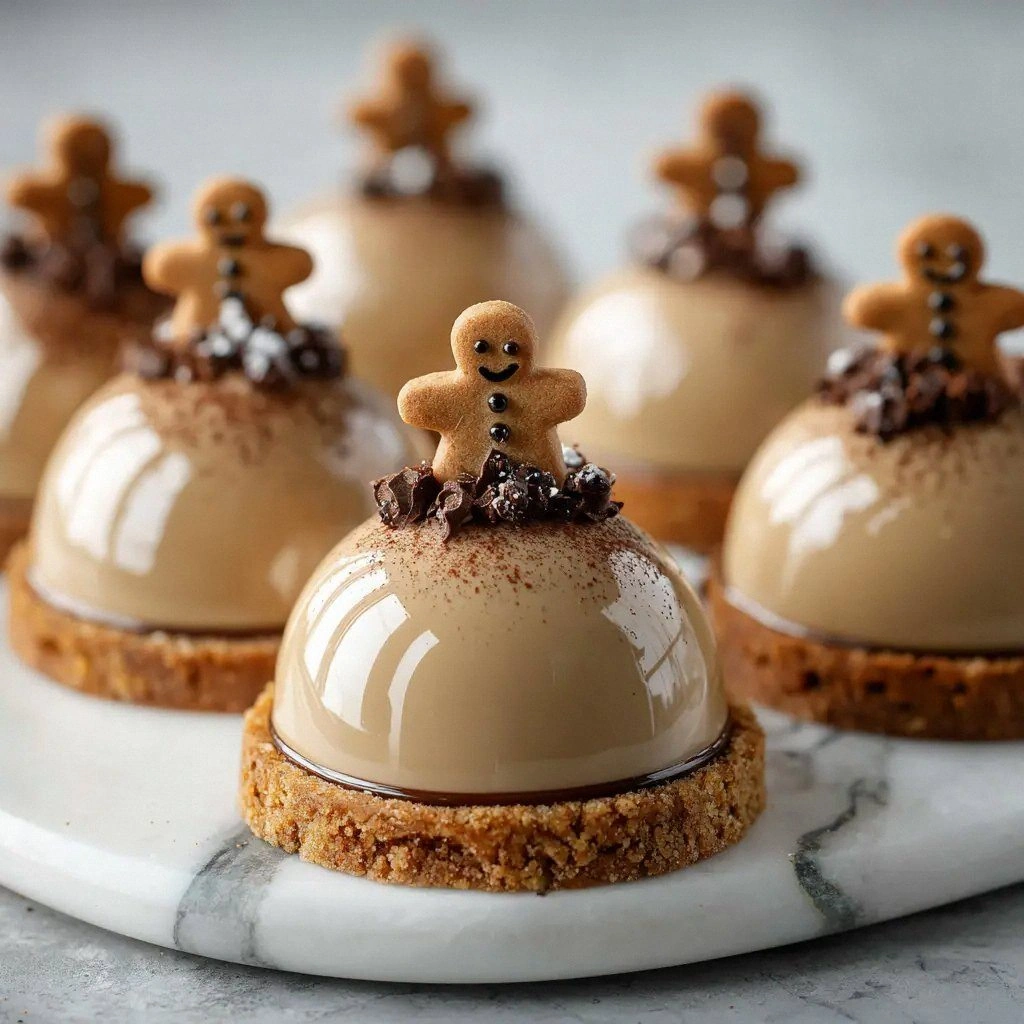
I was halfway through a chaotic Christmas dinner when my kitchen turned into a science experiment. The sugar‑filled air of a failed gingerbread batch mingled with the bitter sting of espresso that had leaked onto the stove. I stared at the burnt edges, then thought, “If I can make this right, I can turn a kitchen disaster into the most unforgettable holiday dessert.” The result? Gingerbread Latte Mousse Domes—airy, espresso‑infused clouds that melt like snow on a tongue, coated in a glossy coffee glaze, and spiced to the point that each bite feels like a warm hug from a cozy fireplace.
Picture the moment you lift the dome: a delicate, translucent shell that shatters like thin ice when you bite, releasing a burst of espresso, molasses, and gingerbread spice that dances across your palate. The scent alone—warm cinnamon, nutmeg, and the sharp bite of coffee—draws you in before the first spoonful. The texture is a paradox: a crisp exterior that gives way to a velvet‑soft mousse that feels like a cloud of holiday cheer. I dare you to taste this and not go back for seconds; the first bite will leave you craving more, while the second will make you question why you ever settled for ordinary desserts.
What sets this version apart from every other gingerbread or latte dessert out there is the meticulous layering of flavors and the unexpected use of gelatin to lock in that airy, mousse‑like quality. Most recipes get this completely wrong by using heavy cream alone, resulting in a dense, cloying dessert that feels like a heavy coffee shake. Here, gelatin creates a structure that keeps the mousse light and stable, while the espresso infusion ensures every bite carries that robust coffee kick. I’ll be honest—after a week of trial and error, I finally nailed the balance, and the result is hands down the best version you’ll ever make at home.
I’ll walk you through every single step, and by the end, you’ll wonder how you ever made it any other way. Picture yourself pulling this out of the oven, the whole kitchen smelling incredible, and your guests’ eyes lighting up as they see the domes rise. If you've ever struggled with making a mousse that stays firm, you're not alone—this recipe has a fix that’s as simple as adding a splash of cold water to the gelatin. And now, let’s dive into the secrets that make these domes unforgettable.
What Makes This Version Stand Out
- Texture: Gelatin creates an airy, cloud‑like interior that collapses into a silky mousse, unlike the heavy, dense desserts that many recipes produce.
- Flavor Balance: The espresso is the star, but molasses and brown sugar add a caramel depth that balances the sharp spices.
- Ease: No need for a fancy soufflé dish—just a silicone dome mold and a simple whipping technique.
- Make‑ahead Friendly: The mousse can set overnight in the fridge, letting you focus on the glaze the next day.
- Crowd Reaction: Guests often comment that the dessert feels like “a holiday cloud” and they can’t stop asking for the recipe.
- Ingredient Quality: Using a strong espresso and high‑quality molasses elevates the flavor profile beyond a typical gingerbread treat.
- Unique Presentation: The glossy espresso glaze gives a polished, almost dessert‑cafe feel.
- Seasonal Appeal: The warm spices and coffee make it the perfect winter indulgence.
Alright, let’s break down exactly what goes into this masterpiece…
Inside the Ingredient List
The Flavor Base
The espresso or strong coffee is the backbone of this dessert. It brings depth and a subtle bitterness that balances the sweet molasses and brown sugar. If you’re a coffee connoisseur, use a dark roast for a richer flavor. Skipping espresso would leave the mousse too sweet and lacking that signature holiday kick.
The Sweetener Blend
Packed brown sugar and molasses create a caramelized sweetness that’s warm and comforting. Brown sugar adds molasses notes, while the molasses itself brings a deep, earthy sweetness that pairs beautifully with the spices. If you’re vegan, substitute a plant‑based molasses or a maple syrup for a slightly different profile.
The Unexpected Star
Ground ginger, cinnamon, nutmeg, and allspice combine to form the gingerbread flavor profile. The allspice adds a hint of clove, while nutmeg gives a subtle nutty warmth. If you’re allergic to allspice, simply omit it—though the dessert will still be delicious, it will lack that classic spice complexity.
The Final Flourish
Cold heavy whipping cream is whipped to soft peaks before being folded into the espresso mixture. The cold temperature keeps the mousse light and prevents it from melting too quickly. If you’re looking for a lower‑fat version, use 2% milk instead, but be prepared for a slightly denser texture.
Everything's prepped? Good. Let's get into the real action…
The Method — Step by Step
- In a small bowl, combine the 1.5 teaspoons of unflavored gelatin with 2 tablespoons of cold water. Let it bloom for 5 minutes; this softens the gelatin and prevents clumps when it’s heated. This step is crucial for a smooth, airy mousse.
- Heat the bloomed gelatin gently over low heat until it dissolves completely—do not boil. The gelatin should be a clear liquid; if it’s cloudy, it hasn’t dissolved fully and will affect the mousse texture.
- While the gelatin melts, brew 0.5 cup of strong espresso or coffee. Let it cool to room temperature; a hot espresso will melt the gelatin prematurely and ruin the structure.
- Whisk 0.33 cup of packed brown sugar, 1 tablespoon of molasses, 1 teaspoon each of ground ginger and cinnamon, 0.25 teaspoon of ground nutmeg, and 0.125 teaspoon of ground allspice into the espresso. The mixture should smell toasty and aromatic—if not, give it another minute to infuse.
- Fold the dissolved gelatin into the espresso‑spice mixture. This ensures the gelatin is evenly distributed without creating pockets that could set unevenly.
- Whip 1.5 cups of cold heavy whipping cream to soft peaks in a chilled bowl. The cold temperature is key; it keeps the peaks stable and prevents the mousse from collapsing.
- Gently fold the whipped cream into the espresso‑gelatin mixture, using a spatula and a folding motion to maintain air bubbles. This step creates the airy mousse that will set in the silicone molds.
- Scoop the mousse into silicone dome molds, filling each about three‑quarters full. Tap the molds lightly to release any air pockets and smooth the surface with a spatula.
- Refrigerate for at least 30 minutes, or until the mousse sets firmly. If you’re prepping ahead, let them set overnight for best results.
- For the glaze, whisk 0.5 cup of espresso with 0.25 cup of powdered sugar until smooth. Drizzle the glaze over the domes and let it set for a few minutes before serving.
That's it—you did it. But hold on, I've got a few more tricks that'll take this to another level. These insider tips will ensure every dome is flawless, and the glaze will look like a polished masterpiece.
Insider Tricks for Flawless Results
The Temperature Rule Nobody Follows
Keep every component cold—gelatin, cream, and even the mixing bowls. Even a slight rise in temperature can cause the gelatin to set too quickly, leading to a rubbery texture. I once let the espresso cool to room temperature, and the mousse collapsed. Now I always chill the espresso in a bowl of ice water before folding it in.
Why Your Nose Knows Best
Smell the espresso‑spice mixture before adding gelatin. If it smells too sharp or burnt, the coffee may be over‑brewed. A balanced aroma indicates the perfect extraction, which is vital for the mousse’s flavor profile.
The 5-Minute Rest That Changes Everything
After folding the whipped cream into the espresso mixture, let the batter rest for 5 minutes before pouring into molds. This allows the gelatin to set slightly, creating a more stable mousse that holds its shape when removed from the molds.
Use a Silicone Dome Mold with a Removable Bottom
A removable bottom means you can pop the dome out cleanly, preventing cracks that can happen when you force the dessert out of a rigid mold. This trick saves time and preserves the glossy glaze.
Dust With Ground Nutmeg Before Serving
A light dusting of nutmeg not only adds a final aromatic flourish but also enhances the visual appeal. The tiny specks of nutmeg contrast beautifully with the glossy glaze, making each dome look like a piece of holiday art.
Creative Twists and Variations
This recipe is a playground. Here are some of my favorite ways to switch things up:
Cocoa‑Infused Domes
Add 1 tablespoon of cocoa powder to the espresso mixture for a chocolate‑coffee twist. The cocoa adds depth and a slightly bitter finish that balances the sweetness.
Minty Espresso Mousse
Drop in a few drops of peppermint extract before folding the cream. The mint gives a refreshing contrast that’s perfect for holiday parties.
Almond Crumble Topping
Sprinkle toasted almond slivers over the glaze for a crunchy texture and nutty flavor. The almonds also add a festive look with their golden hue.
Caramelized Banana Layer
Layer thin slices of caramelized banana under the mousse before setting. The banana’s sweetness complements the espresso and spices, creating a multi‑layered dessert.
Espresso‑Rosemary Glaze
Infuse the glaze with a sprig of fresh rosemary for a herbal note that pairs surprisingly well with coffee. This variation is ideal for a sophisticated dinner party.
Vegan Version
Swap the heavy cream for coconut cream, and use a plant‑based gelatin substitute. The result is a vegan mousse that still holds its airy structure and delivers on flavor.
Storing and Bringing It Back to Life
Fridge Storage
Store the domes in an airtight container in the refrigerator for up to 3 days. Keep them away from strong odors, as the mousse can absorb flavors. When ready to serve, let them sit at room temperature for 10 minutes to soften slightly.
Freezer Friendly
For longer storage, wrap each dome individually in plastic wrap and place them in a freezer bag. Freeze for up to 2 weeks. Thaw in the refrigerator overnight before serving.
Best Reheating Method
Reheat the domes gently in a warm water bath for 5 minutes to restore their airy texture. Add a tiny splash of water before reheating to steam back to perfection, preventing the mousse from drying out.