Picture this: I’m standing in my kitchen, a frantic stack of grocery bags beside me, and a half‑baked casserole that looks like it could double as a work of abstract art. The oven is on, the timer is set, but the aroma is… off. The chicken is dry, the vegetables are soggy, and the sauce has the texture of melted butter. I’ve tried everything from stovetop to microwave, but nothing has ever felt like the perfect, comforting meal that also fits my gluten‑free lifestyle.
That night, I decided to throw caution to the wind and experiment with a slow cooker. I grabbed the ingredients that had been sitting in my pantry for weeks, tossed them together, and set the timer for a low‑heat marathon. The moment the slow cooker hummed to life, the kitchen filled with the rich scent of simmering garlic, onions, and the subtle warmth of thyme. The sound of the bubbling pot was like a lullaby that promised a hearty, melt‑in‑your‑mouth finish. The anticipation was electric—this could be the culinary breakthrough I’d been waiting for.
Fast forward to the moment I pulled the pot out of the slow cooker: a golden, bubbling casserole with a glossy sauce that clung to every piece of chicken like velvet. The vegetables were tender yet retained a faint bite, and the chicken was shredded with the perfect balance of juiciness and flavor. I took a bite and the flavors exploded—smoky paprika, a hint of lemon, and a subtle sweetness from the tomato paste that danced on my tongue. I was honestly shocked at how simple the ingredients were, yet how complex the flavor profile turned out to be. I knew instantly that this was the ultimate version of a gluten‑free chicken casserole, and I couldn’t wait to share it with you.
If you’ve ever struggled with a slow cooker that ends up bland or dry, you’re not alone—and I’ve got the fix. I dare you to taste this and not go back for seconds. This is hands down the best version you’ll ever make at home. Stay with me here—this is worth it. Let me walk you through every single step—by the end, you’ll wonder how you ever made it any other way.
What Makes This Version Stand Out
- Flavor Depth: The combination of smoked paprika, fresh thyme, and a splash of lemon juice creates layers of complexity that make each bite feel like a new discovery. It’s not just seasoning; it’s a flavor orchestra that plays in harmony. The result is a sauce that’s both comforting and exciting.
- Texture Balance: Slow cooking breaks down the chicken into tender, shreddable pieces while keeping the vegetables crisp enough to provide contrast. The sauce thickens just enough to coat without becoming gluey. The final dish feels like a cozy hug for your taste buds.
- Gluten‑Free Integrity: By using a gluten‑free flour blend as a thickener, you avoid the need for wheat‑based roux, which can be a game‑changer for those with sensitivities. The flour also gives the sauce a subtle body that feels substantial. No hidden gluten, no compromise.
- Time Efficiency: While it’s a slow‑cooker recipe, the prep time is minimal—just a few minutes of chopping and searing. The rest is hands‑off, letting you focus on other tasks. It’s a perfect solution for busy weeknights.
- Versatility: The base recipe is a canvas that welcomes additions—from roasted red peppers to a splash of white wine. You can adapt it for different dietary needs or flavor profiles. It’s a recipe that grows with your culinary curiosity.
- Crowd‑Pleaser: Friends and family rave about the comforting flavors, and the dish pairs wonderfully with a simple green salad or a side of quinoa. The presentation is rustic yet elegant, making it suitable for both casual dinners and special occasions. It’s guaranteed to impress.
- Make‑Ahead Potential: The dish keeps well in the fridge and can be reheated without losing flavor or texture. It’s the ideal meal prep option for the week, and the slow‑cooker method ensures it stays moist and flavorful. This is the kind of dish that deserves a spot in your freezer.
Inside the Ingredient List
The Flavor Base
The foundation of this casserole begins with the aromatics: diced onion, minced garlic, and sliced carrots. These ingredients release their sweet, earthy notes as they cook, creating a savory backdrop that elevates every bite. If you skip them, the dish becomes a flat, one‑dimensional experience. The key is to let them soften slowly so they mingle with the other flavors.
The Texture Crew
Chicken thighs are the star of the show, offering juicy, tender meat that shreds effortlessly. Their higher fat content keeps the dish moist, even after long cooking times. If you’re in a hurry, boneless skinless breasts can be used, but you’ll need to watch the cooking time closely to avoid drying out. The vegetables—celery and bell pepper—add a pleasant crunch that contrasts the tender chicken.
The Unexpected Star
Gluten‑free flour is the unsung hero that gives the sauce its silky body. It’s a simple substitution for traditional flour, but it creates a thicker, richer sauce that clings to the meat. If you’re vegan or dairy‑free, you can replace the flour with a gluten‑free cornstarch slurry. This small tweak maintains the same mouthfeel without compromising the dish’s integrity.
The Final Flourish
A splash of lemon juice and a pinch of fresh rosemary add brightness and depth to the casserole. The acidity cuts through the richness, while rosemary provides an aromatic finish that lingers on the palate. If you prefer a sweeter profile, a teaspoon of honey or maple syrup can be added. This final touch transforms the dish from simple to unforgettable.
Everything's prepped? Good. Let's get into the real action...
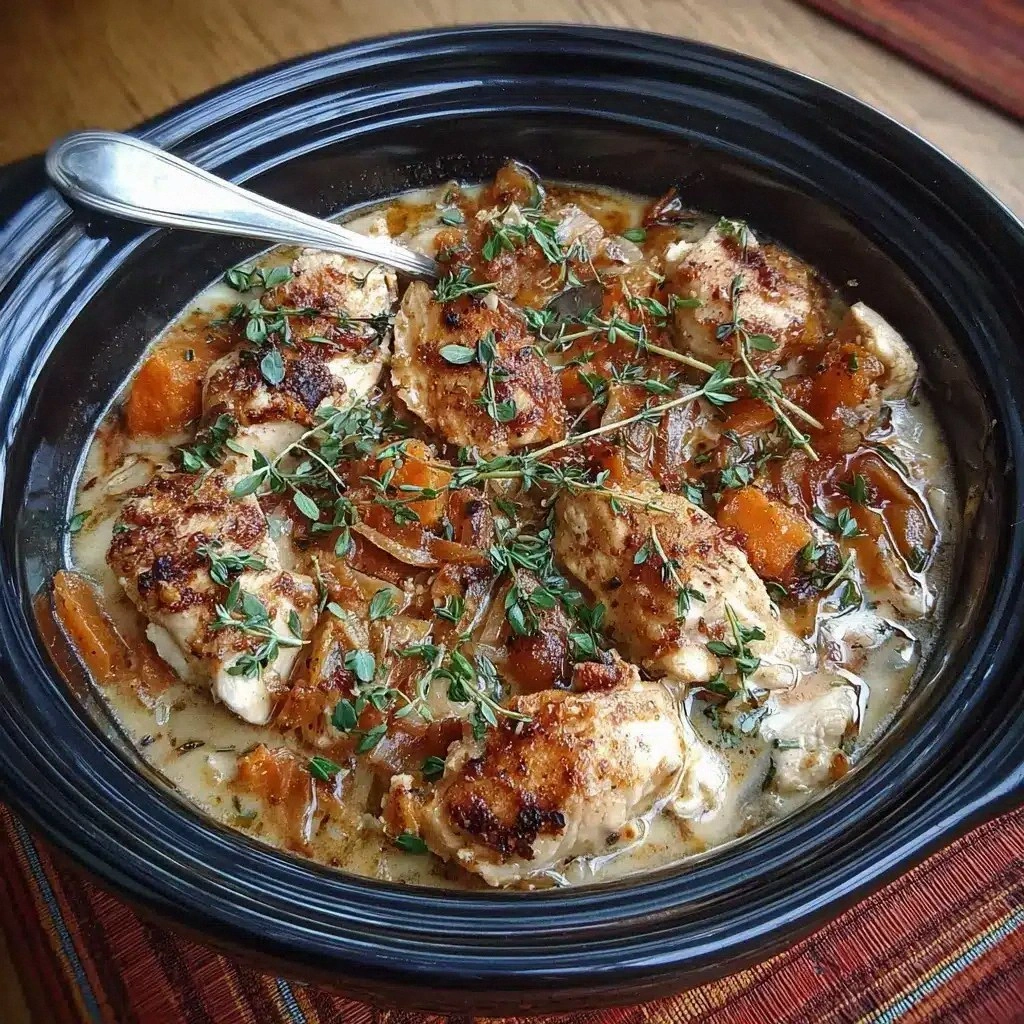
The Method — Step by Step
- First, heat a drizzle of olive oil in a skillet over medium‑high heat. Add the diced onions and carrots, sautéing until they develop a light golden hue. The aromatics should release their sweetness, creating a fragrant base that will permeate the slow cooker. This step is crucial for building depth; skipping it makes the dish feel thin.
- Next, season the chicken thighs with salt, pepper, paprika, thyme, and rosemary. Pat them dry to ensure a good sear. Place the chicken in the skillet, searing each side for about 2 minutes until a golden crust forms. The seared surface locks in juices and adds a savory layer that’s impossible to replicate with slow cooking alone.
- Transfer the seared chicken to the slow cooker. Surround it with the sautéed vegetables, minced garlic, and a splash of chicken broth. Add the tomato paste and stir until the paste is fully incorporated. This mixture creates the flavorful sauce that will slowly develop during the cooking cycle.
- Cover the slow cooker and set it to low for 4 hours or high for 2 hours. The low setting allows the flavors to meld slowly, while the high setting is great for a quicker dinner. During the first hour, check that the liquid hasn’t evaporated; add a little more broth if necessary. Consistency is key: you want a sauce that coats the chicken without being watery.
- After the cooking time is complete, stir the casserole gently to distribute the sauce evenly. If the sauce appears too thin, you can stir in the gluten‑free flour slurry (1 tablespoon flour mixed with 2 tablespoons water). Let it simmer for an additional 10 minutes to thicken. The result should be glossy, velvety, and cling to every piece of chicken.
- Now, add a tablespoon of fresh lemon juice and a sprinkle of shredded mozzarella or parmesan cheese. The cheese melts into the sauce, adding a creamy texture that balances the acidity of the lemon. Stir until the cheese is fully melted and the sauce is silky. This final touch elevates the dish from comforting to decadent.
- Let the casserole rest for 5 minutes after turning off the slow cooker. This rest period allows the flavors to settle and the sauce to thicken slightly. The chicken will be even more tender after this brief pause. If you’re in a rush, you can serve immediately, but the rest period is worth the extra five minutes.
- Serve the casserole hot, spooning generous amounts of sauce over each portion. Pair it with a crisp green salad or a side of quinoa for a balanced meal. Garnish with fresh parsley or a wedge of lemon for an extra pop of color and freshness. The dish is both hearty and elegant, making it perfect for any occasion.
- If you’re planning to store leftovers, let the casserole cool to room temperature before refrigerating. Divide into airtight containers and keep in the fridge for up to 4 days. When reheating, add a splash of water or broth to keep the sauce moist. This dish tastes just as good the next day, if not better.
That's it — you did it. But hold on, I've got a few more tricks that'll take this to another level. These insider tips will help you fine‑tune the dish and avoid common pitfalls.
Insider Tricks for Flawless Results
The Temperature Rule Nobody Follows
Many people set their slow cooker to high and wait for the food to finish, but low heat is the secret to tenderness. The slow, steady heat allows collagen in the chicken to break down into gelatin, creating a melt‑in‑your‑mouth texture. If you must use high, reduce the time to 2 hours and monitor closely. This subtle adjustment can make the difference between a dry chicken and a succulent masterpiece.
Why Your Nose Knows Best
Before you even taste the dish, give it a sniff. The aroma should be rich, with hints of smoked paprika, garlic, and a bright citrus lift. If it smells underwhelming, it’s a sign that the sauce needs more seasoning or that the tomatoes haven’t caramelized enough. Trust your nose; it’s the most reliable flavor sensor you have.
The 5‑Minute Rest That Changes Everything
After you turn off the slow cooker, let the dish sit undisturbed for five minutes. This pause allows the sauce to thicken slightly and the flavors to marry. It also prevents the chicken from drying out as the residual heat continues to cook it gently. Skipping this step is a small sacrifice that can affect the overall experience.
Use Fresh Herbs, Not Dried
While dried herbs are convenient, fresh thyme and rosemary bring a brighter, more vibrant flavor to the dish. Add them at the beginning of the slow cooking process so they infuse the sauce fully. If you only have dried, use half the amount, as dried herbs are more potent. Fresh herbs give the casserole that restaurant‑level freshness.
Add a Touch of Sweetness
A teaspoon of honey or maple syrup can balance the acidity from the lemon and tomato paste. This small addition creates a subtle caramelization on the chicken’s surface during the sear. If you’re watching calories, skip this step; the dish will still be deliciously balanced. Sweetness is optional but recommended for a well‑rounded flavor.
Creative Twists and Variations
This recipe is a playground. Here are some of my favorite ways to switch things up:
Mediterranean Medley
Swap the carrots and celery for diced zucchini and cherry tomatoes. Add a handful of Kalamata olives and a pinch of oregano. This version brings a bright, tangy flavor that pairs wonderfully with a side of couscous. It’s perfect for a light, summery dinner.
Asian Fusion
Replace the chicken broth with low‑sodium soy sauce and add a tablespoon of grated ginger. Finish with a splash of sesame oil and a sprinkle of toasted sesame seeds. The sauce takes on a savory, umami profile that’s both comforting and exotic. Serve over steamed rice for a complete meal.
Mexican Fiesta
Introduce diced bell peppers, corn kernels, and a pinch of cumin. Finish with a squeeze of lime and a handful of fresh cilantro. The dish becomes a vibrant, colorful bowl that’s perfect for a family gathering. Add a side of guacamole for extra indulgence.
Creamy Alfredo Twist
Replace the tomato paste with a half cup of gluten‑free Alfredo sauce. Add a splash of heavy cream for extra richness. The sauce turns silky, buttery, and indulgent. Pair with gluten‑free fettuccine for a decadent dinner.
Herb‑Infused Chicken
Marinate the chicken in a mixture of olive oil, lemon zest, rosemary, and thyme for at least an hour before cooking. This pre‑marinade deepens the herbaceous flavor throughout the dish. The result is a chicken that’s fragrant and flavorful from the first bite.
Spicy Sriracha Kick
Add a tablespoon of sriracha or your favorite hot sauce to the slow cooker. The heat will balance the sweetness of the tomato paste and the richness of the chicken. Serve with a side of cool cucumber salad to tame the spice. This version is a crowd‑pleaser for those who love a fiery kick.
Storing and Bringing It Back to Life
Fridge Storage
Cool the casserole to room temperature before placing it in the refrigerator. Use airtight containers to keep the sauce from drying out. The dish will stay fresh for up to four days. When ready to eat, simply reheat on the stovetop or in the microwave.
Freezer Friendly
Divide the casserole into freezer‑safe portions and seal tightly with plastic wrap or freezer bags. Label with the date for easy tracking. The dish keeps well for up to two months. Thaw in the refrigerator overnight before reheating for best texture.
Best Reheating Method
Reheat in a saucepan over low heat, stirring occasionally. Add a splash of water or broth to keep the sauce moist and prevent it from drying out. Bring to a gentle simmer before serving. This method preserves the sauce’s silky consistency and the chicken’s tenderness.
Everything's ready to be enjoyed. The dish is so comforting that you might find yourself craving it even when you’re not hungry. The combination of flavors, textures, and the ease of preparation make this recipe a staple in my kitchen. I’m excited to hear how it turns out for you and what twists you’ll add. Happy cooking!