Love this? Pin it for later! 📌
Why This Recipe Works
- One pan, zero fuss: Everything roasts together—no extra skillets to wash when you’d rather be under a blanket.
- Omega-3 boost: A single serving delivers over 1.5 g of heart-healthy EPA & DHA to keep winter skin glowing.
- 5-minute prep: While the oven preheats you’ll whisk the glaze and snap the asparagus—dinner is that fast.
- Winter produce star: Cold-season asparagus is sweeter; roasting concentrates its grassy notes into candy-like tips.
- Meal-prep hero: Flakes beautifully over salads or whole-grain bowls for tomorrow’s lunch.
- Restaurant vibe at home: A final drizzle of silky dijon-butter sauce makes every bite feel special without heavy cream.
Ingredients You'll Need
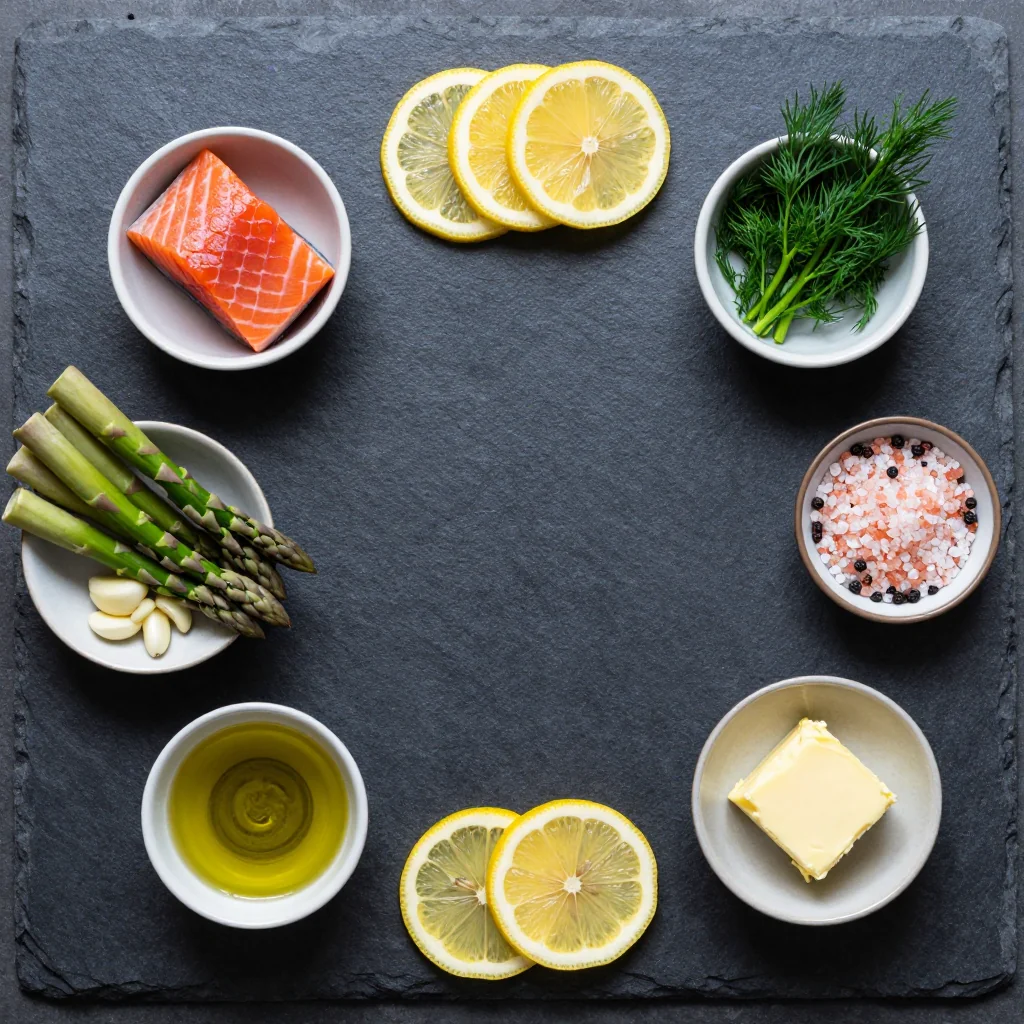
Great salmon begins at the fish counter. Look for fillets that smell like the ocean, not “fishy;” the flesh should bounce back when pressed and display even marbling of fat. I spring for wild-caught Alaskan coho or sockeye in winter because their flavor stands up to hearty accompaniments. If only farm-raised Atlantic is available, no worries—just reduce the salt in the glaze by ⅛ tsp to compensate for its milder profile.
Asparagus spears should squeak when you bundle them—an audible sign of freshness. Skinny stalks roast in the same time as the salmon; if yours are jumbo, halve them lengthwise so they cook evenly. Winter asparagus sometimes has woody ends that extend farther up the stalk; snap off the natural break point and peel the bottom two inches with a Y-peeler for silkier bites.
The glaze is a simple emulsion of extra-virgin olive oil, whole-grain Dijon, maple syrup, and lemon. Use grade-A dark maple for its robust flavor; it caramelizes into a glossy lacquer under high heat. Whole-grain Dijon adds texture and gentle heat; if you only have smooth Dijon, dial the maple back by ½ tsp to keep the balance. Finally, zest the lemon before juicing—those essential oils in the skin give the sauce its perfume.
Finishing butter is optional but transformative. A teaspoon per person melts into the hot tray juices, creating a silky pan sauce you’ll want to spoon over everything. Use cultured, grass-fed butter for deeper flavor; if you’re dairy-free, substitute 1 tsp of tahini whisked with 1 tsp hot water for creaminess without lactose.
How to Make Healthy Baked Salmon with Asparagus for Winter Nights
Preheat & prep pan
Place oven rack in center position and preheat to 425 °F (220 °C). Line a large rimmed baking sheet with unbleached parchment; this prevents the maple glaze from scorching and makes cleanup a two-second affair.
Whisk the glaze
In a small bowl combine 2 Tbsp extra-virgin olive oil, 1 Tbsp whole-grain Dijon, 1 Tbsp dark maple syrup, 1 tsp lemon zest, 2 tsp lemon juice, 1 minced garlic clove, ½ tsp sea salt, and ¼ tsp freshly ground black pepper. Whisk until glossy and slightly thickened, about 30 seconds.
Season the salmon
Pat 1¼ lb (4 × 5-oz) salmon fillets dry with paper towels. Arrange skin-side down on one half of the parchment. Spoon one-third of the glaze over the top, brushing to edges so the flesh is fully lacquered. Let stand while you prep the vegetables—the salt begins to season the interior.
Snap & season asparagus
Trim 1 lb asparagus, leaving tips intact. Pat dry (excess water = steamed, not roasted). Toss in the same bowl with remaining glaze, coating every spear. Arrange in a single layer on the open half of the pan; if necessary, tuck skinny spears under thicker ones so nothing overlaps.
Roast synchronously
Slide the pan into the oven and roast 10 minutes. The high heat sets the glaze, creating a shiny crust while keeping the salmon center coral and translucent.
Butter baste & finish
Dot salmon with 4 tsp cold butter. Switch oven to broil and return pan 6 inches from element for 2–3 minutes, until butter foams and asparagus tips char. Remove promptly; residual heat will finish cooking the fish to a perfect medium.
Rest & plate
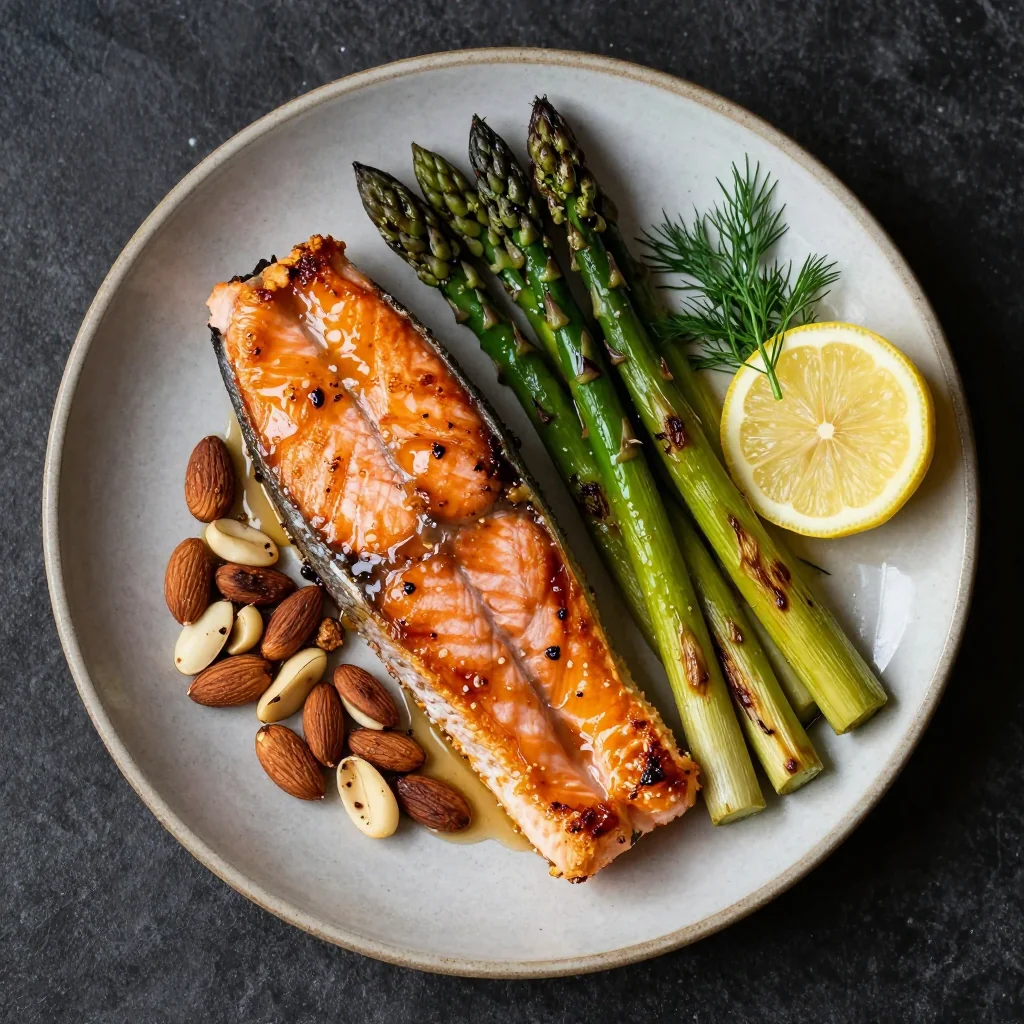
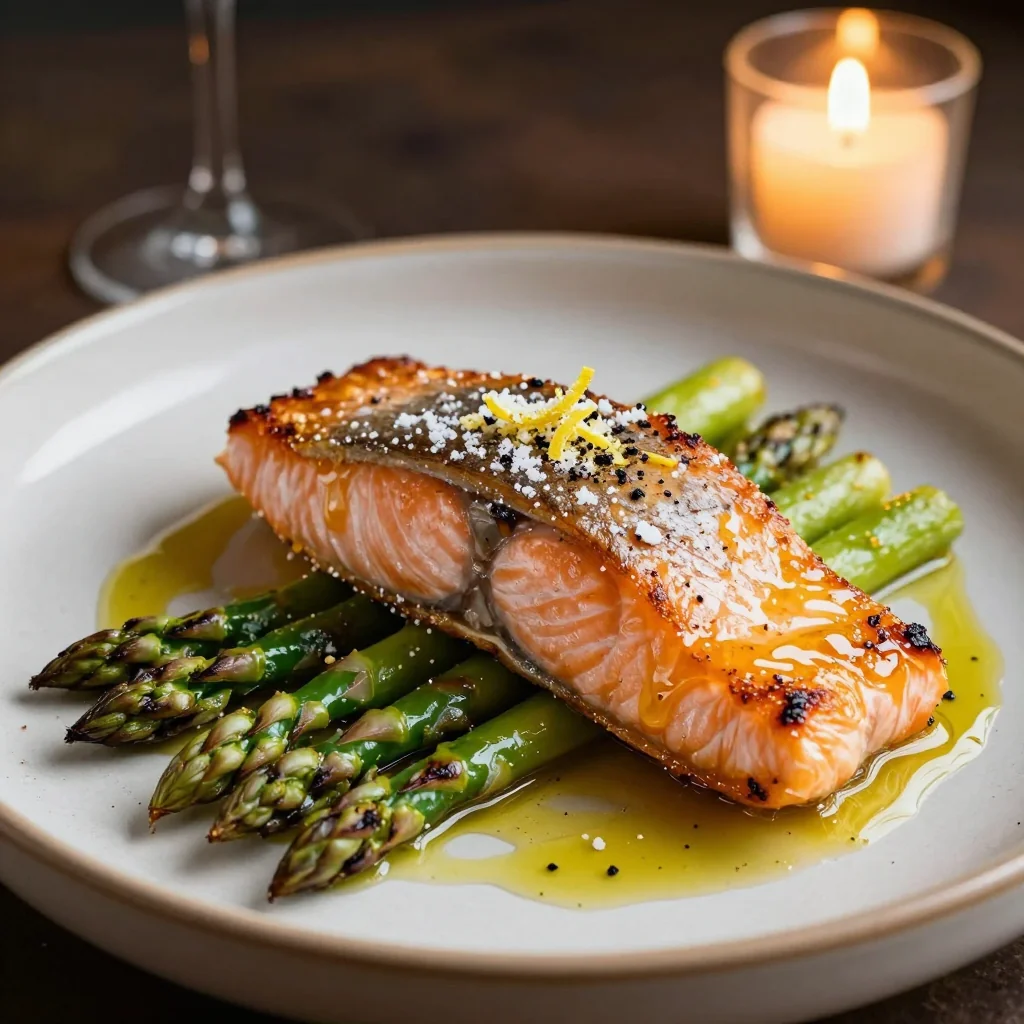
Let the salmon rest 3 minutes; proteins relax, juices redistribute. Transfer fillets and asparagus to warm plates, spooning over the glossy pan juices. Finish with an extra squeeze of lemon and a snow of fresh dill if desired.
Expert Tips
Check temp, not clock
Salmon is medium-rare at 120 °F and medium at 125 °F. Insert an instant-read thermometer into the thickest part at a 45° angle for accuracy.
Pat, pat, pat
Moisture is the enemy of browning. Thoroughly dry both salmon and asparagus so the glaze caramelizes instead of steaming.
Even thickness
If your fillet is thick on one end, fold the thin tail underneath itself to create uniform thickness; this prevents the tail from overcooking.
Make it night-before
Whisk the glaze and store separately; season salmon up to 24 h ahead, covered tightly. Roast straight from the fridge—just add 1 extra minute.
Crispier tips
For ultra-charred asparagus tips, position them pointing toward the oven walls where radiant heat is highest.
Color pop
Add 1 cup cherry tomatoes alongside asparagus for a pop of color and jammy sweetness that complements the savory glaze.
Variations to Try
-
Asian twist
Swap maple for 2 tsp honey + 1 tsp soy sauce; finish with sesame seeds and scallions. -
Citrus medley
Replace lemon with blood-orange juice and zest for a ruby-hued winter glaze. -
Smoky heat
Add ¼ tsp smoked paprika and pinch cayenne to glaze for a subtle campfire note. -
Vegan swap
Substitute 1-inch thick cauliflower steaks; reduce initial roast to 8 minutes. -
Green medley
Toss in 2 cups broccoli florets; they roast at the same rate and add extra vitamin C. -
Creamy finish
Whisk 1 Tbsp Greek yogurt into pan juices for a light, tangy sauce reminiscent of hollandaise.
Storage Tips
Cooked salmon will keep up to 3 days in the refrigerator when stored in a shallow airtight container. To prevent drying, add a teaspoon of water to the container before sealing; the gentle steam keeps the fillet moist when reheated. Asparagus stores similarly but is best consumed within 48 hours.
For longer storage, flake the salmon and freeze in silicone bags with as much air removed as possible up to 2 months. Thaw overnight in the fridge, then fold into pasta or chowder during the last 2 minutes of cooking to warm through without turning rubbery.
To reheat without overcooking, place salmon in a skillet with 2 Tbsp water, cover, and steam over medium-low for 3 minutes. Alternatively, microwave at 50 % power in 20-second bursts until just warmed. Asparagus reheats beautifully under the broiler for 1 minute; drizzle with fresh lemon to revive its brightness.
Frequently Asked Questions
Healthy Baked Salmon with Asparagus for Winter Nights
Ingredients
Instructions
- Preheat: Preheat oven to 425 °F (220 °C). Line a rimmed baking sheet with parchment.
- Make glaze: Whisk olive oil, Dijon, maple syrup, lemon zest, lemon juice, garlic, salt, and pepper until glossy.
- Season salmon: Pat salmon dry; place skin-side down on one half of pan. Brush with one-third of glaze.
- Coat asparagus: Toss asparagus with remaining glaze; arrange on other half of pan.
- Roast: Roast 10 minutes, then dot salmon with butter. Broil 2–3 minutes until butter foams and asparagus tips char.
- Rest & serve: Rest 3 minutes, spoon pan juices over top, garnish with herbs, and serve hot.
Recipe Notes
For crispier asparagus tips, position them toward oven walls. Leftover salmon flakes beautifully over salads or grain bowls within 3 days.