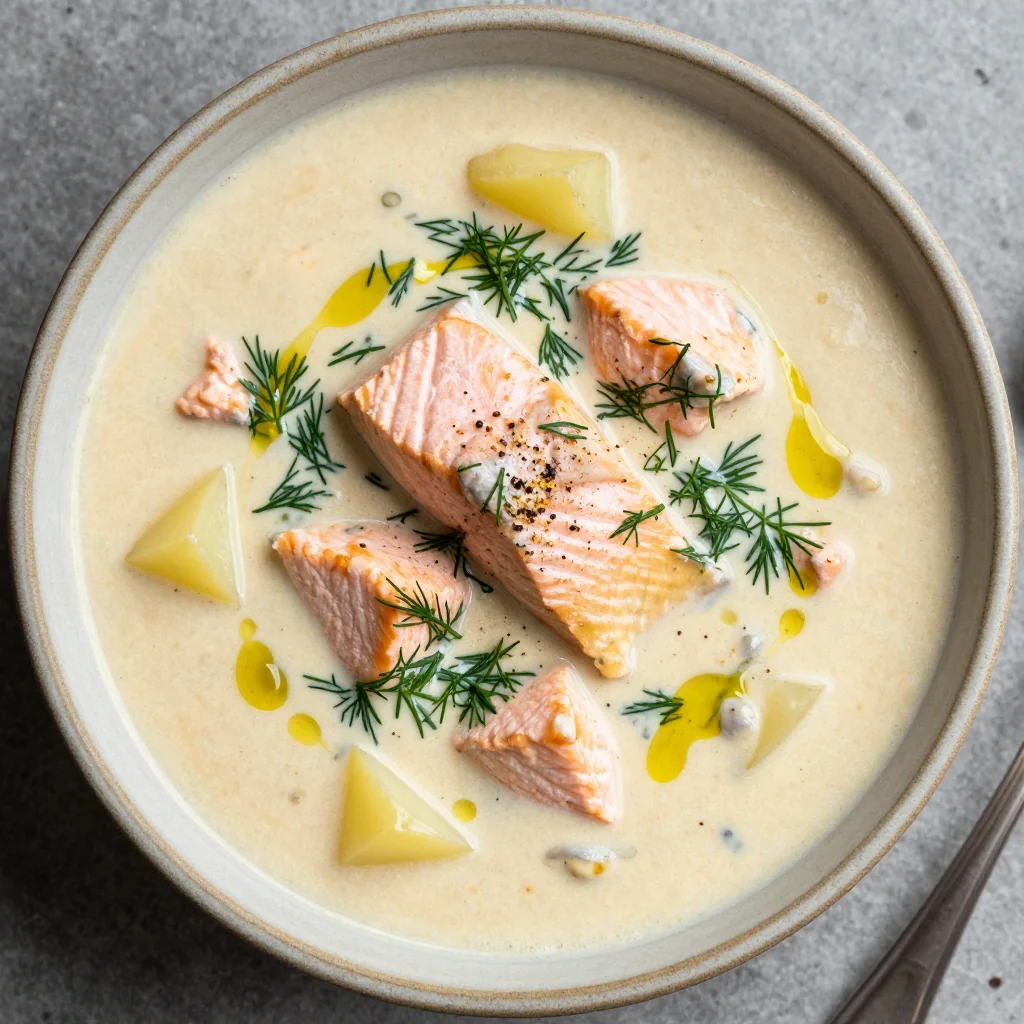
Love this? Pin it for later! 📌
What makes this chowder special is how it balances richness with brightness. The heavy cream gives it that luxurious texture we all love in a chowder, while fresh dill and a squeeze of lemon keep it from feeling heavy. It's become our go-to soup for everything from casual weeknight dinners to elegant dinner parties—I've even served it in tiny espresso cups as an amuse-bouche at Christmas dinner. The best part? It comes together in under an hour, making it perfect for those nights when you want something impressive without spending all evening in the kitchen.
Why This Recipe Works
- Perfect Salmon Texture: Adding the salmon in the last 5 minutes ensures it stays moist and tender rather than overcooked and dry.
- Layered Flavor Base: Building the soup on a foundation of bacon, leeks, and garlic creates incredible depth of flavor.
- Fresh vs. Dried Dill: Using fresh dill at the end preserves its bright, grassy notes that complement the salmon perfectly.
- Potato Selection: Yukon Golds hold their shape while adding natural creaminess to the chowder base.
- Make-Ahead Friendly: The base can be prepared up to 3 days ahead; simply reheat and add cream and salmon before serving.
- Restaurant Quality: A splash of white wine and fish stock elevates this from simple chowder to gourmet experience.
- Nutrient Dense: Packed with omega-3s, protein, and vegetables for a complete meal in one bowl.
Ingredients You'll Need
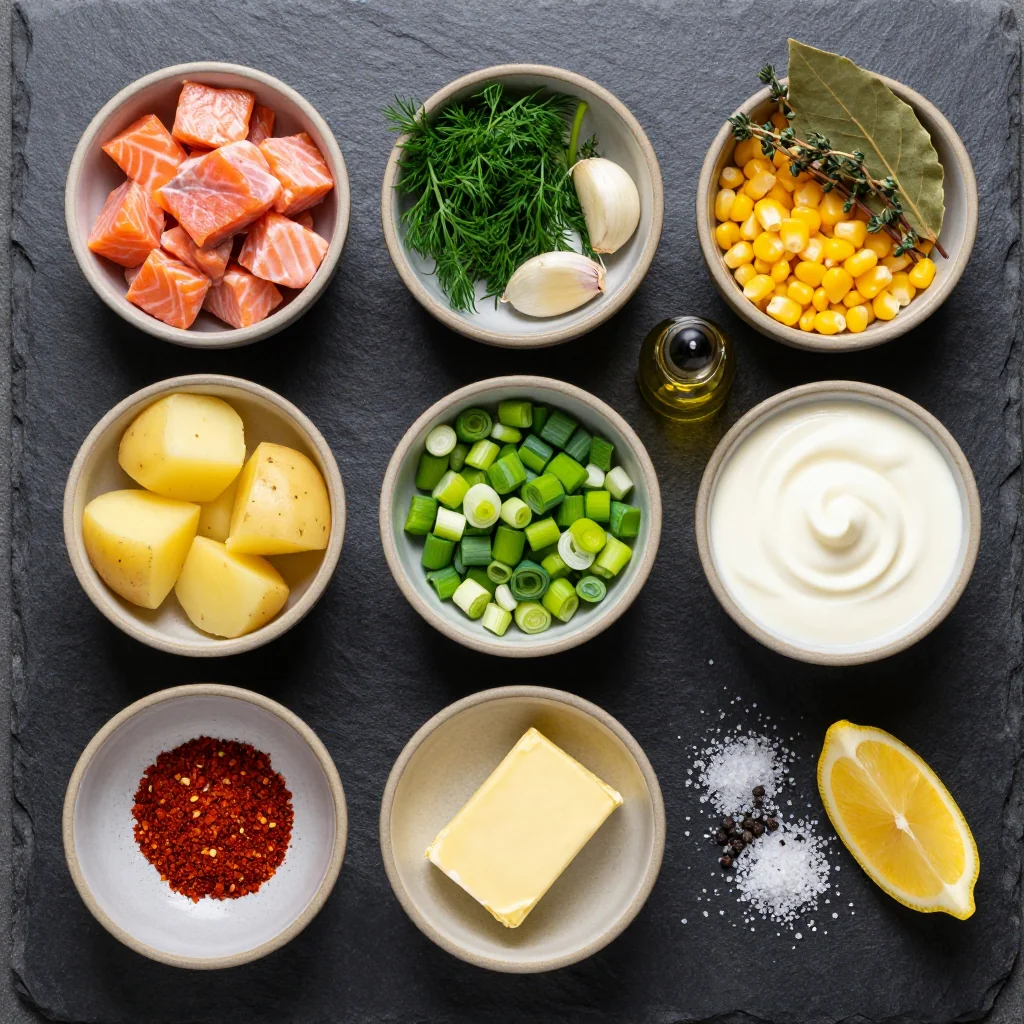
Let's talk about what makes this salmon chowder truly special. Each ingredient has been carefully selected to create the perfect balance of flavors and textures. I've made this recipe dozens of times, tweaking and adjusting until every element shines.
Fresh Salmon: Look for vibrant, firm fillets with no fishy smell. I prefer Atlantic salmon for its higher fat content, which stays moist in the soup. If wild salmon is available, Coho or King varieties work beautifully. Avoid pre-frozen salmon if possible, as it tends to release too much liquid into the chowder.
Yukon Gold Potatoes: These golden beauties are my potato of choice for chowder. They have a naturally buttery flavor and hold their shape well during cooking. Their medium starch content means they'll thicken the soup slightly without turning mushy. If you can't find Yukons, baby red potatoes are an acceptable substitute.
Heavy Cream: Don't skimp here—this is what gives the chowder its luxurious texture. I use organic heavy cream with at least 36% fat content. For a lighter version, you could use half-and-half, but the chowder won't be quite as rich and satisfying.
Fresh Dill: This is non-negotiable in my book. Fresh dill adds a bright, almost citrusy note that pairs perfectly with salmon. Dried dill simply can't compare. Look for vibrant green fronds with no yellowing. Store it in a jar with water like flowers in your fridge.
Leeks: Sweeter and more delicate than onions, leeks add a subtle complexity to the base. Be sure to clean them thoroughly—nobody wants gritty chowder. I slice them and rinse in a bowl of cold water, letting the dirt settle to the bottom.
Thick-Cut Bacon: Just 3 slices provide incredible smoky depth. I prefer applewood-smoked bacon for its slightly sweet notes that complement the salmon. Turkey bacon won't give you the same flavor, so I don't recommend substituting.
Vegetable Stock: While you could use chicken stock, I find vegetable stock lets the salmon flavor shine through. If you have homemade fish stock, that's even better—it adds another layer of ocean flavor.
How to Make Salmon Chowder Creamy Dill Potato Goodness
Prep and Organize
Start by dicing your potatoes into ½-inch cubes—this size ensures they cook evenly and create the perfect texture. Slice your leeks thinly, making sure to wash away any dirt between the layers. Cut your salmon into 1-inch pieces, removing any pin bones with tweezers. Having everything prepped before you start cooking makes the process much smoother and prevents any scrambling later.
Render the Bacon
In a heavy-bottomed Dutch oven over medium heat, cook the chopped bacon until crispy, about 6-8 minutes. This step is crucial for building flavor—the rendered bacon fat will become the base for sautéing our vegetables. Don't rush it; let the bacon slowly release its fat and turn golden brown. Remove the crispy bacon bits with a slotted spoon and set aside on a paper towel-lined plate. These will be our garnish later.
Build the Aromatics
Add the leeks to the bacon fat and cook over medium heat for about 5 minutes until they start to soften. Add the minced garlic and cook for another minute until fragrant. This is where the magic begins—the combination of bacon fat, leeks, and garlic creates an incredible aroma that will have everyone asking what you're making.
Create the Roux
Sprinkle the flour over the leek mixture and stir constantly for 2 minutes. This step helps thicken the chowder and removes any raw flour taste. The mixture should look like a pale paste coating the vegetables. If it seems too dry, add a tablespoon of butter. Cook until it smells slightly nutty but hasn't browned.
Add Liquids and Potatoes
Slowly pour in the vegetable stock while whisking constantly to prevent lumps. Add the diced potatoes, bay leaf, and thyme. Bring to a gentle simmer and cook for about 15 minutes, or until the potatoes are just tender when pierced with a fork. The soup will start to thicken slightly as the potatoes release their starch.
Season and Simmer
Season the base generously with salt and pepper. Remember, potatoes need plenty of salt. Add the white wine if using—this adds acidity that brightens the rich chowder. Let it simmer for 2 minutes to cook off the alcohol. Taste and adjust seasoning; the base should be well-seasoned since we'll be adding cream and salmon.
Add Cream and Salmon
Reduce heat to low and stir in the heavy cream. Gently add the salmon pieces, making sure they're submerged in the liquid. Cover and simmer very gently for 5-7 minutes. The key here is not to overcook the salmon—it should be just opaque and flake easily. Overcooked salmon becomes dry and chalky.
Final Touches
Remove from heat and stir in the fresh dill and lemon juice. Taste one last time and adjust seasoning. The chowder should be creamy and well-balanced, with the salmon perfectly cooked. Serve immediately in warm bowls, garnished with the crispy bacon bits, extra dill fronds, and a crack of fresh black pepper.
Expert Tips
Temperature Control
Keep the heat low when adding cream to prevent curdling. If your soup base is too hot, let it cool slightly before adding dairy. The cream should incorporate smoothly without separating.
Thickness Control
If your chowder is too thick, thin it with a splash of stock or milk. Too thin? Let it simmer uncovered for a few minutes, or mash some potatoes against the side of the pot.
Make-Ahead Strategy
Prepare the base up to 3 days ahead, but don't add the cream or salmon until just before serving. This prevents the dairy from separating and the salmon from overcooking.
Fish Selection
While salmon is traditional, this recipe works beautifully with other firm fish like cod, halibut, or even shrimp. Just adjust cooking times accordingly—shrimp need only 2-3 minutes.
Fresh Dill Substitute
If fresh dill isn't available, use 2 teaspoons of dried dill in the cooking process, then add 1 tablespoon of fresh parsley at the end for color and freshness.
Flavor Enhancement
Add a parmesan rind to the soup while it simmers—it will melt and add incredible umami depth. Remove it before adding the cream and salmon.
Variations to Try
Smoky Salmon Chowder
Add ½ teaspoon of smoked paprika and substitute smoked salmon for half the fresh salmon. The smoky flavors create an entirely different but equally delicious profile.
Vegetable-Loaded Version
Add 1 cup of corn kernels and 1 cup of diced carrots along with the potatoes. The sweetness of the corn pairs beautifully with the salmon.
Spicy New England Style
Add ½ teaspoon of Old Bay seasoning and a pinch of cayenne pepper. This gives it that classic Northeast seafood shack flavor with a gentle heat.
Dairy-Free Option
Replace the heavy cream with full-fat coconut milk. While it changes the flavor profile, it creates a rich, silky texture that's completely dairy-free.
Storage Tips
Refrigeration
Store leftover chowder in an airtight container in the refrigerator for up to 3 days. Keep in mind that the salmon will continue to cook slightly when reheated, so it's best enjoyed within 2 days. The flavors actually meld beautifully overnight, making leftovers even more delicious.
Freezing
While you can freeze this chowder, the cream may separate upon thawing, creating a grainy texture. If you must freeze it, I recommend freezing the base (without cream and salmon) for up to 3 months. When ready to serve, thaw overnight in the refrigerator, then add fresh cream and salmon during reheating.
Reheating
Reheat gently over low heat, stirring frequently. Add a splash of stock or milk if the chowder has thickened too much. Avoid boiling, as this will cause the cream to separate and the salmon to become tough. A double boiler works wonderfully for gentle reheating.
Frequently Asked Questions
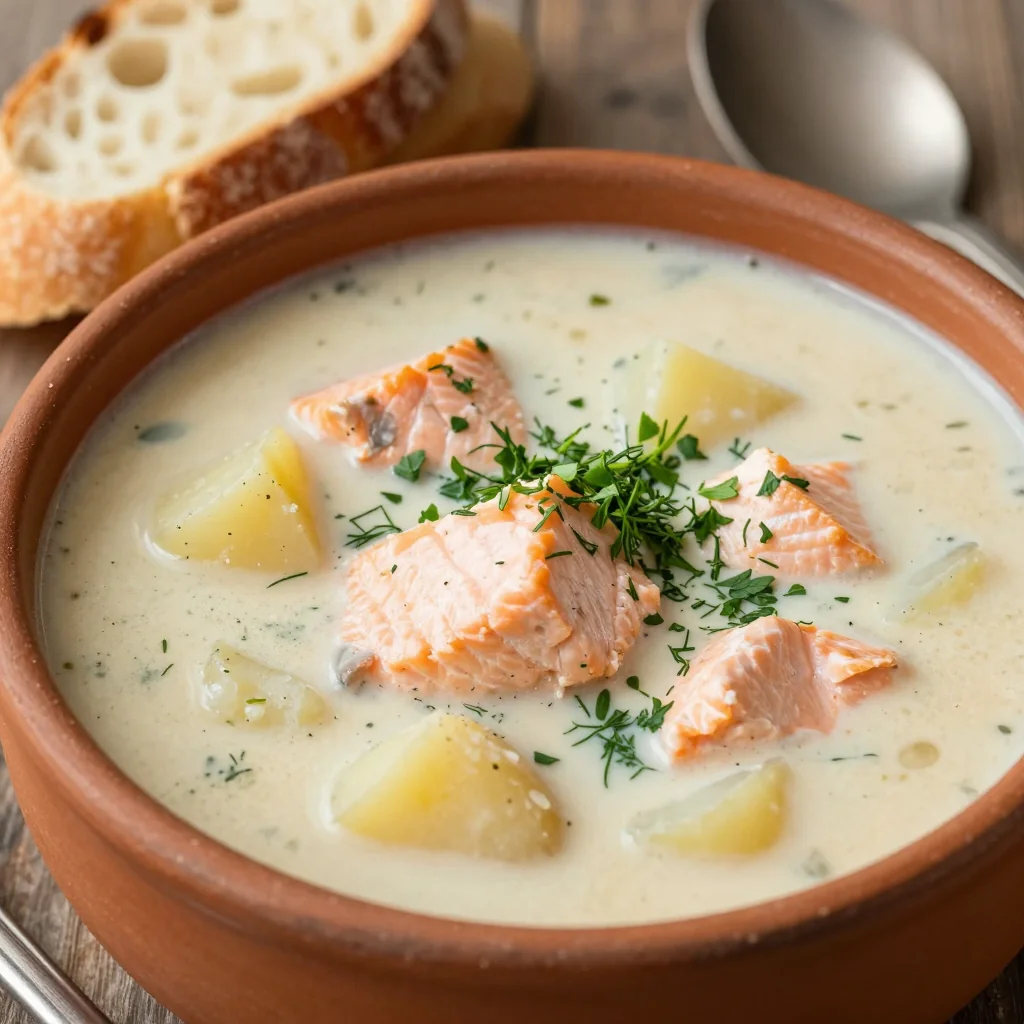
Salmon Chowder Creamy Dill Potato Goodness
Ingredients
Instructions
- Cook Bacon: In a Dutch oven over medium heat, cook chopped bacon until crispy. Remove with slotted spoon and set aside for garnish.
- Sauté Aromatics: Add sliced leeks to bacon fat and cook 5 minutes until soft. Add minced garlic and cook 1 minute more.
- Make Roux: Sprinkle flour over vegetables and cook 2 minutes, stirring constantly.
- Add Potatoes: Slowly whisk in vegetable stock, add diced potatoes, bay leaf, and thyme. Simmer 15 minutes until potatoes are tender.
- Season Base: Add white wine if using, season generously with salt and pepper.
- Add Cream and Salmon: Reduce heat to low, stir in cream, then gently add salmon pieces. Cover and simmer 5-7 minutes until salmon is just cooked through.
- Finish and Serve: Stir in fresh dill and lemon juice. Serve immediately garnished with crispy bacon bits.
Recipe Notes
For the best results, use fresh, high-quality salmon and don't overcook it. The chowder can be made ahead without the cream and salmon—simply reheat and add these final ingredients just before serving.