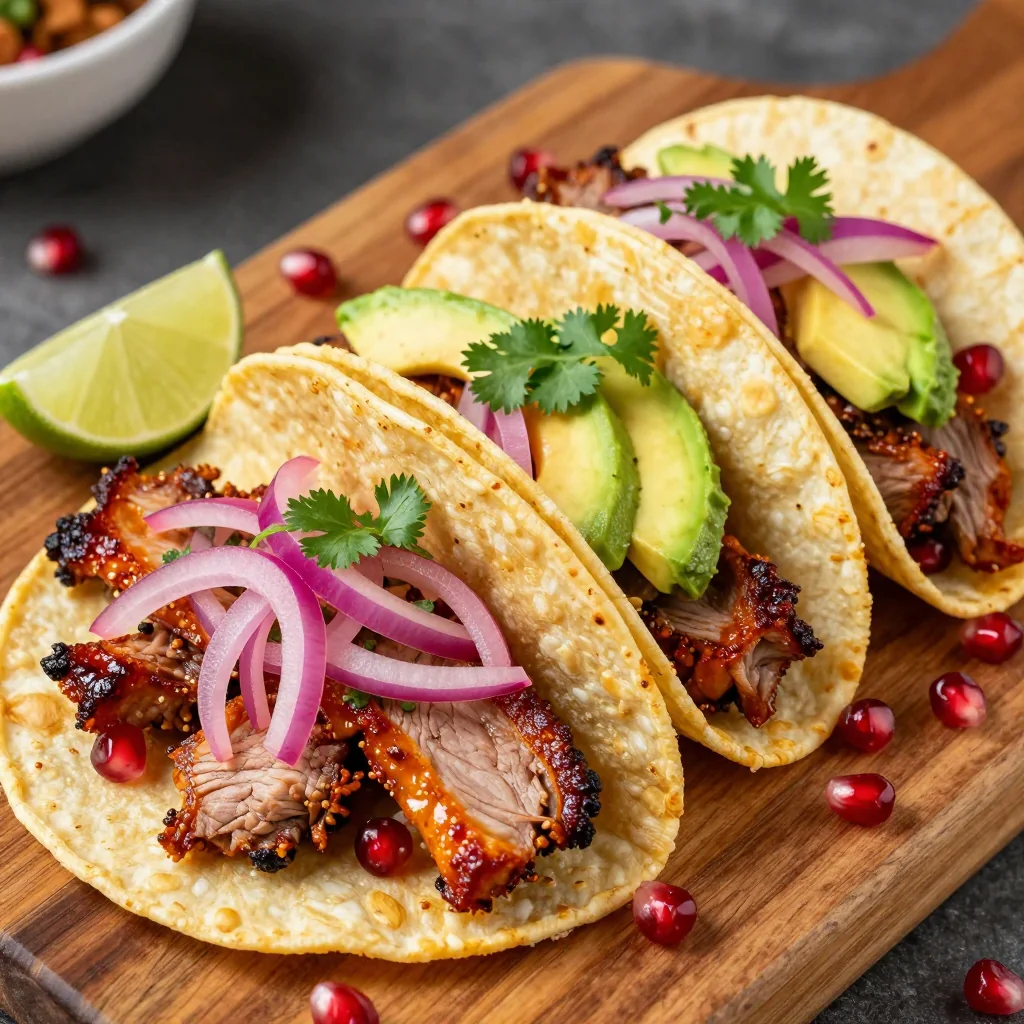
Love this? Pin it for later! 📌
I still remember the first time I served these spicy pork belly tacos at a backyard get-together. The sun had just dipped behind the oaks, string lights flickered on, and the scent of caramelizing pork mingled with smoky chipotle. One bite and my normally reserved neighbor did a literal happy dance—fork in the air, salsa verde dripping down his wrist, declaring these were “the best tacos in the county.” Since then, this recipe has become my weeknight ace-in-the-hole whenever I want maximum flavor with minimal fuss.
What makes these tacos weeknight-friendly? We quick-cure the pork belly for 15 minutes while the cast-iron skillet preheats, sear until the edges turn lacquer-crisp, then finish with a glossy gochujang-lime glaze. In under 40 minutes you’ve got restaurant-quality tacos with layers of spicy, sweet, tangy, and umami. Serve them family-style with warm corn tortillas and a mountain of crunchy toppings—everyone builds their own, which means less work for you and more fun around the table.
Why This Recipe Works
- Quick cure: A 15-minute brown-sugar-salt rub seasons the meat all the way through and jump-starts caramelization.
- Two-stage sear: Start skin-side down in a cold skillet to render the fat slowly, then crank the heat for blistered edges.
- Sticky gochujang glaze: Adds fermented chile depth plus a glossy finish that clings to every cube.
- Fresh toppings: Quick-pickled red onions cut richness while mango-jalapeño salsa adds bright contrast.
- Customizable heat: Dial the spice up or down by adjusting gochujang and jalapeño seeds.
- Make-ahead friendly: Pork belly can be cured, seared, and refrigerated up to 3 days; reheat in a hot skillet for 4 minutes.
Ingredients You'll Need
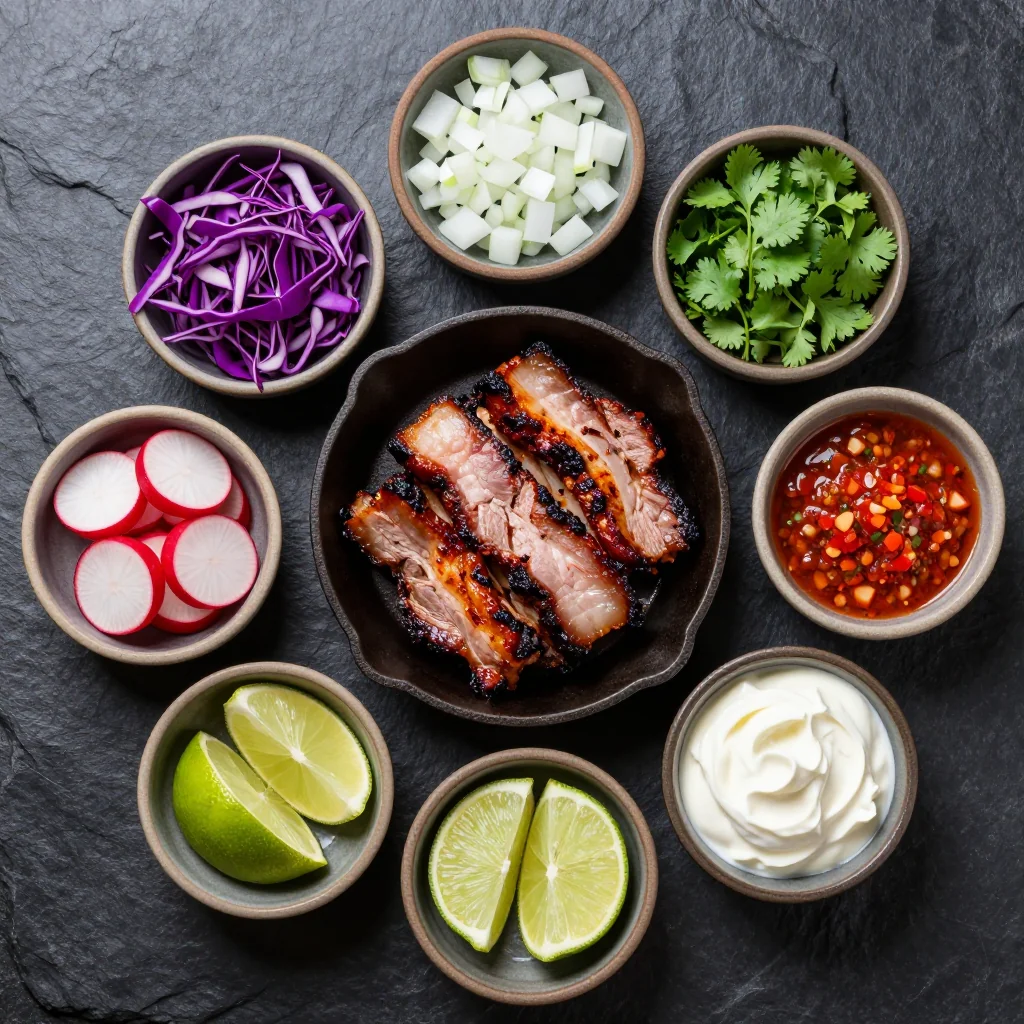
Great tacos start with great ingredients. Seek out pork belly that’s about 50/50 meat to fat—too lean and you’ll miss the luscious mouthfeel, too fatty and the tacos feel heavy. If your butcher offers skin-on belly, ask them to remove it for this recipe; we want the fat cap but not the tough skin. Gochujang, Korean fermented chile paste, is sold in the international aisle of most supermarkets or online; look for one whose ingredient list starts with “wheat flour” rather than corn syrup for deeper flavor. For tortillas, 4 ½-inch corn tortillas fit perfectly in your palm and hold two generous cubes of pork plus toppings without tearing. Finally, pick a neutral oil with a high smoke point (rice bran or grapeseed) so the glaze doesn’t burn.
Pork substitutions: If pork belly feels too indulgent, thick-cut pork shoulder steaks work in a pinch—just increase the sear time by 2 minutes per side. Vegan? Swap in slabs of king oyster mushrooms tossed with smoked paprika and a drizzle of maple syrup.
How to Make Spicy Pork Belly Tacos for Dinner Tonight
Quick-cure the pork
Stir together 1 Tbsp brown sugar, 1 tsp kosher salt, and ½ tsp smoked paprika. Pat pork belly dry, cut into ¾-inch cubes, and toss with the cure. Let sit at room temperature 15 minutes while you prep toppings; the salt draws out moisture so edges will sear, not steam.
Make pickled onions
Thinly slice ½ red onion into half-moons. Warm ½ cup rice vinegar with 1 Tbsp sugar and ½ tsp salt until sugar dissolves. Pour over onions, add 3 ice cubes to cool quickly, and set aside. They’ll turn neon pink and taste tangy in 10 minutes.
Stir together glaze
In a small bowl whisk 2 Tbsp gochujang, 1 Tbsp honey, 1 Tbsp fresh lime juice, 1 tsp soy sauce, and 1 tsp sesame oil. The glaze should coat a spoon; thin with 1 tsp water if it feels like thick ketchup.
Cold-pan sear
Place pork cubes skin-side down in a large cast-iron skillet, then turn heat to medium. As the pan warms, fat renders slowly, basting the meat. After 7–8 minutes the underside is golden; flip each piece with tongs.
Crank the heat
Increase heat to medium-high. Cook 3 more minutes, shaking pan so edges blister evenly. Pour off all but 1 Tbsp rendered fat (save it for roasting potatoes later—it’s liquid gold).
Glaze & finish
Brush pork with half the gochujang glaze; cook 1 minute. Flip, brush remaining glaze, cook 1 minute more until sticky and glossy. Remove from heat and squeeze over the juice of ½ lime for brightness.
Warm tortillas
While pork rests, warm tortillas directly over gas flame 10 seconds per side (or in a dry skillet). Stack in a clean tea towel to steam and stay pliable.
Assemble & serve
Double up tortillas (prevents tear-through), add 2–3 pork cubes, a spoonful of pickled onions, mango-jalapeño salsa, and a shower of cilantro. Finish with a squeeze of lime and serve immediately.
Expert Tips
Control the spatter
Lay a sheet of foil loosely over the skillet during the first 5 minutes of rendering; it catches splatters but lets steam escape so edges still brown.
Rescue over-salty glaze
If your gochujang brand is extra salty, balance with an extra teaspoon of honey and a pinch of orange zest.
Slice when cold
Pork belly is easiest to cube when it’s fridge-cold; pop it in the freezer 10 minutes if it feels floppy.
Char without burning
If glaze starts to darken too fast, add 2 Tbsp water to the pan; it steams off quickly and prevents bitter bits.
Reheat like a pro
Spread leftover pork on a sheet pan, cover with foil, and warm at 400 °F for 6 minutes; uncover for 2 minutes to re-crisp.
Color pop
Add a handful of pomegranate arils just before serving; their ruby color and tart juice make the tacos holiday-worthy.
Variations to Try
- Korean-Mex fusion: Swap gochujang for ssamjang and top with kimchi slaw instead of mango salsa.
- Low-carb bowl: Serve pork over cauliflower rice with avocado, shredded cabbage, and a fried egg.
- Sweet-heat: Add 1 Tbsp pineapple juice to the glaze and garnish with grilled pineapple chunks.
- Smoky vegetarian: Replace pork with roasted cauliflower florets tossed in chipotle powder and maple syrup.
- Breakfast tacos: Toss leftover pork with scrambled eggs, cotija, and a drizzle of hot honey.
Storage Tips
Refrigerate: Cool pork completely, transfer to an airtight container, and refrigerate up to 4 days. Store tortillas and toppings separately so they don’t get soggy.
Freeze: Freeze glazed pork cubes in a single layer on a sheet pan, then transfer to a zip bag for up to 2 months. Thaw overnight in the fridge and reheat in a skillet.
Make-ahead components: Pickled onions keep 2 weeks refrigerated; glaze keeps 1 week; cubed raw pork can be cured and held in the fridge up to 24 hours before cooking.
Frequently Asked Questions
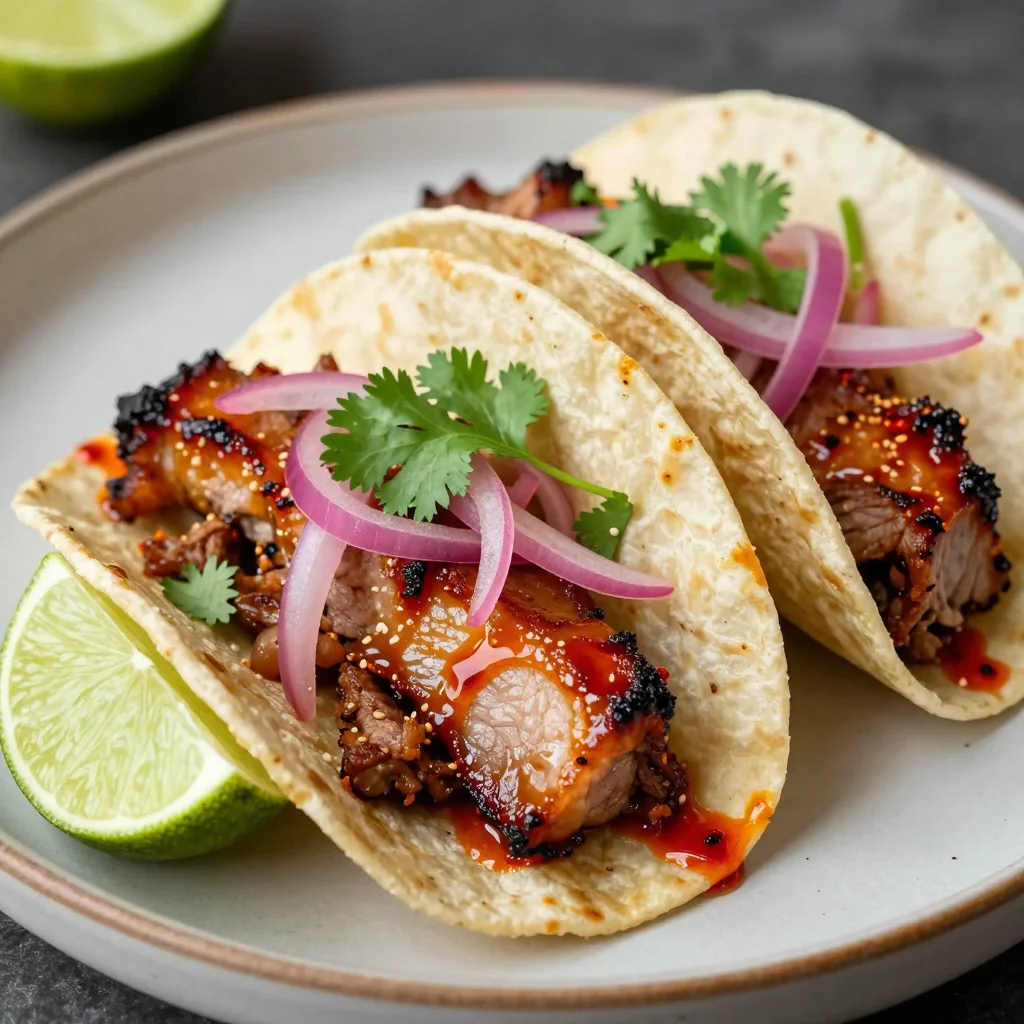
Spicy Pork Belly Tacos for Dinner Tonight
Ingredients
Instructions
- Quick-cure the pork: Toss pork cubes with brown sugar, salt, and smoked paprika. Let stand 15 minutes.
- Pickle onions: Warm vinegar, sugar, and ½ tsp salt until dissolved; pour over sliced onions plus ice cubes. Set aside.
- Make glaze: Whisk gochujang, honey, lime juice, soy sauce, and sesame oil until smooth.
- Cold-pan sear: Place pork skin-side down in a cold cast-iron skillet, turn heat to medium, and cook 7–8 minutes until golden. Flip.
- Blister & glaze: Increase heat to medium-high, cook 3 more minutes, drain excess fat, brush with glaze, and cook 1 minute per side until sticky.
- Assemble: Warm tortillas, double them up, and fill with pork, pickled onions, salsa, and cilantro. Serve with lime wedges.
Recipe Notes
For extra-crisp edges, chill glazed pork cubes in the fridge 10 minutes before serving; the glaze tightens and crackles when bitten.