Love this? Pin it for later! 📌
Warm Roasted Garlic & Herb Sweet Potato and Beet Medley for Winter
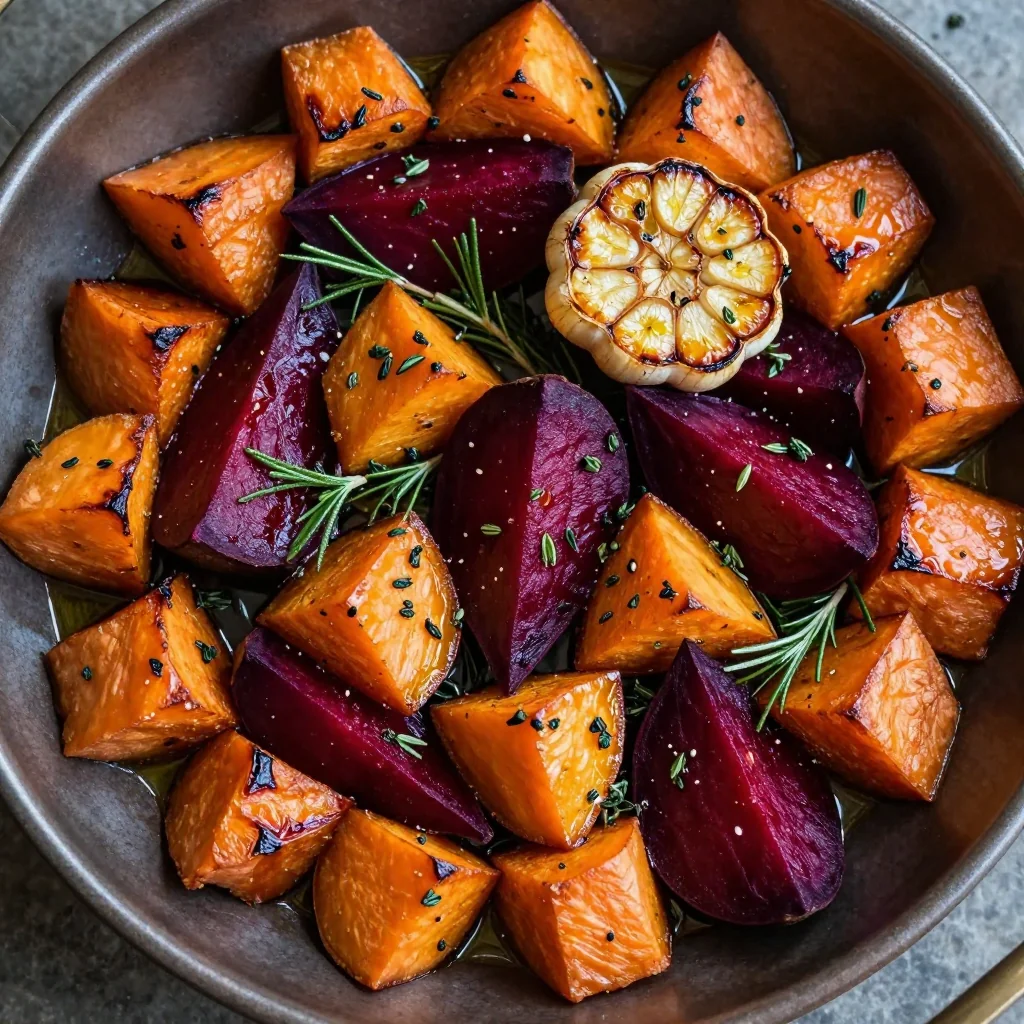
When the first snowflakes start to dance outside my kitchen window, I reach for this soul-warming medley more than any other recipe in my winter arsenal. There's something almost magical about the way roasted beets stain the sweet potatoes a regal burgundy, or how the garlic cloves caramelize into sweet, jammy nuggets that melt on your tongue. This dish has become my December tradition—born one particularly brutal January when the farmers' market was down to root vegetables and my pantry held little more than dried herbs and a head of garlic.
I remember standing in my tiny apartment kitchen, the radiators clanking against the sub-zero wind rattling the panes, thinking there had to be a way to transform these humble ingredients into something that tasted like a hug from the inside out. After three attempts and a lot of taste-testing (my neighbors were thrilled to be guinea pigs), this medley emerged: earthy beets that concentrate their sweetness as they roast, sweet potatoes that develop those irresistible caramelized edges, and whole garlic cloves that turn into spreadable, mellow treasures. Tossed with a bold herb oil while still hot, then finished with a bright splash of citrus to balance all that roasted depth, it's the kind of dish that makes you grateful for winter produce.
Over the years, this recipe has evolved into my go-to for holiday potlucks, cozy date nights in, and those "I need vegetables but want comfort" weeknight dinners. The leftovers transform into grain bowls, get tucked into grilled cheese, or are simply reheated and eaten standing at the fridge—no judgment here. Winter cooking doesn't get more satisfying than this.
Why This Recipe Works
- High-heat roasting concentrates the natural sugars in both sweet potatoes and beets, creating complex caramelization without added sugar
- Whole roasted garlic cloves transform into sweet, spreadable morsels that infuse every bite with mellow garlic flavor
- Separate roasting pans prevent beet bleeding and allow each vegetable to develop optimal texture
- Warm herb oil infusion blooms dried herbs instantly, creating restaurant-level flavor with pantry staples
- Strategic timing lets you roast everything simultaneously while preparing the finishing touches
- Make-ahead friendly components can be prepped days ahead, making this ideal for holiday entertaining
Ingredients You'll Need
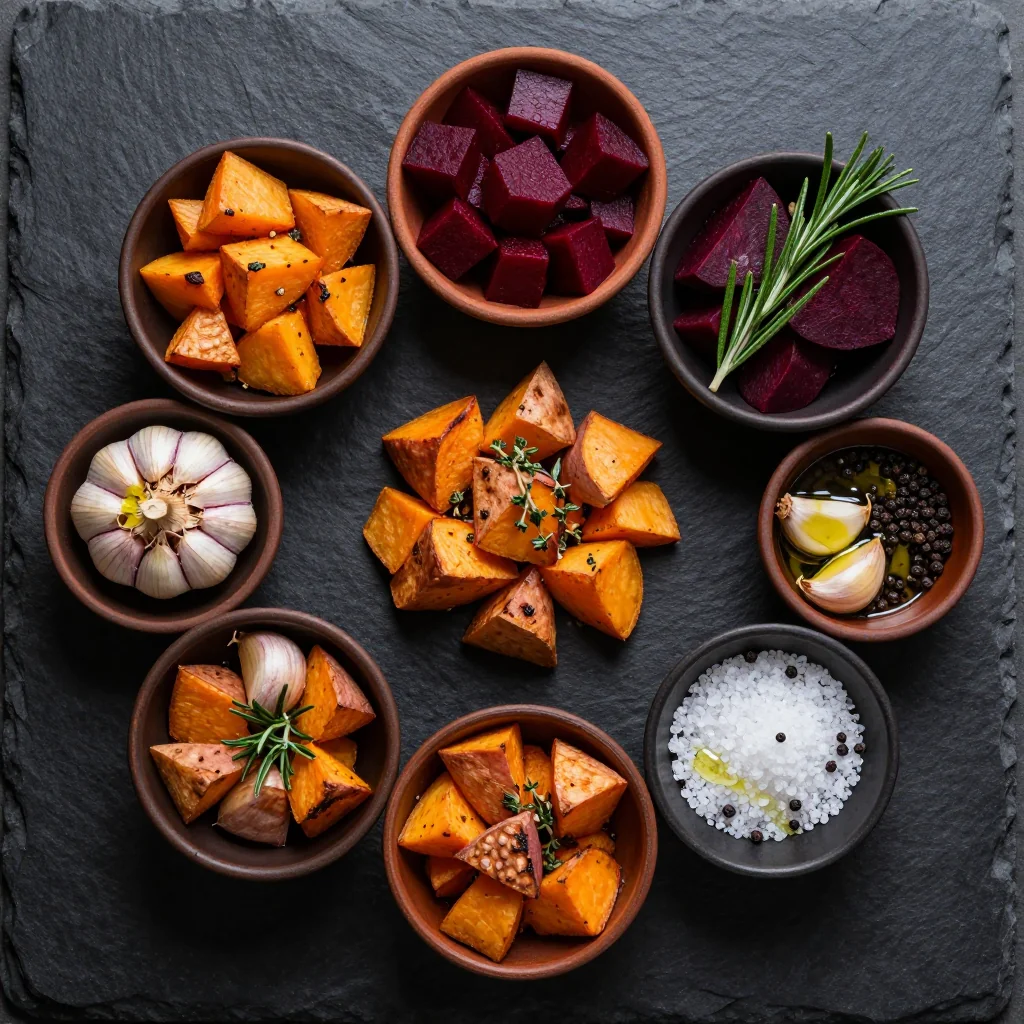
This humble ingredient list proves that winter cooking doesn't require fancy produce or expensive proteins. Each component plays a crucial role in building layers of flavor that taste far more complex than the sum of their parts.
The Stars of the Show
Beets: Choose small to medium beets for the sweetest flavor and most tender texture. Look for firm, unblemished roots with smooth skin. Golden beets work beautifully if you want to avoid the magenta staining, though I find the color transformation rather magical. If your beets come with tops, don't toss them! Sauté the greens with garlic for tomorrow's side dish.
Sweet Potatoes: Jewel or garnet varieties provide the creamiest texture and sweetest flavor. Avoid the purple or white-fleshed varieties—they won't develop the same caramelized edges. Look for sweet potatoes that feel heavy for their size with tight, unwrinkled skin. Pro tip: the deeper the orange color, the higher the vitamin A content.
Garlic: A whole head might seem excessive, but roasting transforms harsh raw garlic into mellow, sweet cloves that you can spread like butter. Fresh, firm garlic heads with tight, papery skins will yield the sweetest roasted garlic. Avoid any heads with green shoots or soft spots.
The Flavor Builders
Dried Herbs: A combination of thyme, rosemary, and oregano creates a Mediterranean profile that complements both vegetables. Dried herbs work better here than fresh—they bloom in the warm oil and won't burn in the high oven heat. If you're lucky enough to have winter-hardy herbs in your garden, double the quantity and add them in the final toss.
Smoked Paprika: Just a whisper adds depth and subtle smokiness that makes this dish taste like it came from a wood-fired oven. Hungarian sweet paprika works if you don't have smoked, but the smoky version adds that extra winter coziness.
Citrus: A bright splash of orange juice and zest balances the earthy sweetness with acidity that makes all the other flavors pop. Blood oranges create a stunning visual when available, but regular navel oranges work perfectly. The zest is crucial—don't skip it!
The Finishing Touch
Pepitas: Toasted pumpkin seeds add crucial crunch and nuttiness that elevates this from simple roasted vegetables to restaurant-worthy dish. Sunflower seeds work in a pinch, but the green pepitas provide beautiful color contrast against the orange and burgundy vegetables.
How to Make Warm Roasted Garlic & Herb Sweet Potato and Beet Medley for Winter
Prepare Your Workspace
Preheat your oven to 425°F (220°C). Position racks in the upper-middle and lower-middle positions. This dual-rack setup ensures even roasting without crowding. Line two heavy-duty rimmed baking sheets with parchment paper—this prevents sticking and makes cleanup a breeze. If you only have one good sheet pan, roast the beets first, then the sweet potatoes while the beets cool.
Prep the Beets
Scrub the beets under cold running water, trimming off any hairy roots or tough stem ends. Pat completely dry—excess moisture will steam rather than roast them. Cut into 1-inch chunks, keeping them as uniform as possible for even cooking. Small beets can be quartered; larger ones should be cut into 1-inch dice. Place in a large bowl and toss with 2 tablespoons olive oil, 1 teaspoon salt, and 1/2 teaspoon black pepper until every surface is glossy and seasoned.
Prep the Sweet Potatoes
Peel the sweet potatoes and cut into 1-inch chunks, similar in size to your beet pieces. The goal is maximum surface area for caramelization—those flat edges where the flesh meets the pan will develop the most flavor. Toss in a separate bowl with 2 tablespoons olive oil, 1 teaspoon salt, 1/2 teaspoon black pepper, and the smoked paprika. The paprika not only adds flavor but helps the sweet potatoes develop gorgeous color.
Prepare the Garlic
Slice the top off the whole garlic head to expose the tops of all cloves. Place on a square of aluminum foil, drizzle with 1 teaspoon olive oil, and wrap tightly into a package. This creates a steamy environment that softens the garlic while preventing burning. Place this packet on the corner of one baking sheet—it will roast alongside the vegetables, infusing your kitchen with incredible aroma.
Arrange for Maximum Caramelization
Spread the beets on one prepared baking sheet and sweet potatoes on the other. The key is not to overcrowd—each piece should have space around it. Crowded vegetables steam rather than roast. If necessary, use additional pans rather than piling them up. Position the garlic packet on the beet pan since beets take slightly longer to cook.
Roast to Perfection
Slide both pans into the preheated oven. Roast for 20 minutes, then remove both pans. Flip the vegetables with a thin metal spatula—those caramelized surfaces are flavor gold. Rotate the pans (top to bottom, bottom to top) for even cooking. Return to the oven for another 15-20 minutes, until the beets are tender when pierced with a fork and the sweet potatoes sport deep golden-brown edges. Total roasting time is 35-40 minutes.
Create the Herb Oil
While the vegetables roast, combine the remaining 3 tablespoons olive oil, dried thyme, rosemary, and oregano in a small saucepan. Warm over low heat just until the oil begins to shimmer and the herbs become fragrant—about 2 minutes. Remove from heat immediately; you're blooming the herbs, not frying them. The warm oil will carry the herb flavors throughout the dish.
Toast the Pepitas
Heat a small dry skillet over medium heat. Add the pepitas and toast, shaking the pan frequently, until they begin to pop and turn golden brown—about 3-4 minutes. Watch carefully as they can burn quickly. Transfer to a small bowl to stop the cooking. This extra step adds incredible nuttiness and crunch that takes the dish from good to restaurant-quality.
Combine While Hot
Remove the vegetables from the oven. Carefully open the garlic packet—watch for hot steam. The cloves should be soft and golden. Transfer both vegetables to a large serving bowl while still hot. Squeeze the roasted garlic cloves from their skins directly into the bowl. Pour the warm herb oil over everything. Add the orange juice and zest, season with additional salt and pepper to taste, and toss gently to combine. The heat helps the flavors meld beautifully.
Finish and Serve
Sprinkle the toasted pepitas over the top for crunch. Serve warm, ideally on a cold winter evening with crusty bread to mop up the herb-scented oil. The dish is best enjoyed warm but is equally delicious at room temperature, making it perfect for holiday buffets. Leftovers transform beautifully into grain bowls or omelet fillings.
Expert Tips
Don't Skimp on Heat
That 425°F temperature isn't negotiable—it's the sweet spot where vegetables caramelize without burning. If your oven runs cool, consider calibrating or using an oven thermometer. Lower temperatures will cook the vegetables but won't develop those coveted caramelized edges.
Pat Dry Thoroughly
Water is the enemy of caramelization. After washing, spread vegetables on clean kitchen towels and pat completely dry. Even a little surface moisture will create steam, resulting in soggy rather than crispy edges. This extra minute makes all the difference.
Uniform Cuts Matter
Take time to cut vegetables into similar sizes. I aim for 1-inch chunks, but consistency matters more than exact dimensions. Those flat cut surfaces develop the best caramelization, so include plenty of surface area. A sharp knife makes this task meditative rather than tedious.
Make-Ahead Strategy
Roast the vegetables up to 3 days ahead. Store separately from the herb oil, then combine and rewarm in a 350°F oven for 15 minutes. The flavors actually improve as they meld. Perfect for holiday entertaining when oven space is at a premium.
Prevent Beet Bleeding
Toss beets separately and keep them on their own pan to prevent turning everything pink. If you want a unified color, combine after roasting. For striking color contrast, add golden beets alongside the red ones—they won't stain but add visual interest.
Scale Up Successfully
This recipe doubles or triples beautifully for a crowd. Use multiple pans and rotate positions every 15 minutes. Don't crowd the vegetables—use every pan you own rather than overfilling. Better to wash extra pans than serve steamed vegetables.
Variations to Try
Autumn Harvest Version
Swap half the sweet potatoes for butternut squash, add fresh sage to the herb oil, and finish with dried cranberries and toasted pecans. The squash roasts in the same time as sweet potatoes, creating a Thanksgiving-worthy side dish.
Moroccan-Inspired
Add 1 teaspoon each ground cumin and coriander to the sweet potatoes, substitute orange juice with pomegranate molasses thinned with water, and finish with chopped preserved lemon and fresh mint. Serve over couscous with harissa on the side.
Protein-Packed Main
Add a can of drained chickpeas to the sweet potato pan for the last 15 minutes of roasting. They'll crisp up like croutons. Serve over quinoa with a dollop of lemon-tahini dressing for a complete vegetarian meal.
Mediterranean Twist
Add halved Brussels sprouts to the beet pan, substitute lemon for orange, and finish with crumbled feta, chopped olives, and fresh oregano. The Brussels sprouts develop crispy edges that complement the sweet vegetables perfectly.
Storage Tips
Proper storage makes this dish a meal prep superstar. Roasted vegetables keep beautifully, and the flavors continue to meld and improve over the first 24 hours. Here's how to maintain optimal texture and flavor:
Refrigerator Storage
Store completely cooled vegetables in an airtight container for up to 5 days. Keep the pepitas separate in a small zip-top bag so they retain their crunch. The herb oil will solidify in the cold—simply let the container sit at room temperature for 30 minutes before serving, or rewarm gently in the microwave or oven.
Freezer Instructions
While the texture of roasted vegetables changes after freezing, this works well for future grain bowls or soup additions. Freeze in single-serving portions for up to 3 months. Thaw overnight in the refrigerator, then rewarm in a 400°F oven for 10-12 minutes to restore some of the original texture. The pepitas should be added fresh after thawing.
Make-Ahead Components
Roast the vegetables and garlic up to 3 days ahead. Store separately from the herb oil, which can be made 1 week ahead. Combine and rewarm just before serving for the freshest flavor. This strategy works beautifully for holiday meals when oven space is at a premium.
Frequently Asked Questions
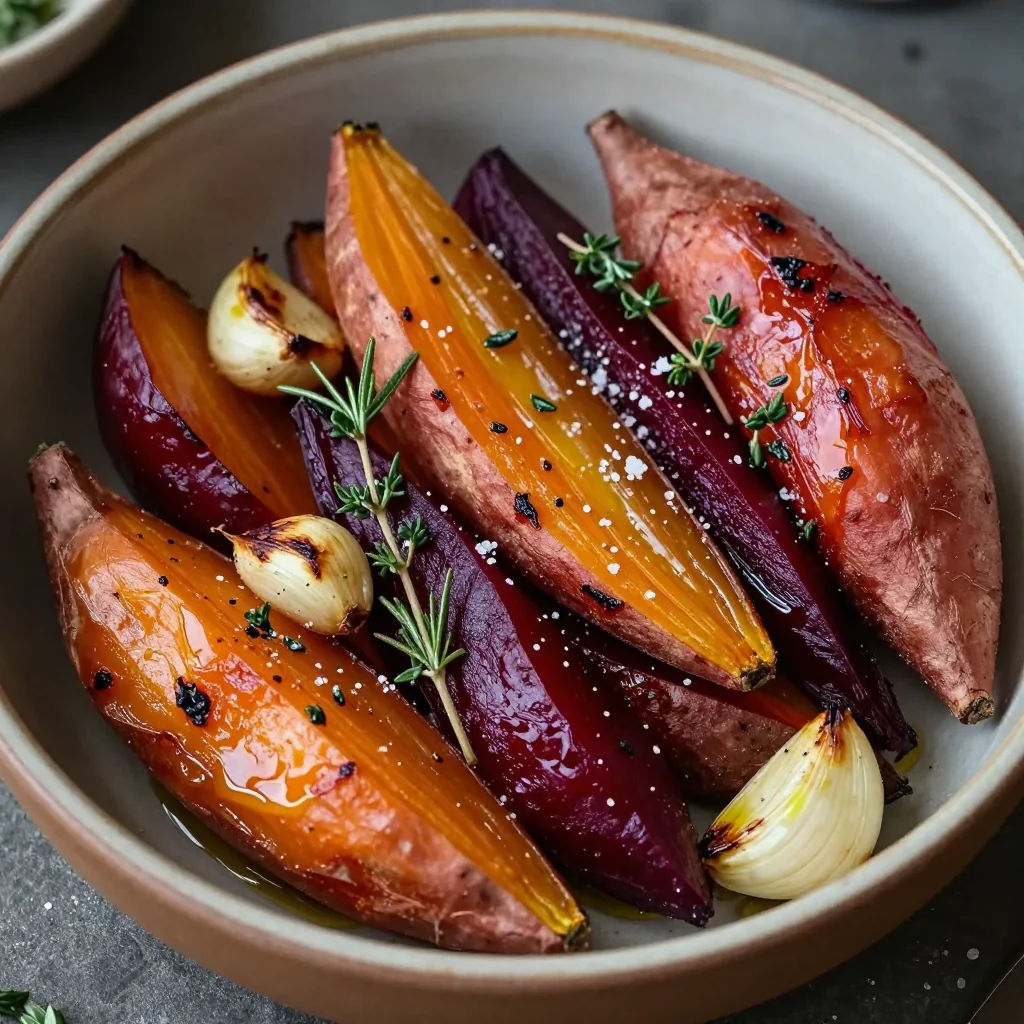
Warm Roasted Garlic & Herb Sweet Potato and Beet Medley for Winter
Ingredients
Instructions
- Preheat oven: Set oven to 425°F (220°C) with racks in upper-middle and lower-middle positions. Line two rimmed baking sheets with parchment.
- Prepare vegetables: Toss beets with 2 tablespoons oil, 1 teaspoon salt, and ½ teaspoon pepper on one sheet. Toss sweet potatoes with 2 tablespoons oil, 1 teaspoon salt, ½ teaspoon pepper, and paprika on second sheet.
- Roast garlic: Place garlic head on foil, drizzle with 1 teaspoon oil, wrap tightly. Place on beet pan.
- Roast vegetables: Roast both sheets for 20 minutes, flip vegetables, rotate pans, and roast 15-20 minutes more until tender and caramelized.
- Make herb oil: Warm remaining 3 tablespoons oil with thyme, rosemary, and oregano in small saucepan over low heat for 2 minutes until fragrant.
- Toast pepitas: Toast pumpkin seeds in dry skillet over medium heat for 3-4 minutes until golden and popping.
- Combine and serve: Transfer hot vegetables to large bowl. Squeeze roasted garlic from skins, add herb oil, orange juice and zest, toss to combine. Top with toasted pepitas and serve warm.
Recipe Notes
Roast vegetables up to 3 days ahead. Store separately from herb oil and combine when reheating. Golden beets work beautifully if you prefer to avoid staining. Fresh herbs can be substituted—double the quantities and add in final toss rather than infusing in oil.