
Japanese Tonkotsu Ramen
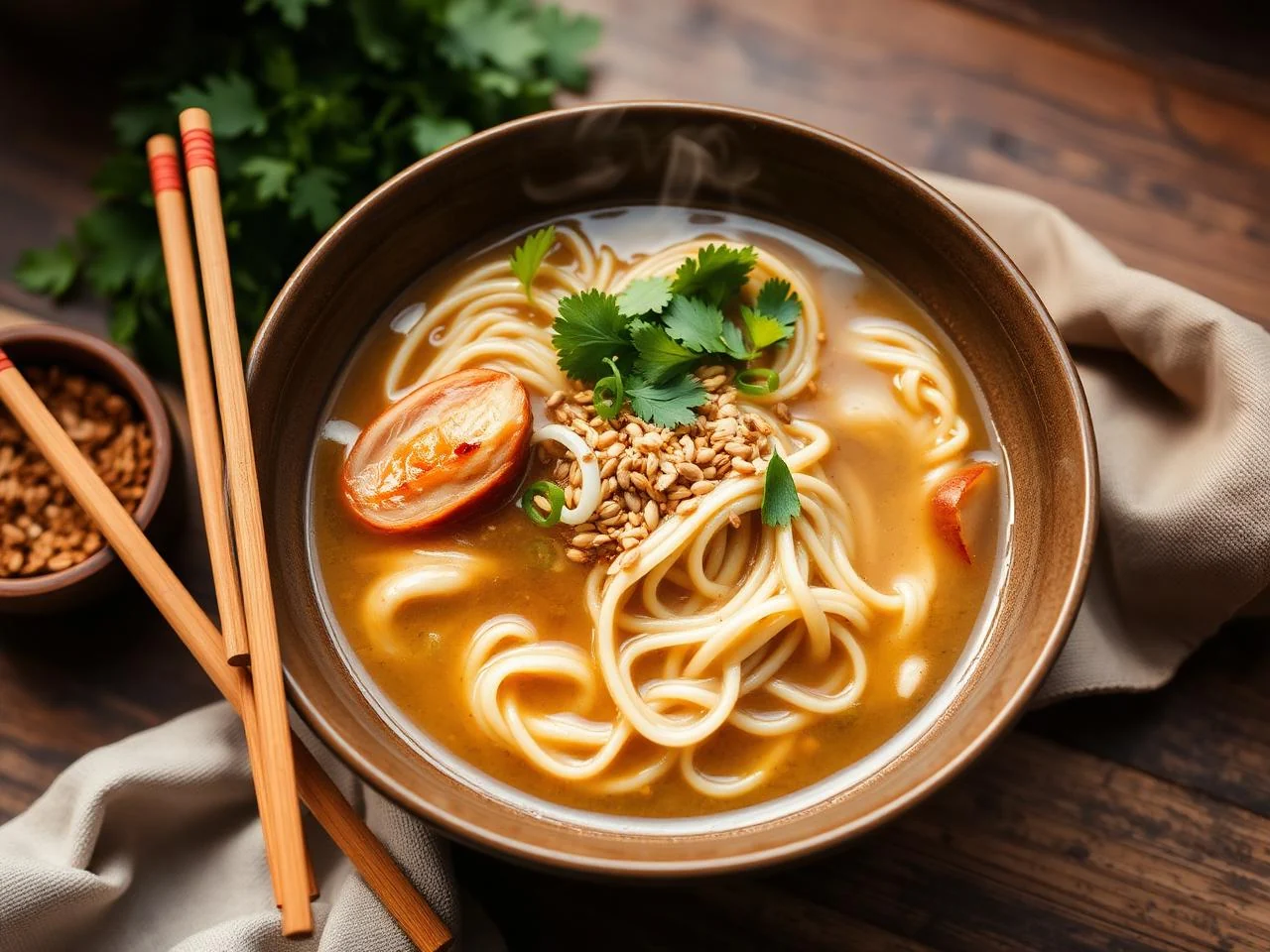
I still remember my first bowl of Japanese Tonkotsu Ramen - the steaming hot broth, the springy noodles, and the savory toppings all combined to create a truly unforgettable experience. As a home cook, I was determined to recreate this delicious dish in my own kitchen, and after months of experimentation, I finally perfected my recipe. In this article, I'll share with you my secrets for making authentic Japanese Tonkotsu Ramen at home, from the rich pork broth to the flavorful toppings.
One of the things that sets Tonkotsu Ramen apart from other types of ramen is its rich, creamy broth, which is made by simmering pork bones for hours to extract their collagen and gelatin. This process gives the broth a thick, velvety texture that's just irresistible. But don't worry - while making Tonkotsu Ramen from scratch does require some time and effort, it's definitely worth it in the end.
If you're new to making ramen at home, don't be intimidated - this recipe is designed to be approachable and easy to follow, even for beginners. And if you're a seasoned ramen lover, you'll appreciate the attention to detail and the authentic flavors that this recipe delivers. So let's get started and dive into the world of Japanese Tonkotsu Ramen!
When it comes to making Tonkotsu Ramen, the key is to use high-quality ingredients and to take the time to develop the rich, complex flavors that this dish is known for. From the pork bones to the noodles, every component plays a crucial role in creating the perfect bowl of ramen. And with this recipe, you'll be able to enjoy a delicious, authentic bowl of Japanese Tonkotsu Ramen in the comfort of your own home.
So who is this recipe for? It's for anyone who loves ramen and wants to learn how to make it at home. It's for adventurous eaters who are looking to try new flavors and techniques. And it's for anyone who appreciates the comfort and satisfaction of a warm, delicious bowl of noodles on a chilly day. Whether you're a ramen newbie or a seasoned pro, this recipe is sure to become a favorite in your household.
Why You’ll Love This Recipe
- This recipe is easy to follow and requires minimal special equipment.
- The dish is highly customizable, so you can add your favorite toppings and make it your own.
- Tonkotsu Ramen is a comforting and satisfying meal that's perfect for cold winter nights.
- The recipe makes a large batch of broth that can be frozen for later use.
- This dish is a great way to explore the flavors and techniques of Japanese cuisine.
- The rich, creamy broth is made with pork bones, which are rich in protein and collagen.
- This recipe is a great option for a special occasion or a dinner party.
Why This Recipe Works
So what makes this recipe for Japanese Tonkotsu Ramen so special? For starters, it's the rich, creamy broth that's made by simmering pork bones for hours to extract their collagen and gelatin. This process gives the broth a thick, velvety texture that's just irresistible. And when you combine it with springy noodles and savory toppings, you get a dish that's truly greater than the sum of its parts.
Another key factor is the use of high-quality ingredients, from the pork bones to the noodles. By using the best ingredients you can find, you'll be able to create a dish that's not only delicious but also authentic and true to its Japanese roots. And with this recipe, you'll learn how to select the best ingredients and use them to create a truly unforgettable bowl of ramen.
Finally, it's the attention to detail and the care that goes into making each component of the dish. From the broth to the noodles to the toppings, every element plays a crucial role in creating the perfect bowl of ramen. And with this recipe, you'll learn how to bring all of these elements together to create a dish that's truly special.
By following this recipe and using the techniques and ingredients outlined here, you'll be able to create a bowl of Japanese Tonkotsu Ramen that's not only delicious but also authentic and true to its Japanese roots. So let's get started and dive into the world of Tonkotsu Ramen!
Ingredients You’ll Need
When it comes to making Japanese Tonkotsu Ramen, the ingredients are just as important as the technique. You'll need a few specialty ingredients, such as pork bones and ramen noodles, but most of the ingredients are readily available at your local grocery store. In this section, we'll go over the ingredients you'll need and provide some tips for selecting the best ones.
One of the most important ingredients in Tonkotsu Ramen is the pork bones, which are used to make the rich, creamy broth. You can find pork bones at most butcher shops or Asian markets, and they're usually quite affordable. You'll also need some aromatics, such as onions and garlic, as well as some seasonings, such as soy sauce and sesame oil.
- 2 lbs (1 kg) pork bonesYou can use any type of pork bones you like, but rib bones and neck bones work best for making a rich, creamy broth. Make sure to ask your butcher for bones that are meaty and have a good amount of marrow, as these will add the most flavor to your broth.
- 1 lb (450g) pork shoulder, sliced into thin stripsYou can use any type of pork you like, but pork shoulder works well because it's tender and has a good amount of fat. Make sure to slice the pork into thin strips so that it cooks quickly and evenly.
- 2 tablespoons (30g) vegetable oilYou can use any type of oil you like, but vegetable oil works well because it has a neutral flavor and a high smoke point. Make sure to use a high-quality oil that's fresh and has a good flavor.
- 1 onion, slicedYou can use any type of onion you like, but yellow onions work well because they're sweet and have a good flavor. Make sure to slice the onion thinly so that it cooks quickly and evenly.
- 3 cloves garlic, mincedYou can use any type of garlic you like, but fresh garlic works best because it has a strong flavor and aroma. Make sure to mince the garlic finely so that it distributes evenly throughout the dish.
- 2 inches (5 cm) piece of ginger, slicedYou can use any type of ginger you like, but fresh ginger works best because it has a strong flavor and aroma. Make sure to slice the ginger thinly so that it cooks quickly and evenly.
- 4 cups (1L) chicken brothYou can use any type of broth you like, but chicken broth works well because it's light and has a good flavor. Make sure to use a high-quality broth that's fresh and has a good flavor.
- 2 cups (475ml) waterYou can use any type of water you like, but filtered water works best because it's clean and has a neutral flavor. Make sure to use a high-quality water that's fresh and has a good flavor.
- 2 tablespoons (30g) soy sauceYou can use any type of soy sauce you like, but Japanese soy sauce works best because it has a strong umami flavor. Make sure to use a high-quality soy sauce that's fresh and has a good flavor.
- 1 tablespoon (15g) sesame oilYou can use any type of sesame oil you like, but Japanese sesame oil works best because it has a strong nutty flavor. Make sure to use a high-quality sesame oil that's fresh and has a good flavor.
- 1 teaspoon (5g) sugarYou can use any type of sugar you like, but granulated sugar works best because it's sweet and has a good flavor. Make sure to use a high-quality sugar that's fresh and has a good flavor.
- 1/2 teaspoon (2g) saltYou can use any type of salt you like, but kosher salt works best because it's mild and has a good flavor. Make sure to use a high-quality salt that's fresh and has a good flavor.
- 1/4 teaspoon (1g) black pepperYou can use any type of pepper you like, but black pepper works best because it's sharp and has a good flavor. Make sure to use a high-quality pepper that's fresh and has a good flavor.
Equipment You’ll Need
How to Make Japanese Tonkotsu Ramen
- 1In a large heavy pot or Dutch oven, heat 1 tablespoon (15g) of vegetable oil over medium heat until it reaches 350°F (175°C) on an instant-read thermometer.
- 2Add the sliced onion and cook, stirring occasionally, until it's softened and lightly browned, about 8-10 minutes.
- 3Add the minced garlic and sliced ginger and cook, stirring constantly, for 1-2 minutes until fragrant.
- 4Add the pork bones and cook, stirring occasionally, until they're browned on all sides, about 5-7 minutes.
- 5Add the chicken broth, water, soy sauce, sesame oil, sugar, salt, and black pepper, and bring the mixture to a boil.
- 6Reduce the heat to low and simmer, covered, for at least 4 hours, or overnight, until the broth is rich and creamy and the pork is tender.
- 7Strain the broth through a colander or strainer into a large bowl or container, discarding the solids.
- 8Add the sliced pork shoulder to the broth and cook, stirring occasionally, until it's cooked through and tender, about 5-7 minutes.
- 9Cook the ramen noodles according to the package instructions and drain well.
- 10Assemble the ramen bowls by placing some noodles in the bottom of a bowl, then adding slices of pork, and finally ladling the hot broth over the top.
- 11Serve immediately, garnished with green onions, bean sprouts, and pickled ginger, if desired.
Expert Tips
- Use high-quality ingredients, such as pork bones and fresh ginger, to get the best flavor.
- Don't skip the step of browning the pork bones, as this adds a rich, caramelized flavor to the broth.
- If you don't have an instant-read thermometer, you can test the temperature of the oil by dropping a small piece of food into it - if it sizzles and rises to the surface, the oil is ready.
- Let the broth simmer for at least 4 hours, or overnight, to get the richest, most flavorful broth possible.
- Use a variety of toppings, such as green onions, bean sprouts, and pickled ginger, to add texture and flavor to the dish.
- Experiment with different types of noodles, such as thin, curly noodles or thicker, chewier noodles, to find your favorite.
- Add some heat to the dish by incorporating spicy ingredients, such as red pepper flakes or sriracha, into the broth or toppings.
- Make the broth ahead of time and store it in the fridge or freezer for up to 3 days or 3 months, respectively.
Common Mistakes to Avoid
- Not browning the pork bones, which adds a rich, caramelized flavor to the broth.
- Not simmering the broth for long enough, which results in a weak, flavorless broth.
- Not using high-quality ingredients, such as fresh ginger and soy sauce, which can result in a dull, uninspired flavor.
- Overcooking the noodles, which can make them mushy and unappetizing.
- Not straining the broth, which can leave it cloudy and unappealing.
- Not serving the ramen immediately, which can cause the noodles to become soggy and the broth to lose its heat.
Variations and Substitutions
- Add some heat to the dish by incorporating spicy ingredients, such as red pepper flakes or sriracha, into the broth or toppings.
- Use different types of noodles, such as thin, curly noodles or thicker, chewier noodles, to change the texture of the dish.
- Add some acidity to the broth by incorporating ingredients, such as citrus juice or vinegar, to balance out the richness.
- Incorporate other proteins, such as boiled eggs or cooked chicken, to add variety to the dish.
- Use different types of vegetables, such as bok choy or spinach, to add freshness and flavor to the broth.
- Make the broth with different types of bones, such as beef or chicken bones, to change the flavor profile.
- Add some creaminess to the broth by incorporating ingredients, such as coconut milk or heavy cream, to balance out the richness.
What to Serve With Japanese Tonkotsu Ramen
Serve the Tonkotsu Ramen hot, garnished with green onions, bean sprouts, and pickled ginger, if desired. You can also add other toppings, such as boiled eggs, cooked chicken, or sliced pork, to make the dish more substantial. For a more authentic experience, serve the ramen in a traditional Japanese bowl, with a pair of chopsticks on the side.
Some other dishes that pair well with Tonkotsu Ramen include stir-fried vegetables, such as bok choy or broccoli, and grilled meats, such as pork or chicken. You can also serve the ramen with a side of steamed rice or noodles, for a more filling meal. Whatever you choose, make sure to enjoy the ramen while it's hot, as this is when the flavors are at their best.
Make-Ahead, Storage, Freezing and Reheating
Let the broth cool, then refrigerate or freeze it for later use. The broth can be stored in the fridge for up to 3 days, or frozen for up to 3 months. To reheat the broth, simply thaw it overnight in the fridge, then reheat it on the stovetop or in the microwave until hot and steaming.
To freeze the broth, let it cool, then transfer it to an airtight container or freezer bag. Label the container or bag with the date and contents, then store it in the freezer. To reheat the frozen broth, simply thaw it overnight in the fridge, then reheat it on the stovetop or in the microwave until hot and steaming.
When reheating the broth, make sure to stir it occasionally to prevent scorching. You can also add some water or chicken broth to the reheated broth if it's too thick, to achieve the desired consistency. Whatever you do, make sure to enjoy the Tonkotsu Ramen while it's hot, as this is when the flavors are at their best.
Some other tips for storing and reheating the broth include using a thermometer to ensure that the broth is heated to a safe temperature, and avoiding overheating the broth, which can cause it to become too thick and sticky. By following these tips, you can enjoy the Tonkotsu Ramen for days to come, without sacrificing any of its flavor or quality.
Frequently Asked Questions
What type of pork bones should I use for the broth?
You can use any type of pork bones you like, but rib bones and neck bones work best because they're meaty and have a good amount of marrow. Make sure to ask your butcher for bones that are fresh and have a good amount of meat on them.
How long should I simmer the broth for?
You should simmer the broth for at least 4 hours, or overnight, to get the richest, most flavorful broth possible. The longer you simmer the broth, the more collagen and gelatin will be extracted from the bones, resulting in a thicker, more creamy broth.
Can I use different types of noodles for the ramen?
Yes, you can use different types of noodles for the ramen, such as thin, curly noodles or thicker, chewier noodles. Just make sure to cook the noodles according to the package instructions and drain them well before adding them to the broth.
How do I store the broth for later use?
You can store the broth in the fridge for up to 3 days, or freeze it for up to 3 months. To reheat the broth, simply thaw it overnight in the fridge, then reheat it on the stovetop or in the microwave until hot and steaming.
Can I add other ingredients to the broth for extra flavor?
Yes, you can add other ingredients to the broth for extra flavor, such as sliced pork, boiled eggs, or green onions. Just make sure to cook the ingredients according to the package instructions and add them to the broth at the right time to avoid overcooking.
How do I prevent the broth from becoming too thick and sticky?
You can prevent the broth from becoming too thick and sticky by stirring it occasionally while it's reheating, and by adding some water or chicken broth if it's too thick. You can also try using a lower heat when reheating the broth to prevent it from boiling over and becoming too thick.
Can I make the broth ahead of time and refrigerate or freeze it?
Yes, you can make the broth ahead of time and refrigerate or freeze it for later use. Just make sure to let the broth cool, then transfer it to an airtight container or freezer bag and label it with the date and contents.
How do I reheat the frozen broth?
To reheat the frozen broth, simply thaw it overnight in the fridge, then reheat it on the stovetop or in the microwave until hot and steaming. Make sure to stir the broth occasionally while it's reheating to prevent scorching.
Ingredients
- 2 lbs (1 kg) pork bones
- 1 lb (450g) pork shoulder, sliced into thin strips
- 2 tablespoons (30g) vegetable oil
- 1 onion, sliced
- 3 cloves garlic, minced
- 2 inches (5 cm) piece of ginger, sliced
- 4 cups (1L) chicken broth
- 2 cups (475ml) water
- 2 tablespoons (30g) soy sauce
- 1 tablespoon (15g) sesame oil
- 1 teaspoon (5g) sugar
- 1/2 teaspoon (2g) salt
- 1/4 teaspoon (1g) black pepper
Instructions
- In a large heavy pot or Dutch oven, heat 1 tablespoon (15g) of vegetable oil over medium heat until it reaches 350°F (175°C) on an instant-read thermometer.
- Add the sliced onion and cook, stirring occasionally, until it's softened and lightly browned, about 8-10 minutes.
- Add the minced garlic and sliced ginger and cook, stirring constantly, for 1-2 minutes until fragrant.
- Add the pork bones and cook, stirring occasionally, until they're browned on all sides, about 5-7 minutes.
- Add the chicken broth, water, soy sauce, sesame oil, sugar, salt, and black pepper, and bring the mixture to a boil.
- Reduce the heat to low and simmer, covered, for at least 4 hours, or overnight, until the broth is rich and creamy and the pork is tender.
- Strain the broth through a colander or strainer into a large bowl or container, discarding the solids.
- Add the sliced pork shoulder to the broth and cook, stirring occasionally, until it's cooked through and tender, about 5-7 minutes.
- Cook the ramen noodles according to the package instructions and drain well.
- Assemble the ramen bowls by placing some noodles in the bottom of a bowl, then adding slices of pork, and finally ladling the hot broth over the top.
- Serve immediately, garnished with green onions, bean sprouts, and pickled ginger, if desired.