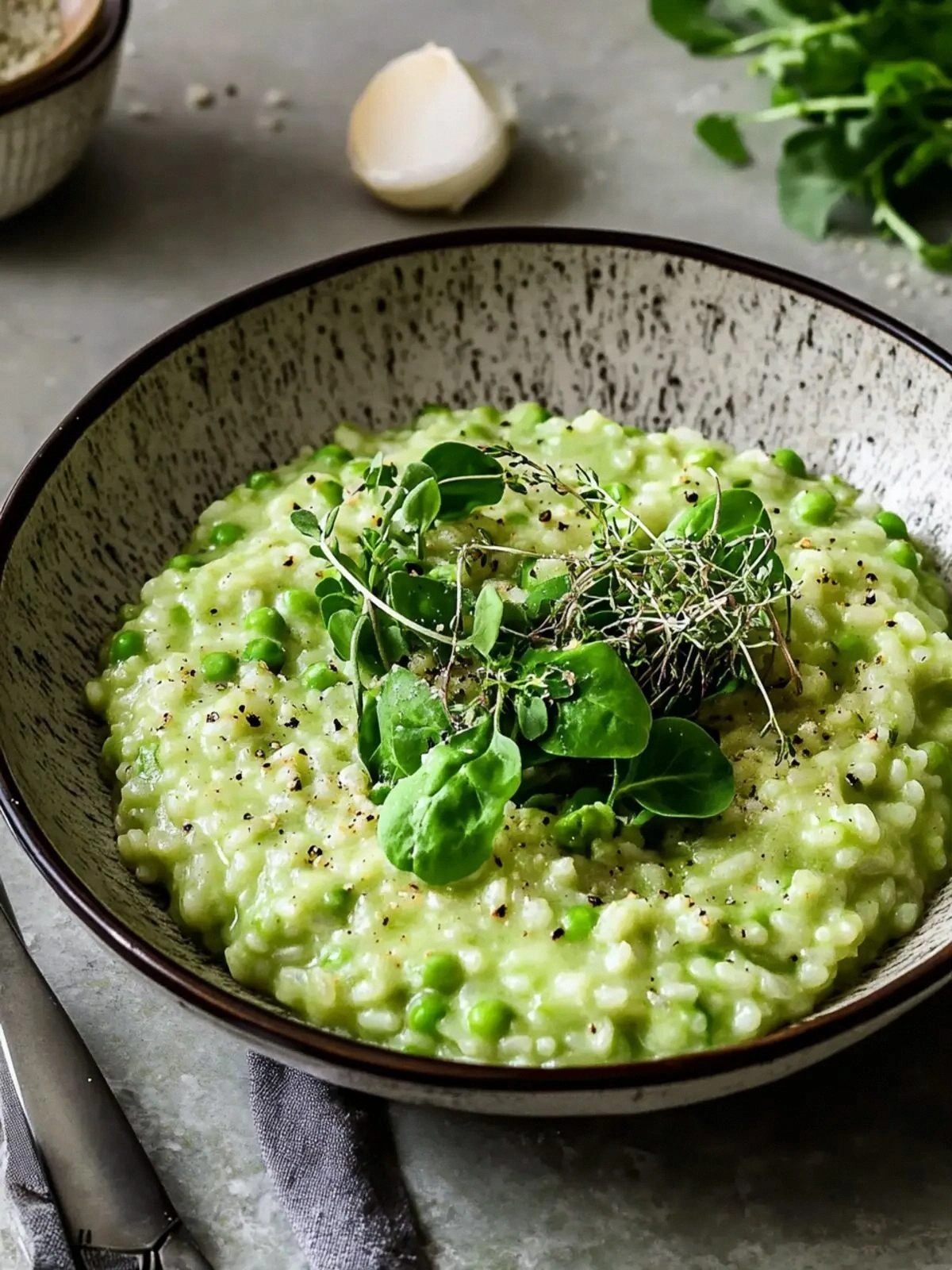
I was in the middle of a culinary crisis, watching my stovetop simmer like a tiny volcano, when I realized the only thing missing was a fresh, green burst of flavor. I grabbed a bag of peas from the fridge, tossed them into a pot, and the kitchen filled with the sweet scent of spring. That moment sparked an idea: what if a risotto could harness that bright, almost nostalgic green, turning a simple side into a showstopper? I knew this wasn’t going to be your average risotto; I was about to add a secret weapon that would make every spoonful feel like a velvet ribbon. So, grab your apron, because I’m about to walk you through the ultimate savory fresh pea risotto that will have you daring your friends to taste it.
Picture the kitchen: the stove humming, a pan sizzling, and the aroma of onions and garlic dancing in the air. As the onions soften, the sound of gentle crackle becomes a symphony that signals the beginning of something extraordinary. The peas pop with a bright green pop that feels like a fresh breath of spring, even if it’s winter outside. Every ingredient is chosen to create a harmony of creamy texture, subtle citrus lift, and a hint of nutty warmth from the butter. And that first bite? It’s like a burst of sunshine on your palate, leaving you craving more.
What sets this recipe apart is not just the ingredients, but the technique that turns a simple risotto into a silky canvas. I’ll show you how to toast the rice until it glows like a warm amber, then gradually coax the broth into the grains, letting them breathe. The secret lies in the timing of the lemon zest, which is added just before the final stir to preserve its bright flavor. I also use a dash of parmesan at the very end, which creates a glossy finish that’s almost too pretty to eat. If you’ve ever made a risotto that’s too dry or too mushy, this version will rescue you with its perfect balance.
I dare you to taste this and not go back for seconds; the creamy, vibrant peas will have you reaching for the spoon again and again. Most recipes get this completely wrong, but I’ve cracked the code to keep the rice al dente while still soaking up all that flavor. Picture yourself pulling this out of the pot, the whole kitchen smelling incredible, and watching your guests’ eyes widen in delight. And if you’re worried about the time, trust me—this dish comes together in under an hour, and you’ll feel like a culinary wizard. Let me walk you through every single step—by the end, you’ll wonder how you ever made it any other way.
What Makes This Version Stand Out
- Flavor: The bright green peas inject a fresh, almost floral note that cuts through the richness of butter and parmesan. The citrusy zing from the lemon zest lifts the dish, preventing it from feeling heavy. Together, they create a palate that’s both comforting and invigorating.
- Texture: Toasting the rice gives a subtle nuttiness that pairs with the creamy al dente grains, creating a contrast that feels like velvet. The gradual broth addition releases starch without turning the mixture gummy. The result is a silky, cohesive bite that coats the tongue.
- Timing: The method’s precise broth additions and constant stirring keep the rice from overcooking. The slow, steady simmer allows each grain to absorb flavor while maintaining a firm bite. This rhythm is what separates a good risotto from a great one.
- Finish: Adding the lemon zest at the last minute locks in citrus brightness, preventing the flavor from slipping into bitterness. The final stir of parmesan creates a glossy sheen that invites the eye and the appetite.
- Visual Appeal: The peas’ vivid green pops against the golden rice, making the dish look as good as it tastes—perfect for Instagram. The bright color signals freshness, while the creamy surface hints at indulgence.
- Ease: Every step uses pantry staples; no exotic ingredients or fancy gadgets are required, making this a go-to weeknight meal. The process is straightforward yet rewarding.
- Versatility: It can double as a main or a side, and can be paired with grilled chicken, shrimp, or roasted vegetables with no adjustments. The simple flavor profile adapts to any protein or vegetarian option.
Inside the Ingredient List
The Flavor Base
Onion and garlic form the aromatic foundation of any risotto. The onion, when sautéed until translucent, releases a subtle sweetness that balances the earthiness of the peas. Garlic adds a punch of depth; if you’re sensitive, reduce the cloves to one. Olive oil is the medium that carries these flavors, and a good quality extra virgin oil gives a bright finish. Skipping this base will leave the dish flat and lacking character.
The Texture Crew
Arborio rice is the star of the show, prized for its high starch content that creates that coveted creamy consistency. The rice should be toasted until the edges are translucent, which not only adds nuttiness but also prevents the grains from becoming gummy. Vegetable broth is the liquid that coax the rice into releasing its starch; the broth’s flavor should be robust enough to complement the peas but not overpower them. A clear, homemade broth is best, but a quality store-bought version works if you’re short on time.
The Unexpected Star
Fresh peas are the dish’s centerpiece; they add a sweet pop of color and a natural sweetness that contrasts beautifully with the savory base. Their bright green hue is a visual treat, and their texture remains tender yet firm if cooked just right. Lemon zest is the secret that injects a burst of citrus, cutting through the richness and adding a bright, almost floral note. If you’re in a pinch, frozen peas can work, but fresh peas give the best flavor and texture.
The Final Flourish
Butter adds a luxurious mouthfeel and a subtle depth of flavor that elevates the dish to a new level of indulgence. Parmesan cheese contributes a salty, nutty undertone and a silky finish when folded in at the end. Salt and black pepper are essential for balancing the flavors; taste as you go and adjust accordingly. Skipping any of these final touches will leave the risotto feeling incomplete.
Everything's prepped? Good. Let's get into the real action.
The Method — Step by Step
- Gather all ingredients and preheat the stove to medium. Measure out the broth and set a ladle ready; this will make the process smoother. Dice the onion finely, mince the garlic, and set aside. This prep work ensures you can focus on the cooking rhythm without interruptions.
- Heat olive oil in a heavy-bottomed pan over medium heat until it shimmers. Add the diced onion and sauté until translucent, about 5 minutes. The onion should soften without browning; this creates a sweet, mellow base. Stir occasionally to keep it from sticking.
- Add the minced garlic and cook for 30 seconds until fragrant. The aroma should be unmistakably garlicky, but not burnt. This brief sauté releases the garlic’s essential oils, enhancing the overall depth of the risotto.
- Stir in the Arborio rice and toast it until the edges become translucent, about 2 minutes. The rice should look slightly browned but not burnt. This toasting step locks in the rice’s natural starch, which will later turn into a silky sauce. Keep stirring to ensure even coating.
- Pour in the first ladle of hot vegetable broth and let it simmer, stirring constantly until the liquid is mostly absorbed. The broth should be hot enough to keep the pan at a gentle simmer, not a rolling boil. This gradual absorption is key to releasing the rice’s starch without overcooking.
- Add the fresh peas, stir, and let the mixture simmer for another minute to heat them through. The peas should retain their bright green color and a slight bite. This step ensures the peas are tender but not mushy, preserving their natural sweetness.
- Continue adding broth one ladle at a time, stirring constantly. Each addition should be absorbed before the next ladle is added. This slow, controlled process creates a creamy consistency without the risk of a soupy mess.
- When the rice is al dente and the risotto has a creamy consistency, remove the pan from the heat. The grains should still feel firm to the bite but not hard. This is the moment of truth—every stir counts.
- Stir in the butter until it’s fully melted and incorporated. The butter should coat the rice, giving it a glossy sheen and a buttery richness that’s almost impossible to resist.
- Fold in the grated Parmesan cheese and the lemon zest, mixing until the cheese melts and the zest is evenly distributed. The cheese should create a velvety finish, while the zest adds a bright, citrusy lift.
- Season with salt and pepper to taste, adjusting for your preference. Taste the risotto before serving; a well-seasoned risotto should have a balanced flavor profile, not too salty or too bland.
- Let the risotto rest for a minute, then serve hot, garnishing with extra Parmesan or fresh herbs if desired. The rest allows the flavors to meld, making each bite even more harmonious.
That's it — you did it. But hold on, I've got a few more tricks that'll take this to another level.
Insider Tricks for Flawless Results
The Temperature Rule Nobody Follows
Many cooks set the stove too high, causing the risotto to cook unevenly. Keep the heat at medium and let the broth simmer gently. This slow, steady approach ensures the rice releases starch in a controlled way, yielding a silky sauce without any lumps.
Why Your Nose Knows Best
The aroma of the risotto is a reliable indicator of doneness. When the dish smells warm, buttery, and slightly toasted, it’s almost ready. Trust that scent; it’s a cue that the rice is developing the right flavor profile.
The 5-Minute Rest That Changes Everything
After you remove the pan from heat, let the risotto sit covered for five minutes. This brief rest allows the grains to finish cooking in their own steam, ensuring each bite is perfectly al dente and the sauce is fully integrated.
The Secret of the Lemon Zest
Adding lemon zest at the very last stir preserves its bright, fresh flavor. If you add it too early, the zest can lose its citrusy punch and become bitter. A quick swirl of zest right before plating keeps the dish vibrant.
The Butter Balance
Butter adds richness, but too much can overpower the peas. Use exactly two tablespoons and fold it in gently. The butter should coat the rice without making it greasy.
The Quick Fix for Overcooked Rice
If your risotto turns out mushy, rescue it by adding a splash of cold water or a bit more broth while stirring vigorously. This rehydrates the grains and pulls the sauce back into a silky consistency. It’s a lifesaver when timing goes off.
Creative Twists and Variations
Protein Boost
Add grilled chicken, seared shrimp, or sautéed tofu for a protein-packed main. Toss the protein into the pan during the final stir, allowing it to warm through and absorb the risotto’s flavors.
Herb Infusion
Stir in fresh basil, mint, or chopped parsley for an herbal lift. The herbs should be added at the end to preserve their bright, fresh aroma and color.
Smoky Twist
A pinch of smoked paprika or a splash of chipotle sauce adds a subtle smoky depth. Use sparingly; you want the smokiness to complement, not overpower, the peas.
Creamy Upgrade
Stir in a splash of heavy cream or mascarpone for a richer, more luxurious texture. This works especially well if you’re serving the risotto as a main dish and want a decadent finish.
Vegan Version
Swap the butter for a plant-based alternative and use a vegan parmesan. The dish remains creamy and flavorful, making it perfect for plant-based diners.
Autumn Touch
Add roasted butternut squash, caramelized onions, or a handful of sautéed mushrooms. These ingredients bring warmth and earthiness, creating a seasonal variation that feels cozy and comforting.
Storing and Bringing It Back to Life
Fridge Storage
Cool the risotto completely, then transfer it to an airtight container. Store in the fridge for up to 3 days. The rice may thicken slightly, but it will reheat well.
Freezer Friendly
Freeze in a freezer-safe container for up to 2 months. When ready to use, thaw overnight in the fridge. Reheat gently to avoid overcooking.
Best Reheating Method
Reheat over low heat, adding a splash of water or broth to restore moisture. Stir frequently until heated through; this will bring back the risotto’s silky texture without drying it out.