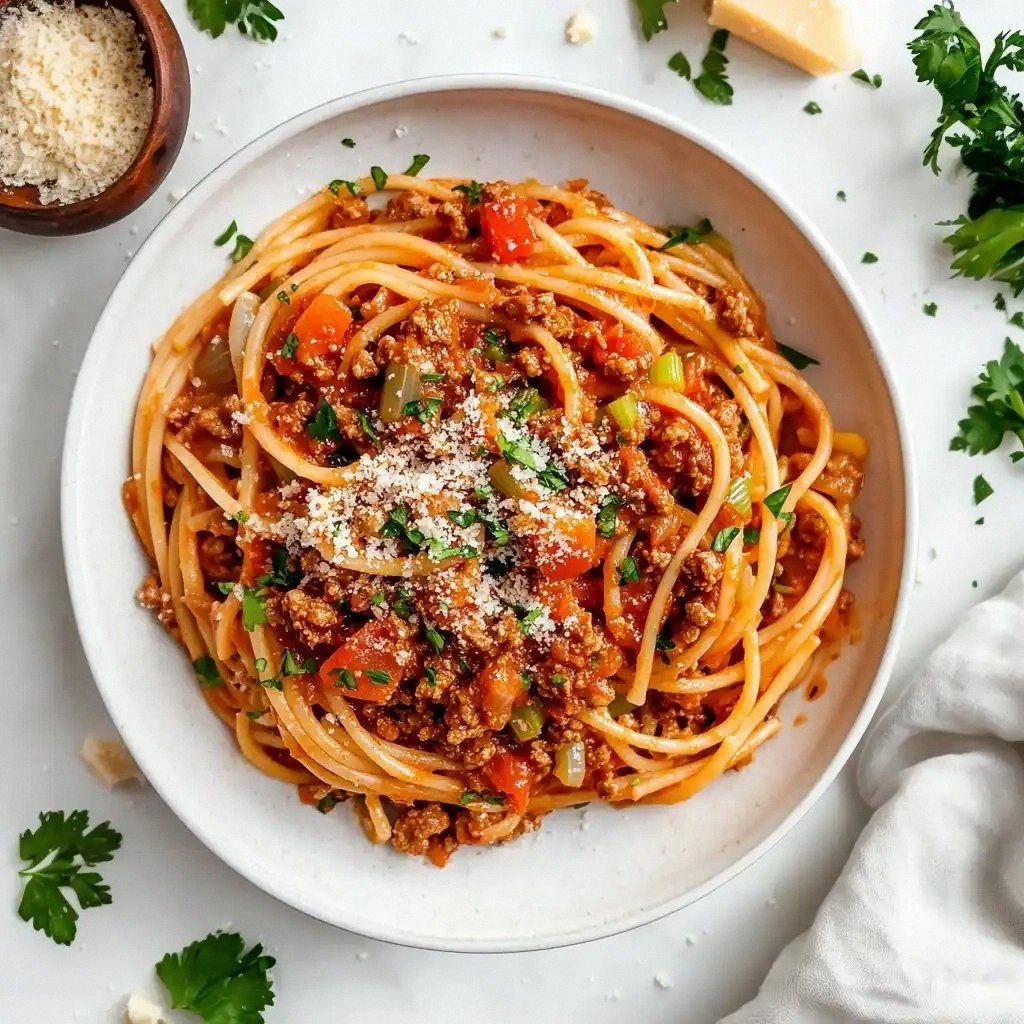
I was standing in my kitchen, staring at a bag of ground chicken that had been sitting in the fridge for a week, feeling a pang of culinary dread. The idea that it could transform into a dinner that would make the entire house sing was almost too good to be true. I remember that night, the air thick with the scent of garlic and onions, when a friend dared me to create a “Tuscan” dish with nothing but what I had on hand. That dare turned into a culinary quest, a mission to coax the humble chicken into a masterpiece that would leave everyone begging for seconds.
Picture this: the first bite of a perfectly browned meatball, its exterior crisp as a fresh slice of baguette, gives way to a juicy interior that practically melts on your tongue. The sauce that follows is a silky, tomato‑based elixir, thickened with a splash of dry white wine and a whisper of red pepper flakes that adds just enough heat to dance on the palate. The orzo, tender and al dente, swirls around the sauce like a well‑tuned orchestra, each grain coated in a velvety cream of Parmesan and heavy cream. And the final flourish of sun‑dried tomatoes and fresh basil gives the dish a bright, almost citrusy lift that feels like a breath of Tuscan summer.
What sets this version apart from the countless other “chicken meatball” recipes that flood the internet is the meticulous balance of flavors and textures. The meatballs are not just fluffy; they’re seasoned to the point where the Italian seasoning and fresh parsley punch through the mildness of the chicken, creating a depth that is almost cinematic. The sauce is layered, not rushed; each component is added in the right order, allowing the tomatoes to reduce and the wine to evaporate, leaving a concentrated flavor that coats the pasta like velvet. The orzo is cooked to a perfect bite, and the addition of spinach and sun‑dried tomatoes provides both color and a subtle sweetness that complements the savory richness.
And if you’re wondering about the “secret weapon” that makes this dish stand out, it’s the use of heavy cream in combination with grated Parmesan. This duo creates a sauce that is both silky and robust, turning a simple tomato base into a luxurious, comforting hug in a bowl. I dare you to taste this and not go back for seconds—once you’ve experienced that creamy, herb‑laden, tomato‑rich bliss, you’ll never settle for a bland sauce again.
What Makes This Version Stand Out
- Flavor Depth: The blend of Italian seasoning, fresh parsley, and a splash of white wine creates layers of taste that evolve with each bite.
- Texture Contrast: Crispy edges on the meatballs juxtapose with the silky sauce and al dente orzo for a satisfying mouthfeel.
- Ingredient Quality: Using high‑grade Parmesan and sun‑dried tomatoes in oil elevates the dish from ordinary to extraordinary.
- Time Efficiency: The method allows the meatballs to cook while the sauce simmers, reducing overall prep time.
- Make‑Ahead Friendly: The sauce can be prepared a day ahead, and the meatballs can be baked and frozen for future use.
- Versatility: The recipe can be tweaked for dietary preferences—swap orzo for rice or use dairy‑free cream.
- Crowd Appeal: The comforting, Mediterranean flavor profile is a hit with both kids and adults, making it a family favorite.
- Visual Appeal: The bright green spinach and sun‑dried tomatoes provide a pop of color that makes the dish Instagram‑ready.
Alright, let’s break down exactly what goes into this masterpiece. If you’re ready to dive deeper into the culinary science behind each component, keep reading.
Inside the Ingredient List
The Flavor Base
The foundation of this dish is the tomato sauce, which begins with crushed tomatoes and chicken broth. The tomatoes provide acidity and body, while the broth adds savory depth without overwhelming the palate. If you skip the broth, the sauce becomes syrupy and loses its balance, turning the dish into a heavy, one‑dimensional flavor.
The white wine is more than a garnish; it deglazes the pan, lifting browned bits that carry intense flavor into the sauce. A dry white wine like Pinot Grigio works best, but any light, dry wine will suffice. If you’re avoiding alcohol, a splash of chicken stock with a pinch of lemon juice can mimic the acidity and complexity.
Red pepper flakes add a subtle heat that cuts through the richness of the cream and Parmesan. Don’t shy away from them; they’re the secret that keeps the sauce from feeling too sweet. If you’re heat‑averse, reduce the amount to a quarter teaspoon or omit them entirely for a milder profile.
The Texture Crew
Panko breadcrumbs give the meatballs a light, airy structure, preventing them from becoming dense or rubbery. The panko’s fine, airy crumbs absorb the egg and herbs, creating a tender interior that’s a delight to bite into. If you can’t find panko, regular breadcrumbs work, but the texture will be slightly denser.
Heavy cream is the heart of the sauce’s creaminess. It balances the acidity of the tomatoes and the saltiness of the Parmesan, resulting in a silky mouthfeel that coats every grain of orzo. To keep the sauce from separating, add the cream gradually, stirring constantly until fully incorporated.
The orzo pasta is chosen for its ability to soak up sauce and its small, rice‑like shape that provides a pleasant bite. Cooking it al dente ensures it doesn’t become mushy when combined with the sauce, maintaining a satisfying texture. If you prefer a gluten‑free option, substitute with a suitable gluten‑free pasta or cauliflower rice.
The Unexpected Star
Baby spinach may seem like an ordinary vegetable, but its quick wilting releases a subtle earthiness that balances the sweet sun‑dried tomatoes and the richness of the cream. Adding spinach late in the cooking process preserves its bright green color and vibrant flavor, making the dish visually appealing.
Fresh basil is the final flourish that adds a burst of aromatic freshness. It’s added at the very end to preserve its bright, slightly peppery flavor. If basil isn’t in season, a few leaves of fresh oregano can serve as a suitable substitute.
The Final Flourish
The grated Parmesan cheese is used twice—once in the meatball mixture and once in the sauce—creating a cohesive flavor that ties all components together. The cheese’s nutty undertones complement the tomato’s acidity and the cream’s richness, resulting in a harmonious taste profile. If you’re lactose intolerant, a vegan Parmesan alternative can be used without compromising flavor.
Everything’s prepped? Good. Let’s get into the real action.
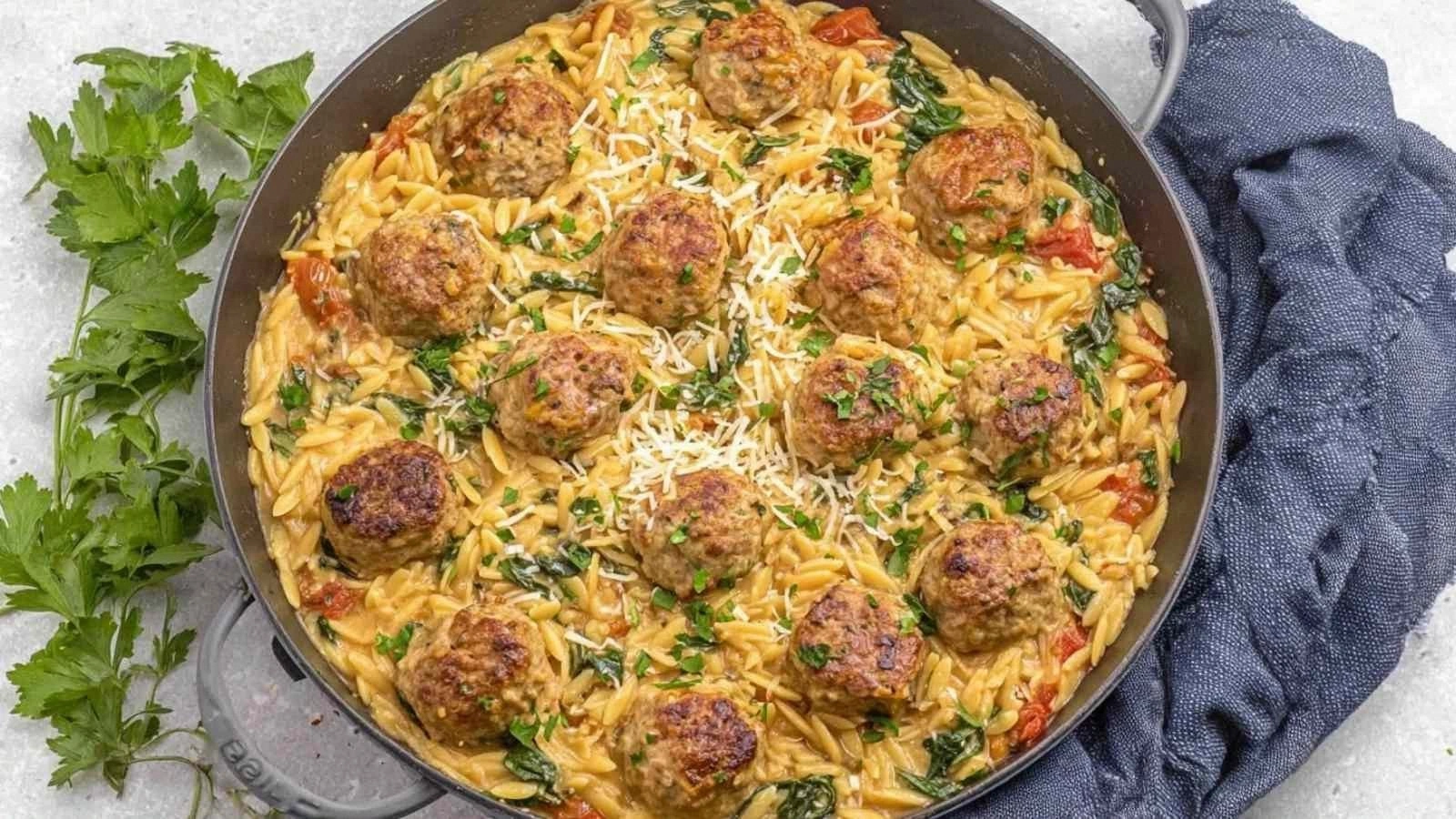
The Method — Step by Step
- Preheat your oven to 400°F (200°C). In a large bowl, combine 1 lb ground chicken, ½ cup panko breadcrumbs, ¼ cup grated Parmesan, 1 large egg, 2 cloves minced garlic, 1 tbsp fresh parsley, 1 tsp Italian seasoning, ½ tsp salt, ¼ tsp black pepper, and 1 tbsp olive oil. Mix until just combined—over‑mixing will make the meatballs tough. Shape into 1½‑inch balls and arrange them on a parchment‑lined sheet. Bake 15–18 minutes until golden and cooked through. This step locks in moisture and gives the meatballs a satisfying crisp exterior.
- While the meatballs bake, heat a large skillet over medium‑high heat. Add 1 tbsp olive oil, then 1 small diced onion; sauté until translucent and fragrant, about 3–4 minutes. Add the second set of 2 cloves minced garlic and ½ tsp red pepper flakes; cook for another 30 seconds until the garlic is aromatic. Pour in ½ cup dry white wine, scraping the pan to deglaze. Let the wine reduce by half, concentrating its flavor and leaving behind a rich, savory base.
- Stir in 28 oz crushed tomatoes and 1 cup chicken broth. Bring the mixture to a gentle simmer, allowing it to thicken slightly over 10 minutes. The sauce should coat the back of a spoon and develop a slightly glossy sheen. This slow simmer melds the tomato’s sweetness with the broth’s savory depth, creating a rich canvas for the meatballs.
- Gently place the baked meatballs into the simmering sauce. Cover the skillet and let the meatballs simmer for an additional 10 minutes, allowing the flavors to meld. The meatballs should absorb some of the sauce, becoming even more flavorful and moist.
- Meanwhile, cook 8 oz orzo according to package instructions, but reduce the cooking time by 2 minutes to keep it al dente. Drain the pasta and set aside, reserving a splash of pasta water if needed for later.
- Add 5 oz baby spinach, ½ cup sun‑dried tomatoes in oil, and ½ cup heavy cream to the sauce. Stir until the spinach wilts and the cream fully incorporates, creating a silky, cohesive base. Taste the sauce and adjust salt and pepper as needed—remember, the Parmesan will add saltiness later.
- Toss the cooked orzo into the sauce, ensuring every grain is coated. Stir in the remaining ½ cup grated Parmesan and ¼ cup fresh basil. The cheese will melt, thickening the sauce and adding a nutty richness that ties all the elements together.
- Serve the meatballs atop the orzo, spooning extra sauce over each portion. Garnish with a handful of fresh basil leaves or a dusting of Parmesan if desired. The dish should feel like a comforting hug in a bowl, with each bite offering a blend of savory, creamy, and herbal notes.
- Enjoy while hot, and remember: the flavors deepen as the dish sits for a few minutes, so let it rest for 5 minutes before serving to let the sauce thicken and the flavors fully integrate.
That's it — you did it. But hold on, I've got a few more tricks that'll take this to another level.
Insider Tricks for Flawless Results
The Temperature Rule Nobody Follows
Many cooks assume that a high oven temperature is the secret to juicy meatballs, but the truth is that a lower, steady heat (350°F) allows the meatballs to cook evenly without drying out. When you bake at a lower temperature, the internal temperature rises gradually, keeping the interior moist while still achieving a golden crust on the outside. If you’ve ever baked meatballs that come out tough, try this tweak and taste the difference.
Why Your Nose Knows Best
During the simmering step, pay close attention to the aroma. A bright, tomato‑rich scent indicates that the sauce is developing properly. If the smell is flat or overly acidic, let it simmer longer or add a pinch more Italian seasoning. Your nose is a reliable guide to when the sauce has reached its full flavor potential.
The 5-Minute Rest That Changes Everything
After the meatballs finish cooking, let them rest on a warm plate for 5 minutes before serving. This short rest allows the juices to redistribute, ensuring each bite is juicy and tender. A friend once tried to serve them immediately and ended up with a dry center; the rest made the difference between a mediocre and a memorable dish.
The Sauce’s Secret Ingredient
The splash of white wine might seem like a minor detail, but it unlocks hidden umami notes in the tomatoes and balances the acidity. If you’re avoiding alcohol, replace it with a splash of chicken broth and a teaspoon of lemon juice for acidity. This substitution preserves the sauce’s depth without compromising flavor.
The Pasta’s Perfect Bite
Al dente orzo is key to preventing a mushy texture when combined with the sauce. Overcooking the pasta can cause it to break apart and lose its shape, while undercooking it will leave it hard. The 2‑minute reduction in cooking time is a small adjustment that makes a big difference in the final mouthfeel.
The Herb’s Final Touch
Adding fresh basil at the very end preserves its bright, slightly peppery flavor. If you add it earlier, the heat will wilt the leaves, turning them into a muted green paste. By adding it last, you get a burst of color and aroma that elevates the entire dish.
Creative Twists and Variations
This recipe is a playground. Here are some of my favorite ways to switch things up:
Swap Ground Chicken for Ground Turkey
Using ground turkey keeps the dish lean while still delivering the same savory texture. The lighter flavor pairs well with the creamy sauce, creating a balanced meal that’s lower in fat but high in protein.
Add White Beans for Heartiness
Stir in a cup of cooked cannellini beans during the last 5 minutes of simmering. The beans absorb the sauce, adding a subtle nutty flavor and a hearty, filling texture that makes the dish even more satisfying.
Use Pesto Instead of Basil
Swapping fresh basil for a spoonful of basil pesto adds an extra layer of umami and a vibrant green hue. The pesto’s oil content enriches the sauce, creating a silky, herbaceous finish that’s unmistakably Italian.
Substitute Fettuccine for Orzo
If you’re craving a pasta‑centric dish, use fettuccine instead of orzo. The flat ribbons soak up the sauce beautifully, delivering a comforting, pasta‑heavy version that still highlights the meatballs.
Add Parmesan Crisps on Top
For a crunchy finish, sprinkle a handful of Parmesan crisps over each serving. The crispy, salty shards add a delightful textural contrast to the creamy sauce and tender meatballs.
Make It Low‑Carb with Cauliflower Rice
Replace orzo with cauliflower rice for a low‑carb alternative that still delivers the same comforting feel. The cauliflower’s mild flavor absorbs the sauce, making each bite rich and satisfying without the extra carbs.
Storing and Bringing It Back to Life
Fridge Storage
Store the sauce and meatballs separately in airtight containers. The sauce can keep up to 3 days in the refrigerator, while the meatballs remain fresh for the same period. This separation prevents the pasta from becoming soggy when you reheat the dish.
Freezer Friendly
Freeze the sauce in portions for up to 3 months and the meatballs for up to 2 months. When ready to eat, thaw overnight in the fridge, then reheat on the stove with a splash of water to restore moisture. The dish will taste almost as good as fresh.
Best Reheating Method
Reheat the sauce and meatballs in a skillet over medium heat, adding a splash of chicken broth or water to keep it from drying out. Finish by stirring in fresh basil and a drizzle of olive oil for a fresh finish. The orzo should be reheated separately in a pot with a little water to keep it from sticking.